

Your brand is more than just a logo or name. It’s a valuable asset that can drive profits and customer loyalty for years. Understanding brand value helps you make smarter business decisions and build lasting success.
Brand value is an abstract concept, representing intangible qualities like trust and emotional connection, which are difficult to quantify but crucial for business success.
What Is a Brand Value?
Brand value measures how much extra customers will pay for your products because of your brand name. It’s not just about the physical product. It’s about the trust, memories, and feelings people connect with your brand.
David Aaker, the pioneer of brand equity research, explains that “brand equity provides real value to the firm by enhancing efficiency and effectiveness of marketing programs.” This foundational concept shows why brand value matters for business success.
Think about it this way: people often choose one coffee shop over another, even when both serve similar drinks. That choice happens because of brand value. One brand feels more trustworthy, familiar, or appealing.
Brand Value Definition
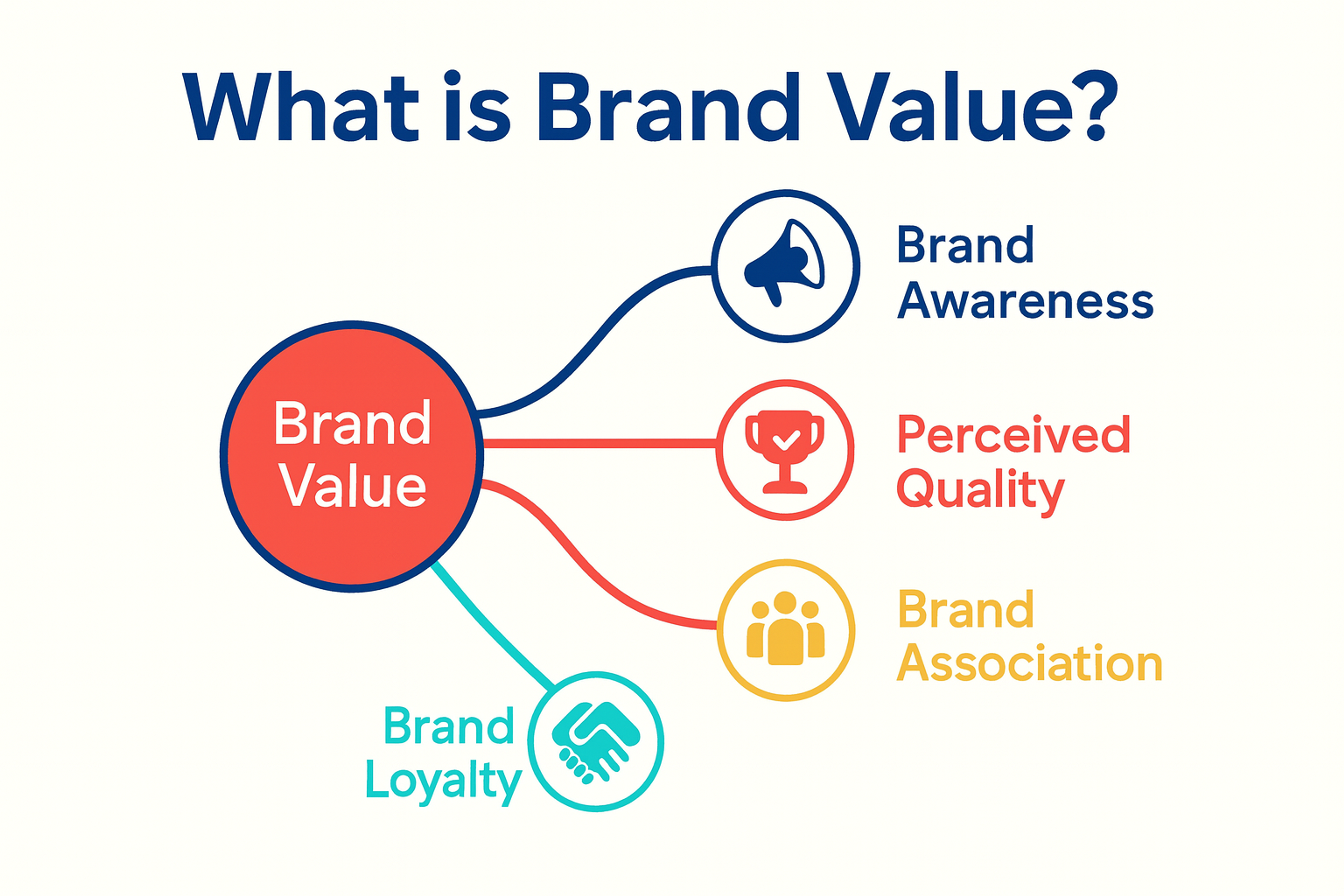
Brand value captures everything your brand represents to customers. It includes their loyalty, the quality they expect, and how your brand makes them feel. Brand value is closely linked to brand identity, as a strong and consistent brand identity reinforces the perceived value of your brand.
It's important to distinguish brand value from your brand's values — the brand's values are the guiding beliefs that shape your brand identity and influence how customers perceive your business. When customers prefer your brand over cheaper alternatives, that’s brand value at work.
What Are Core Brand Values?
Core brand values are the principles your brand stands for. They go beyond what you sell to represent why you exist. These values should be authentic, meaningful, and consistent across all customer touchpoints. These are also known as core values, and a company's core values and brand's core values should be aligned to create a strong foundation for the brand.
Think of core brand values as your brand’s personality traits. Just like people, brands with clear personalities are more memorable and trustworthy. Strong core values and strong brand values help brands build trust and stand out in the marketplace. Customers connect with brands that share their personal values and beliefs.
Core Brand Values
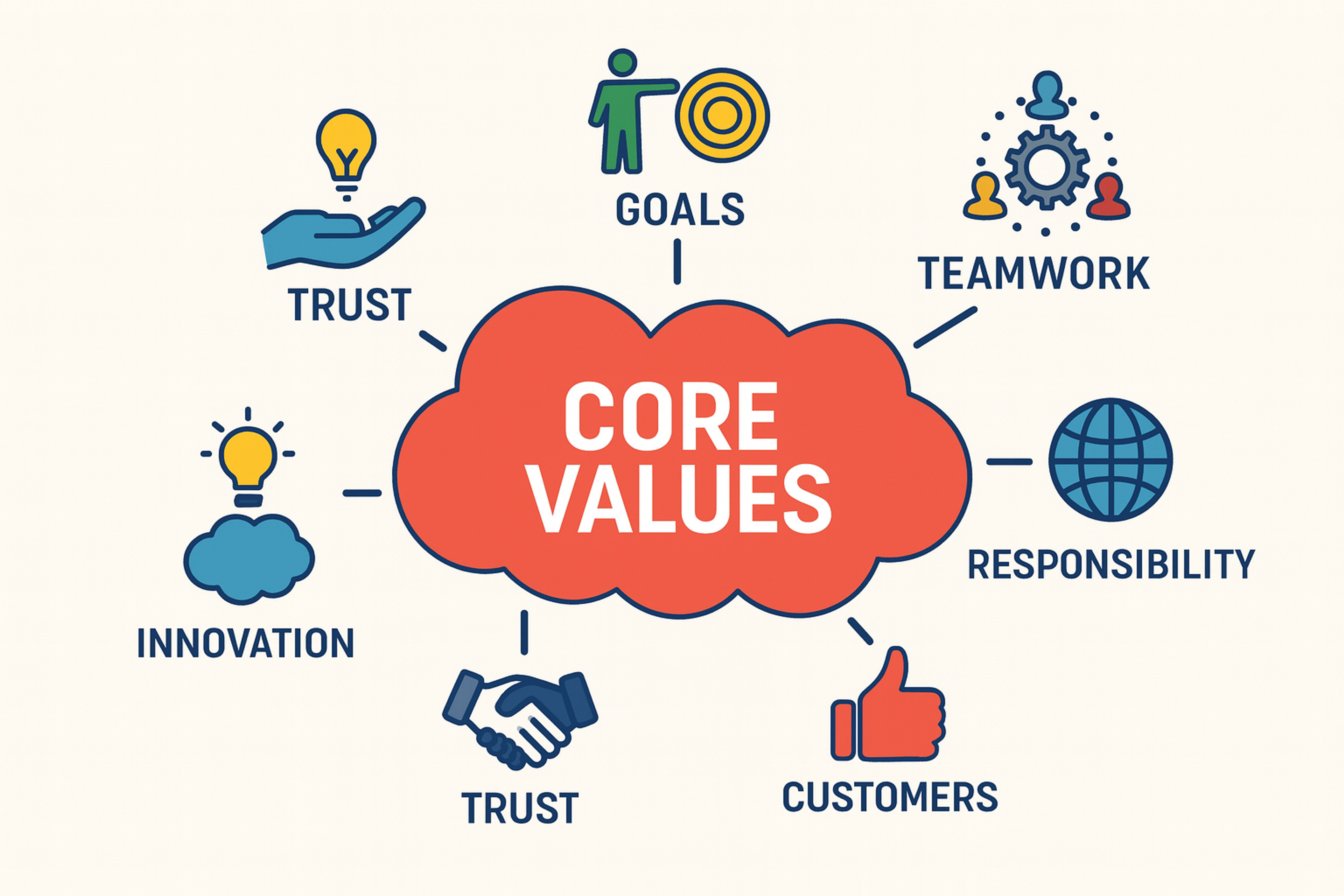
Great brand values and unique brand values, such as environmental protection, innovation, or customer-centricity, can set a brand apart. These values can be translated into guiding principles that shape company culture and corporate culture, ensuring the brand's core values are reflected in daily actions and long-term strategies.
What Is the Brand Value Chain?
The brand value chain traces the path from marketing activities to business results. It connects brand investments (advertising, customer experience, product development) to customer responses (awareness, preference, loyalty) to financial outcomes (sales, margins, market share).
The brand value chain model includes key multipliers such as program quality, which refers to the clarity and effectiveness of marketing programs, and customer mindset, which reflects how consumers perceive and respond to the brand.
Investor sentiment and shareholder value are important financial outcomes influenced by the brand value chain, as positive investor sentiment can increase shareholder value by reflecting confidence in the brand's growth potential.
This framework helps answer critical questions: Which marketing activities create the most brand value? How do customer perceptions translate into sales? Where should you invest to maximize brand returns?
Brand Value vs Brand Equity: What's the Difference?
These terms sound similar but mean different things. Brand equity includes all the intangible benefits your brand creates. This covers brand awareness, customer loyalty, and the associations people make with your brand. Brand associations, such as customer perceptions and emotional connections, are key components of a brand's equity.
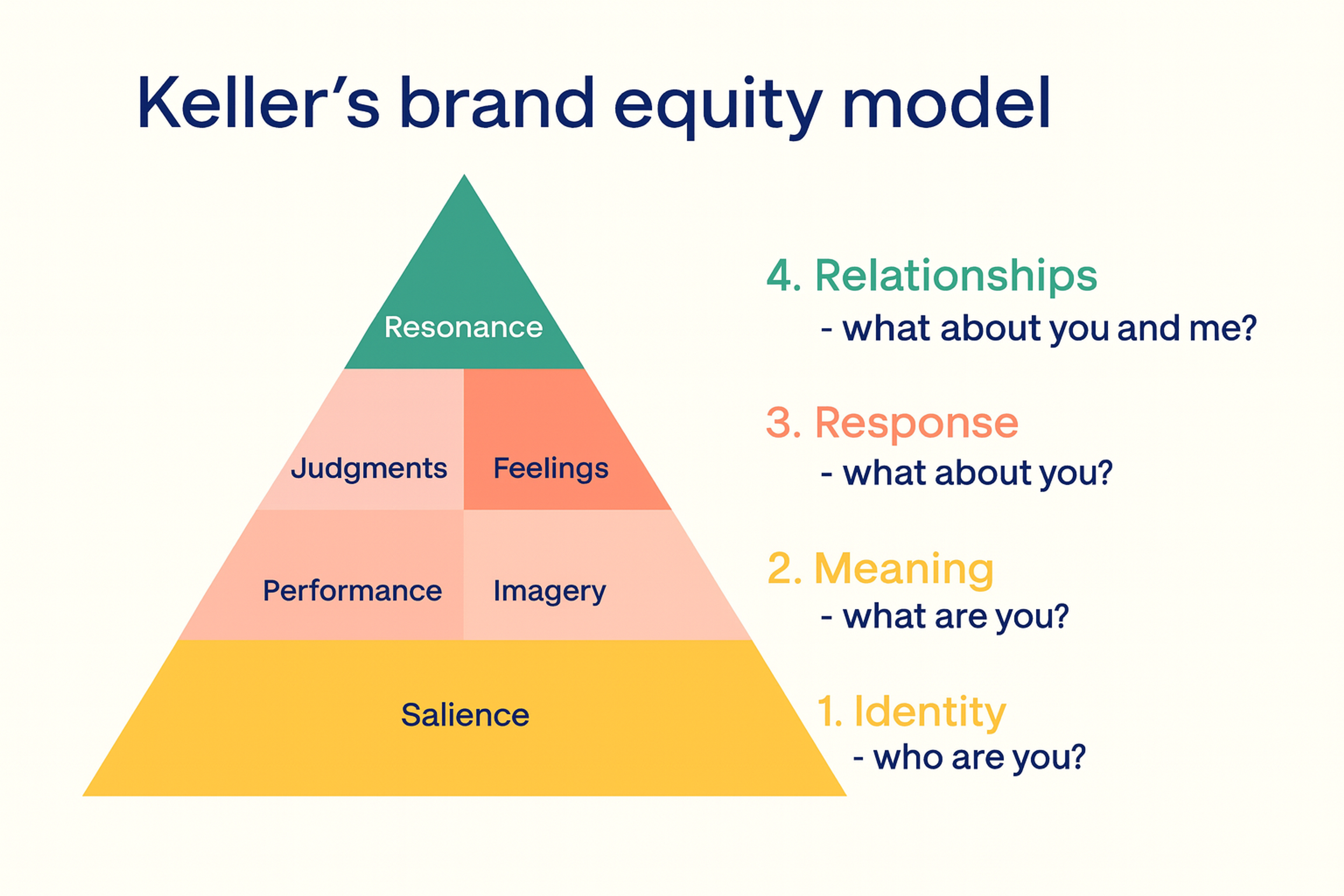
Kevin Lane Keller’s customer-based brand equity model demonstrates how brand knowledge drives consumer behavior. His research shows that strong brand equity creates competitive advantages that last for years.
Brand equity changed how businesses think about marketing in the 1980s. Companies realized brands weren’t just marketing tools. They were valuable business assets that could drive long-term growth.
Keller’s Customer-based Brand Equity Model
Philip Kotler notes that “brand value creation requires consistent delivery of superior customer experiences that build trust over time.” This perspective connects brand strategy to actual business outcomes. Brand preference is a key metric for measuring brand equity, as it reflects how much consumers favor your brand over competitors.
Brand value is part of brand equity. It focuses specifically on the financial worth of your brand. You can think of brand equity as the bigger picture, while brand value zooms in on the dollars and cents. A brand's worth is determined by evaluating both tangible and intangible factors, and a strong brand equity can create a lasting competitive advantage in the marketplace.
Brand Value Measurement
Different approaches help measure brand value accurately. Key metrics such as brand awareness, customer loyalty, and financial performance are used to assess brand value.
Customer-Based Valuation
This method focuses on what customers think your brand is worth. Customer-based valuation is crucial to brand building, as it helps identify what drives customer loyalty and willingness to pay.
Survey current and potential customers about their willingness to pay for your products. Calculate the average lifetime value for different customer groups.
Revenue Premium Valuation (Relief from Royalty Method)
Compare your prices to generic or unbranded alternatives. If customers choose your brand despite higher prices, that difference represents brand value. Repeat purchases by loyal customers are a strong indicator of brand value in this method, as they reflect customer satisfaction and can impact sales forecasting and customer lifetime value.
Income-Based Valuation (Economic Value Added)
Analyze how much revenue your brand generates compared to unbranded alternatives. This method requires separating brand-driven sales from other factors. Ethical and consistent business practices that align with your brand values can enhance brand-driven sales and contribute to higher brand value.
McKinsey research shows brands can contribute 15-20% of total enterprise value when measured properly.
Market-Based Valuation
Research what similar brands sell for in your industry. Look at recent acquisitions, stock valuations, and what competitors might pay to buy your brand.
Understanding your brand's competitive position in the market is essential for accurate valuation, as it reflects your market share and brand strength relative to others.
Cost-Based Valuation
Add up everything you've invested in building your brand. Include marketing campaigns, logo design, trademark registration, and staff time. This shows your investment but doesn't necessarily reflect current market value.
How to Define Brand Value Through Customer Loyalty
You can measure brand value in several ways. The most important approach looks at customer lifetime value (CLV). Customer retention and brand loyalty are critical factors in maximizing CLV and achieving long-term success. This shows how much money each customer will spend with your brand over time.
How to Measure Brand Value
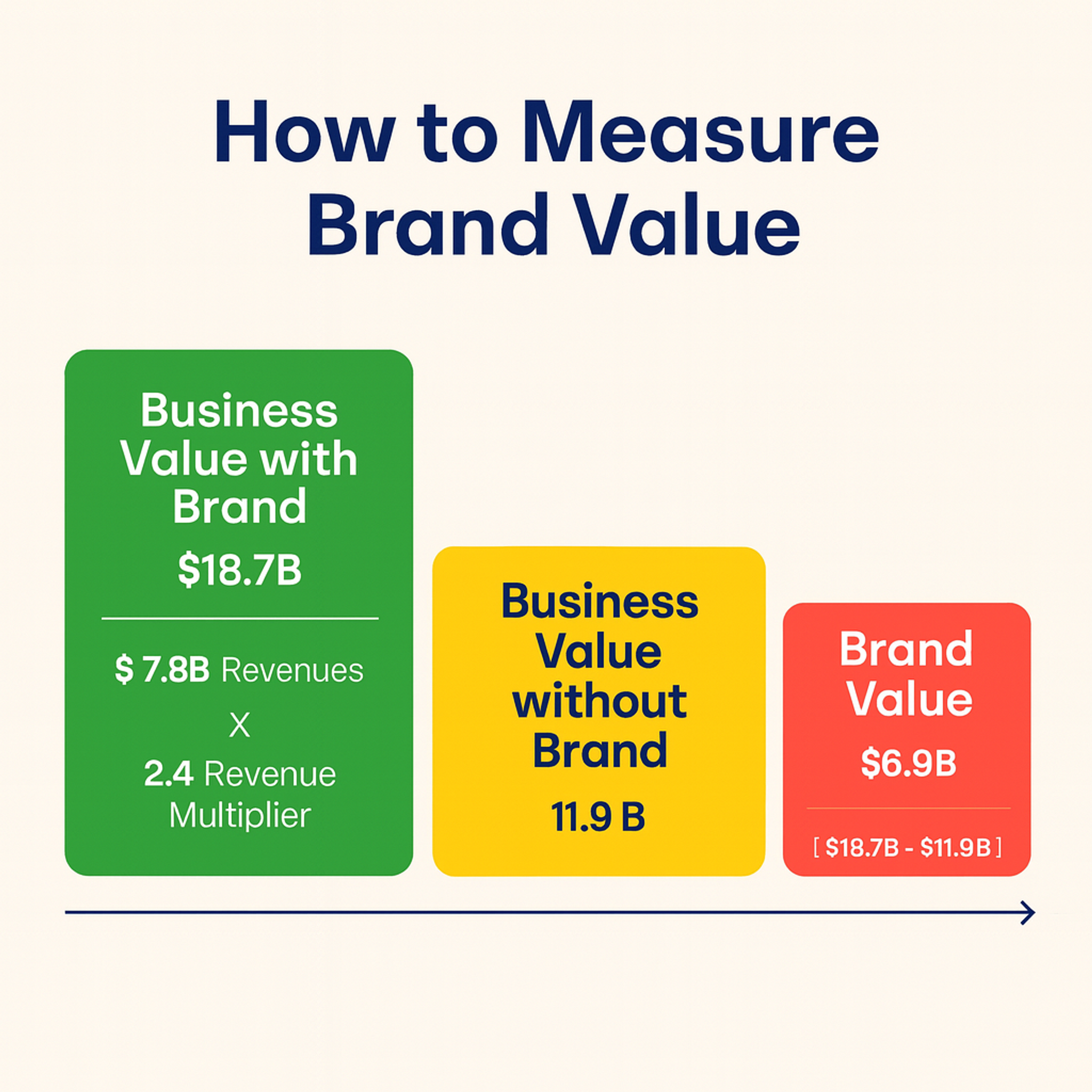
Here’s a simple way to calculate CLV:
CLV = Average purchase value × Number of purchases per year × Customer relationship length (in years)
Let’s look at a music store example:
A drummer buys drumsticks regularly:
- $20 per pair × 4 pairs per year × 8 years = $640
A guitarist buys strings regularly:
- $40 per pack × 4 packs per year × 6 years = $960
The guitarist brings more value to the store. This information helps the owner focus marketing efforts on the most valuable customers.
Advanced Brand Measurement Tools
Net Promoter Score (NPS)
Ask customers how likely they are to recommend your brand on a scale of 0-10. Subtract the percentage of detractors (0-6) from promoters (9-10). Higher scores indicate stronger brand value because word-of-mouth recommendations drive new business.
YouGov BrandIndex
This platform tracks brand perception across multiple dimensions, including buzz, impression, and recommendation. Many companies use it alongside other brand tracking studies for comprehensive measurement.
Kantar BrandZ Methodology
Kantar's approach combines financial analysis with consumer research. Their annual rankings show how brand strength correlates with stock performance over time.
Industry-Specific Brand Value Examples
Technology Sector
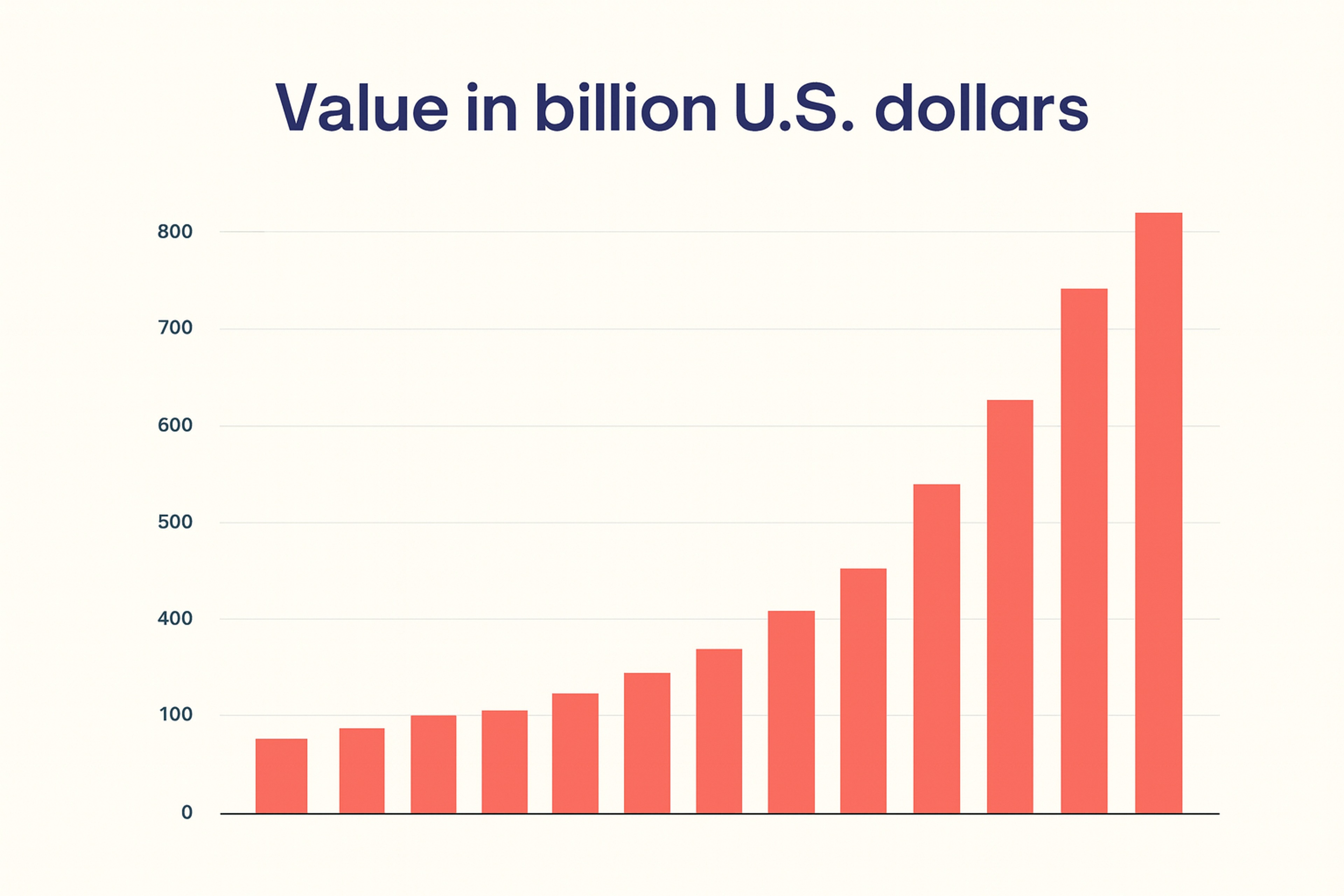
Apple commands premium pricing across all product categories. The company generates 40% higher margins than Samsung on comparable devices. Apple’s brand value reached $355 billion in 2024 according to Interbrand rankings. Apple’s strong brand image plays a key role in supporting its premium pricing and fostering exceptional customer loyalty.
Microsoft transformed from a software company to a cloud-first brand. Their brand strategy focuses on productivity and innovation, supporting their $326 billion market valuation.
Brand Value
Luxury Brands
LVMH demonstrates how luxury brand portfolios create compound value. Each brand (Louis Vuitton, Moët & Chandon, Hennessy) reinforces the parent company's premium positioning.
Hermès maintains exclusivity through controlled production and heritage storytelling. Their brand value continues growing despite limited product availability.
Automotive Industry
Tesla disrupted traditional automotive branding by focusing on innovation and sustainability. Tesla is also known for challenging the status quo in the automotive industry, consistently pushing boundaries and redefining industry standards. The company achieves higher brand value per vehicle than established manufacturers.
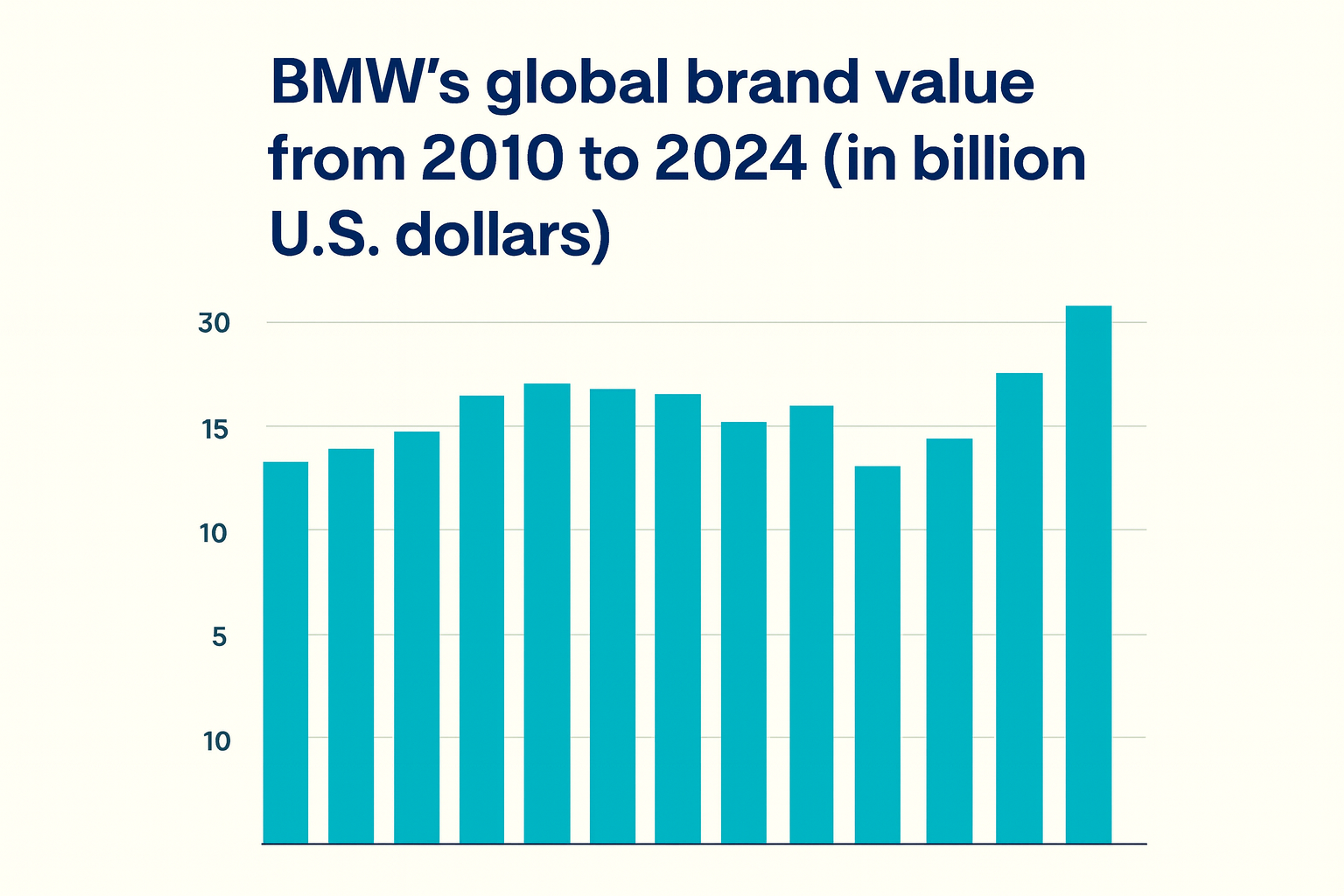
BMW maintains premium positioning through consistent quality and performance messaging. Their “Ultimate Driving Machine” tagline has supported decades of brand value growth.
BMW brand value 2024
Financial Services
JPMorgan Chase builds brand trust through reliability and financial expertise. In banking, brand trust directly correlates with customer acquisition costs and retention rates.
B2B Technology
IBM transitioned from hardware to services by repositioning their brand around business transformation. Their brand value in enterprise markets remains strong despite changing technology trends.
Oracle maintains brand leadership in database technology through consistent innovation, messaging, and customer success stories.
Key Benefits of a Strong Brand Value
Stand Out From Competitors
Strong brand value gives you a competitive edge. Harvard Business Review research shows that brands with emotional connections to customers achieve 85% higher sales growth than competitors.
Build Customer Loyalty
Loyal customers are gold for your business. They try new products more often and spend more money. Nielsen research indicates repeat customers spend 67% more in months 31-36 of their relationship compared to months 0-6.
Attract New Customers
Most shoppers prefer brands that match their personal values. Edelman Trust Barometer data shows 81% of consumers must trust a brand before making purchase decisions. The key is reaching the right audience with the right message. Understanding your target audience is essential for creating effective marketing strategies that attract new customers.
Improve Operations
Clear brand values guide decision-making across your company. Teams work faster when they understand the brand guidelines. Product launches happen more smoothly when measured against consistent brand principles.
Create Consistency
The marketing rule of 7 states that customers need to see your brand seven times before buying. Consistent brand values across all touchpoints make this process more effective. Deloitte research shows companies with consistent branding achieve 23% higher revenue growth.
5 Companies With Incredible Brand Value
1. Amazon
Amazon dominates through reliability and convenience. The company's brand value exceeded $350 billion in 2024, making it the world's most valuable retail brand. Despite supply chain challenges, Amazon maintains customer trust through consistent delivery and service quality.
Amazon's advertising business now generates over $31 billion annually, competing directly with Google and Meta through sponsored search results and product placements.
2. McDonald's
McDonald's represents consistency and reliability worldwide. The company operates over 40,000 restaurants across 100+ countries, serving 70 million customers daily. Brand consistency allows McDonald's to maintain similar profit margins globally.
3. Coca-Cola
Coca-Cola built a brand around refreshment and emotional connection. Interbrand ranks Coca-Cola among the top 10 most valuable brands globally, with brand value exceeding $57 billion. The company holds 42% of the global cola market through consistent brand messaging.
4. Nike
Nike represents motivation and athletic achievement. Their “Just Do It” campaign, launched in 1988, delivered measurable ROI through increased market share and brand recognition. Nike's brand story of motivation and achievement resonates with consumers worldwide, effectively communicating the company's origins, values, and mission. Nike’s brand value reached $50 billion in 2024, making it the most valuable apparel brand worldwide.
5. Luxury Portfolio Example
Consider how LVMH manages multiple premium brands. Each brand maintains a distinct identity while benefiting from shared luxury positioning. Some companies, such as Google, define their brand identity through ten core values that guide their branding and corporate culture. This approach creates a combined brand value exceeding individual brand worth.
Brand Valuation Service Alternatives
Professional Valuation Firms
Interbrand specializes in brand valuation and strategy consulting. They publish annual rankings and provide detailed methodology for Fortune 500 companies.
Brand Finance offers trademark valuation and brand strategy services. Their approach emphasizes financial analysis and market research integration.
Landor & Fitch focuses on brand transformation and design strategy. They help companies align brand value with business strategy.
Brand Management Software
Brandwatch provides social listening and brand monitoring tools. Companies use it to track brand perception and competitive analysis.
Mention offers real-time brand monitoring across digital channels. This helps companies respond quickly to brand mentions and customer feedback.
Brand Tracking Services
YouGov provides continuous brand health monitoring across multiple markets and demographics. Tracking your brand's health is essential for making informed decisions and monitoring progress over time.
Kantar combines brand tracking with market research for comprehensive brand performance analysis.
Steps to Increase Your Brand Value
1. Focus on Customer Experience
Make every interaction with your brand positive. This includes your website, customer service, product quality, and after-sales support. Consistent positive experiences build trust and loyalty.
2. Invest in Brand Awareness
Increase visibility through targeted marketing campaigns. Use social media, traditional advertising, content marketing, and public relations. The key is reaching the right audience with the right message.
3. Use Technology for Personalization
Modern technology helps you deliver personalized experiences. Use customer data to customize messaging, product recommendations, and communications. Personal touches make customers feel valued.
How to Build Your Brand Value

4. Reward Customer Loyalty
Create loyalty programs that reward repeat customers. Offer exclusive discounts, early access to new products, or special perks. Make customers feel appreciated for choosing your brand repeatedly.
5. Keep Innovating
Stay ahead of industry trends. Regularly update your products or services to meet changing customer needs. Innovation shows customers that your brand is forward-thinking and reliable.
Common Brand Valuation Mistakes
Many companies make critical errors when measuring brand value. Avoid these common mistakes:
Over-relying on cost-based methods without considering market perception and customer willingness to pay premium prices.
Ignoring competitive context when calculating brand premiums and market positioning advantages.
Focusing only on financial metrics while overlooking customer loyalty, brand awareness, and emotional connections that drive long-term value.
Using outdated valuation data in rapidly changing markets where brand perception shifts quickly.
How to Leverage Brand Value Long-Term
Once you've built brand value, protect and grow it:
Reward Loyalty: Offer exclusive deals and experiences to your best customers. Make them feel special for choosing your brand.
Create Brand Ambassadors: Encourage satisfied customers to share their experiences on social media. Authentic recommendations from real customers drive new business effectively.
Form Strategic Partnerships: Work with other reputable brands that share your values. These partnerships can introduce your brand to new audiences while reinforcing your market positioning.
Continue Innovating: Keep improving your products and services. Stagnant brands lose value over time as competitors advance and customer expectations evolve.
Monitor Brand Health: Use quarterly brand tracking studies to measure awareness, perception, and competitive positioning changes over time.
Read more
FAQ
What Are the Three Main Brand Values?
The three main brand values typically refer to core principles that guide a brand's behavior and perception. These often include:
1.
Integrity – acting with honesty and ethical intent.2.
Innovation – pushing boundaries to improve or create value.3.
Customer-centricity – prioritizing the needs and satisfaction of customers.
Note: Brand values vary by company and can include authenticity, sustainability, or inclusivity depending on brand identity.
What Is Brand Value vs Goodwill?
Brand value is the quantifiable worth of a brand name, based on factors like market recognition, loyalty, and financial performance. It contributes to a company's competitive advantage.
Goodwill, in accounting, is the intangible asset recorded during an acquisition, which includes brand value but also encompasses customer relationships, reputation, and employee expertise. Brand value is a component of goodwill, but goodwill is broader.
What Is a Brand Value Statement?
A brand value statement is a concise declaration that articulates the core principles, beliefs, and ethical stance of a brand. It serves as a strategic anchor for brand behavior, communication, and culture, often aligned with mission and vision.
Example: “We believe in empowering creativity through open design and sustainable innovation.”
What Drives Brand Value?
Several key factors drive brand value:
- Brand recognition and awareness
- Customer loyalty and trust
- Consistent brand experience across touchpoints
- Positive reputation and emotional connection
- Effective brand positioning and differentiation
- Financial performance and market share
Collectively, these elements influence how much a brand is worth in consumers' and investors' eyes.
What Are the Five Main Components of the Value Chain?
According to Michael Porter’s value chain model, the five primary components are:
1.
Inbound Logistics – receiving and storing inputs.2.
Operations – transforming inputs into products or services.3.
Outbound Logistics – distributing the products.4.
Marketing and Sales – promoting and selling the products.5.
Service – post-sale customer support and maintenance.
These stages add value at every step of a product’s journey to the customer.
What Is the Brand Value Statement?
The brand value statement is a formal expression of a brand's foundational beliefs and guiding ethics. It communicates what the brand stands for and sets expectations for internal culture and external interactions. It often informs tone of voice, design, and strategic decisions.
Conclusion
Brand value transforms your business from a commodity into a preferred choice. It takes time and consistent effort to build, but the rewards are significant. Strong brand value leads to higher prices, more loyal customers, and sustainable competitive advantages.
Your brand can become your most valuable business asset with the right approach, consistent measurement, and long-term commitment to customer value creation.


About Clay
Clay is a UI/UX design & branding agency in San Francisco. We team up with startups and leading brands to create transformative digital experience. Clients: Facebook, Slack, Google, Amazon, Credit Karma, Zenefits, etc.
Learn moreAbout Clay
Clay is a UI/UX design & branding agency in San Francisco. We team up with startups and leading brands to create transformative digital experience. Clients: Facebook, Slack, Google, Amazon, Credit Karma, Zenefits, etc.
Learn more