
Great apps and websites do more than respond to clicks. They create emotional journeys that stay with users long after they close the browser. The difference between a working interface and a memorable experience often comes down to storytelling in user experience design.
When designers master story techniques, products change from simple tools into compelling experiences that users genuinely care about. A basic button becomes a doorway to possibilities. A loading screen becomes a moment of anticipation instead of frustration.
This article explores the fundamental techniques and advanced psychological frameworks that separate exceptional UX storytelling from basic narrative use. You'll learn how to create stories that engage users, guide their thinking, influence their decisions, and build lasting emotional connections.
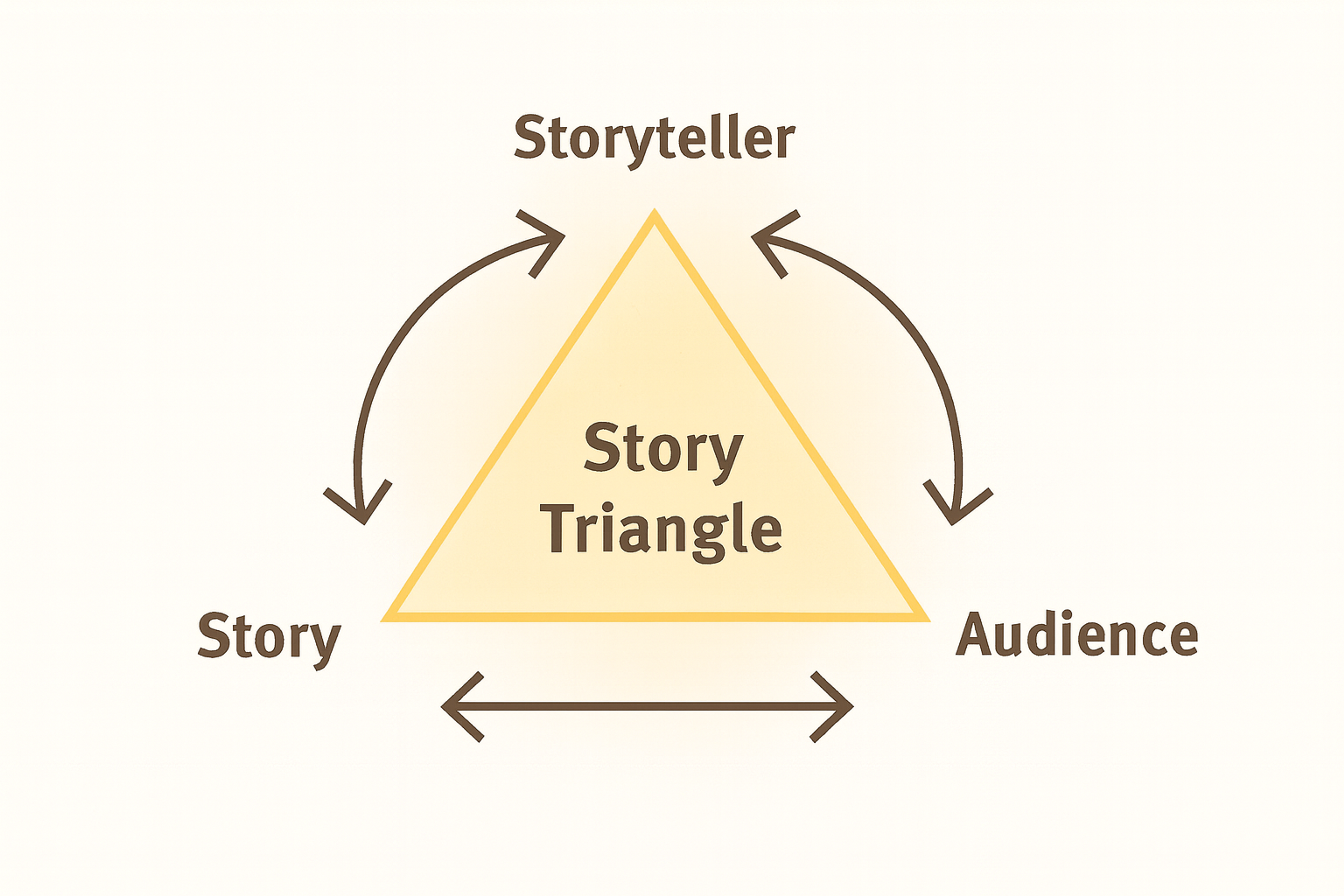
A Story Triangle
Key Takeaways
Storytelling in UX design creates emotional connections, making interactions more engaging and memorable. By turning features into relatable narratives, designers can build empathy and enhance user experiences.
It’s key in onboarding, user research, and interface design, guiding users and fostering trust. However, storytelling should remain simple and avoid overcomplicating or misusing humor. As UX evolves, AI and immersive experiences will offer even more personalized interactions.
What Is UX Storytelling?
UX storytelling links features into a small, human story. It trades specs for people, problems, and wins. Instead of “The app syncs your data,” try “Dara lifted her backpack. For once, her old laptop kept her lecture notes.”
Good UX stories build empathy and clarify user needs. They make the product feel useful, familiar, and worth using.
A strong story starts with a character facing a stubborn problem. She finds the product, tries a few taps, and things improve. The arc echoes a simple hero’s journey. It turns product use into a short, satisfying win, not another chore.
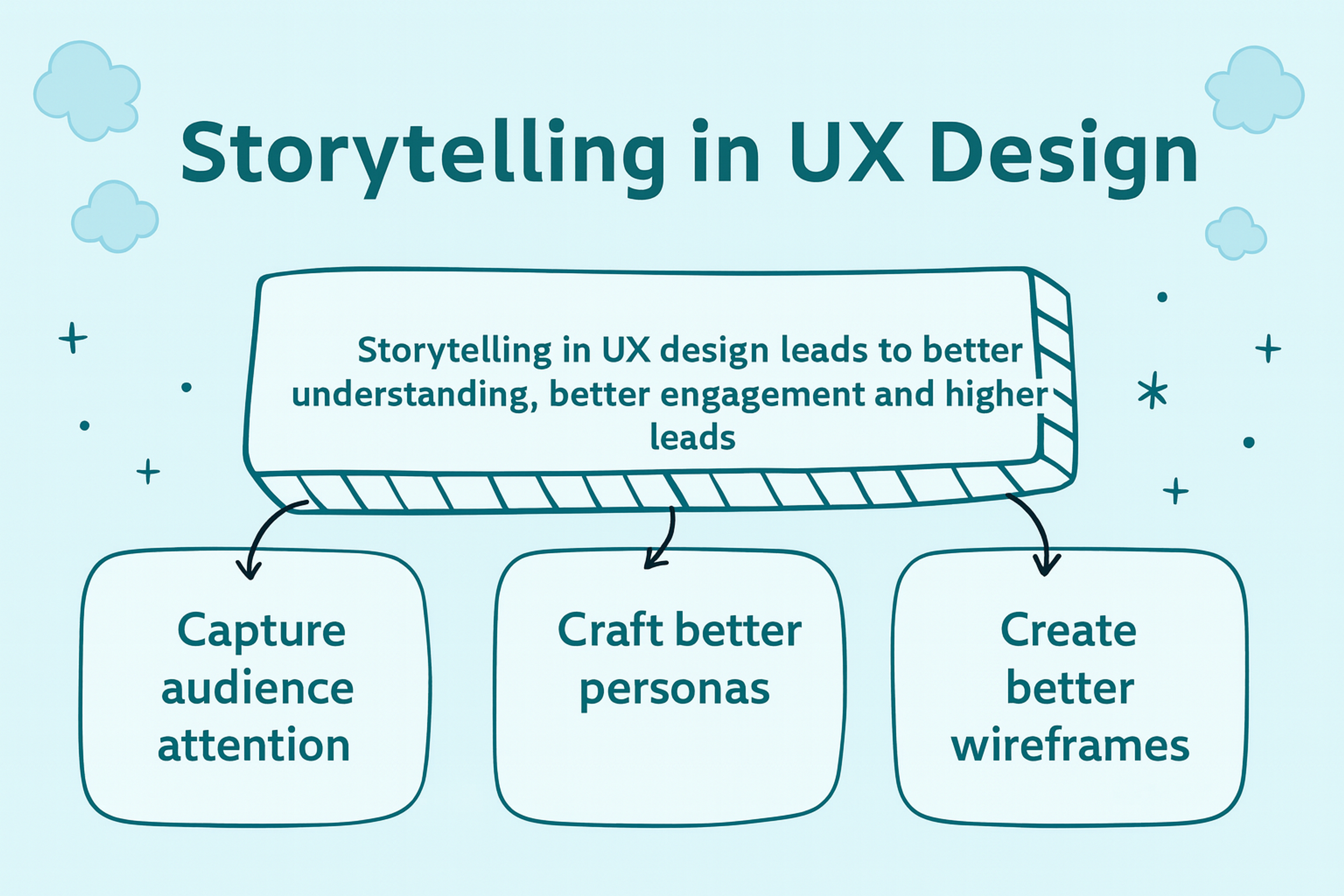
3 Reasons Why Including Storytelling in UX Design
Why Do You Need Storytelling in UX?
Humans have campfires in their bones. We spun yarns long before we built websites or wrote college textbooks to pass the time.
That ancient habit still lights up the same part of your brain as a fresh smartphone notification. A story clicks, invites you in, and says, Hey, picture this for a minute.
Designers sometimes forget that people are not just walking eyeballs. Еhey are neighbors, cousins, and friends. Give them plain steps, and they zone out. Give them a plot twist, and suddenly, they want to know what happens next.
A tale that mirrors a user’s morning commute or weekend market run flips a switch. The listener thinks, “Wow, this product sees me,” empathy is born in real time.
Stories don’t only comfort. They yank focus back to the person using the app. Personas, journey maps, and even dull-looking user scenarios are mini-stories dressed in business casual. Journey mapping and creating a journey map help visualize the user's journey, uncovering pain points, emotions, and opportunities for improvement throughout user journeys.
After user scenarios, incorporating storytelling into journey mapping is a common practice among design teams to engage audiences and share stories with stakeholders, making user insights more memorable and actionable.
What Makes a Strong UX Story
Every strong UX story uses four pieces: a person, a place, a problem, and a path. In step one, choose a real user. In step two, put them in a familiar setting. Show the snag they face. Then present the fix your product offers.
Use a simple arc: rising action, climax, falling action, and a clear ending. Think of it as a story mountain. This structure helps the story stick with users.
Add feelings. Ask what the user feels before and after. Before the fix: confused, rushed, or frustrated. After the fix: calm, proud, or relieved.
Emotion holds the story together. It turns moments into memories. Without it, the plot falls flat.
Length does not matter. Even one sentence can show the struggle and the win. Short can still be powerful.
Where to Use Stories in UX
You can use storytelling at many points in the design process. Storytelling helps create experiences in digital products and design projects by connecting with users on an emotional level and guiding them through engaging narratives. Here’s where it has the biggest impact:
- Communicating ideas and concepts clearly to stakeholders and team members.
- Using visual storytelling, such as photos and videos, to enhance UI/UX design and evoke emotions.
- Building empathy for users by sharing their backgrounds and needs.
- Shaping the narrative structure of your design project with strong underlying concepts.
- Guiding users through digital products with compelling stories that foster trust and engagement.
Onboarding
Picture the first five minutes someone spends with you, like the opening scene of a movie. If that moment is clunky or drags on, most folks will hit the back button without a second thought. Onboarding is especially crucial for a new app, as it helps users feel welcomed and guided from the very start. Do it right, though. The same users will stick around curious to see what happens next.
A winning onboarding sequence reads like a mini-narrative. It gently shows newcomers what buttons to press and the rewards they’ll snag, such as personalized recommendations tailored to their preferences. Take Duolingo, for example!
A cheerful green owl walks users through each step, chatting in a tone that feels more like a buddy than a bot. You already think more intelligently and confidently when you’ve answered a handful of questions.
User Research
User research is more than charts. It whispers real-life noise. UX research and usability testing help uncover the challenges users face by revealing their authentic needs, emotions, and experiences.
Interviews and surveys give designers short, everyday narratives illuminating a stranger’s morning routine.
User Research
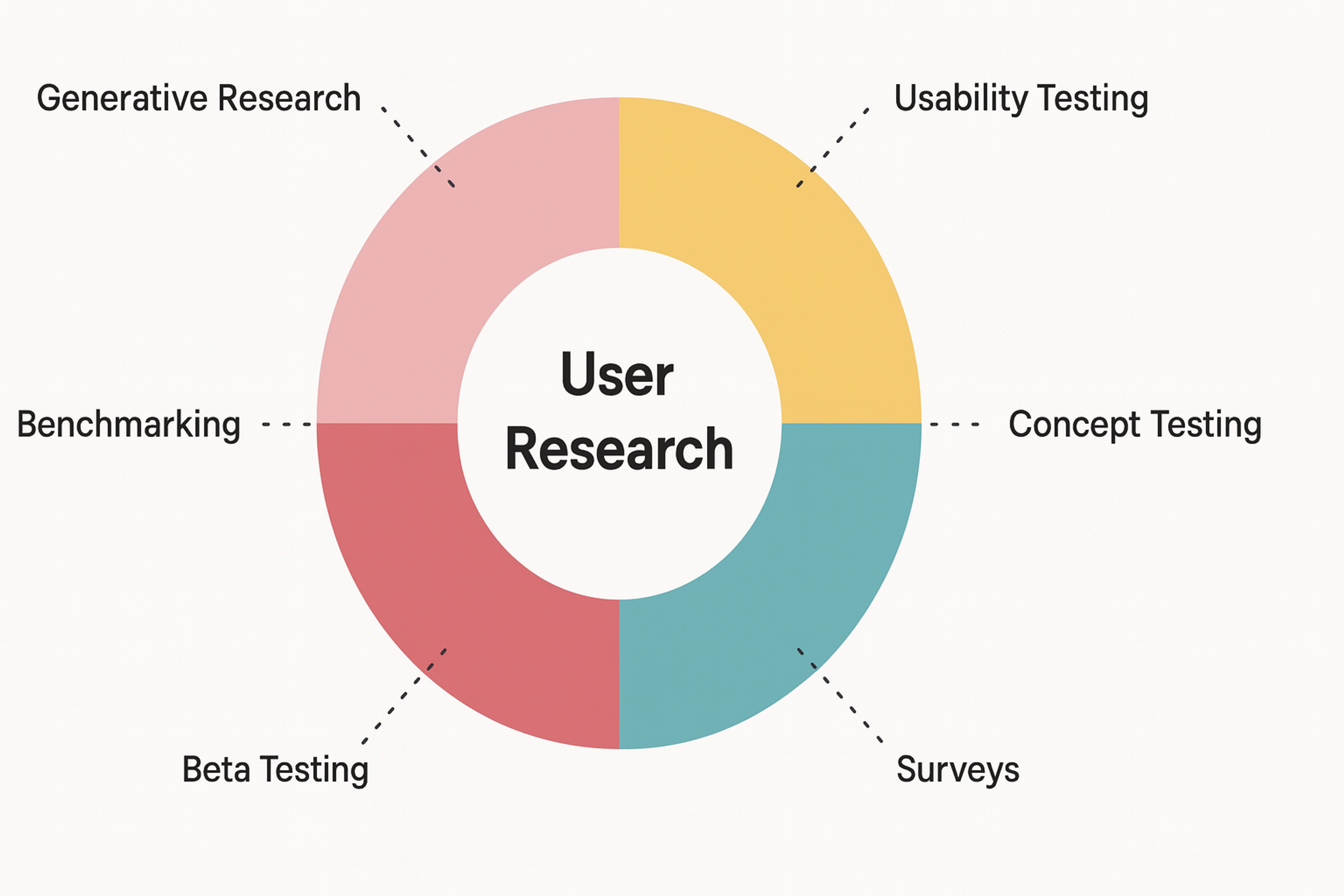
Usability testing provides direct feedback on user experiences, allowing teams to identify and address specific issues users face through methods like A/B testing and prototype testing. That insight becomes a scout report about who will touch the product.
Imagine sharing that Sarah is trying to book a doctor while bouncing a baby in one arm. The scene snaps teammates out of graphs and into genuine empathy. From that fresh place, better design calls feel almost automatic.
Interface and Microcopy
Tiny words are not so small when placed in a user’s palm. A friendly toast after a file saves or a gentle nudge during a loading lull can change a mood in seconds. The text becomes an unsung guide that steers emotion quietly. A skilled UX writer crafts microcopy that helps users feel connected, using language to foster a sense of inclusion and engagement.
Rather than the sterile Error: Code 504, a voice that says, Oops! Something broke. Let’s try that again. It puts a hand on the shoulder. Well-crafted messages like these engage users on an emotional level, making them feel that someone cares and deepening their connection to the experience. Users don’t strictly understand the glitch. They know someone cares.
Product and Brand Storytelling
A company’s voice should match the product it ships. Storytelling in UX ties the experience together and strengthens the brand. Every interaction should reflect the company’s values and personality.
If a brand jokes, its buttons and menus can smile too. If the brand is calm, the interface should stay calm. A loud screen in a quiet app feels wrong.
Consistency builds trust. When logos, colors, and tone align, users relax. Clear, steady stories make products more engaging and motivate people to act.
Predictability also helps. Customers stop guessing how updates will feel. They arrive already tuned to the mood.
It’s the difference between a practiced jazz set and a band winging it. One feels intentional. The other feels off.
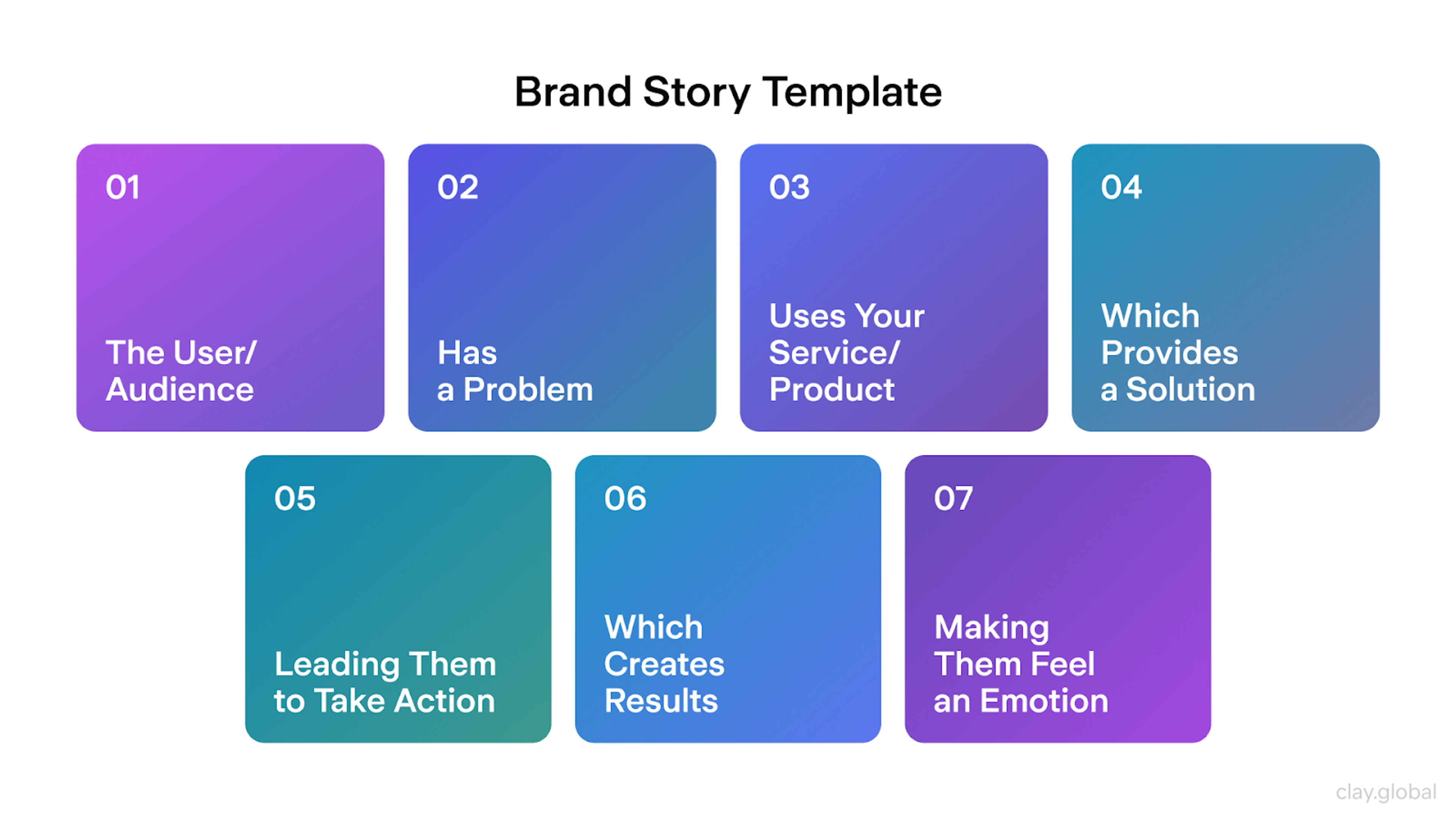
Brand Story Template by Clay
How to Do Storytelling Right
Telling a gripping story in UX is like laying a good sidewalk: it should feel even underfoot. To create truly engaging user experiences, designers need to actively use their storytelling skills to craft narratives that resonate with users.
Pretty words alone won’t carry your users forward. You have to picture the folks behind the screen, their messes, and the small victories — and even plot twists — that keep them clicking.
To see effective storytelling work in action, consider including a case study that demonstrates how these techniques can be applied in real-world UX design.
Start with Real People
Solid UX tales aren’t drawn from a cape-wearing hero. They spring from your next-door neighbor trying to book a flight. Identifying your target users and understanding the user's perspective is crucial for crafting stories that resonate and address real needs. Those neighbors’ eyes, habits, and surprising worries make the story live.
Hop on a video chat, slide into a coffee shop, or watch the help desk for half an hour. Eavesdrop guilt-free. The phrases half-smiled users toss out cues like I always hit a wall at check-out or I want this over already-become bones for your next design.
Keep It Simple and Clear
Fancy talk is the velvet rope no one asked for. Writing a clear article can help communicate UX storytelling principles effectively, making complex ideas accessible to a wider audience. Write how you’d explain something to an eighth-grader, then trim any extra flourishes.
The failed authentication sounds like bad news delivered by a robot. Try. We couldn’t log you in. Give it another shot. The second version feels more like a polite coworker than a digital door slammer.
Watch the mood. A login glitch earns a straight face, but an empty cart bit can afford a wink or two. Matching tone to moment keeps the story feeling honest.
Show the Story Visually
Good design shows the story before a single word is read. Gentle colors, crisp spacing, and tiny animations pull visitors in.
A well-placed micro-animation can act like a friendly arrow, pointing to the next step. Simple icons often tell more than a caption ever could.
Our website for Joe & The Juice is a great example. The bold layout, confident use of pink, and smooth transitions tell a clear story about energy, youth, and movement. Without saying a word, the design speaks to the brand’s fresh, fast, and stylish feel. You feel the vibe before reading a line of copy — and that’s strong visual storytelling.
Joe & The Juice website
Test your Story with Users
A perfect tale in the designer’s head can still fall flat on the first test. Honest feedback is the sharpest mirror. Gathering user feedback is crucial for refining storytelling elements and ensuring the narrative resonates with your audience.
Ask users which part felt obvious and which part felt like a riddle. Tune in when they say it clicked or, worse, when they hit a wall.
If the story falls short, scrap that chapter and try again. Redesign, rewrite, repeat — this cycle builds the final shine. Ongoing UX work means continuously testing stories, gathering user feedback, and making improvements even after launch.
What to Avoid
Not all stories improve the user experience. Sometimes, storytelling can get in the way, distract users, or even make things worse. A common example is when a narrative is so elaborate that it overshadows the main functionality, leaving users confused about what to do next. Good UX storytelling should always serve a purpose. It should help the user, not confuse or slow them down.
Below are some common mistakes to avoid when adding storytelling to your design.
Don’t Force a Story Where It Doesn’t Belong
If users just want to finish a task, don’t slow them down with a long story.
For example, someone checking out online doesn’t want to read a funny paragraph about your company’s values. They want to pay and leave. Save storytelling for places where it adds clarity or comfort.
Don’t Overdo Personality or Cleverness
It’s tempting to make your writing fun, playful, or full of jokes. While a light tone can work well in some places, it doesn’t belong everywhere.
When humor is forced or used too often, it can distract from the task. Worse, it can annoy users who just want help.
Avoid this mistake by:
- Matching tone to the context (helpful for errors, friendly for onboarding)
- Testing humor with real users to see how it lands
- Using personality in small touches, not everywhere
Remember: a little personality goes a long way.
Don’t Make Up Fake Problems
If your story isn’t based on real user needs, it won’t help your design. It might even confuse your team or lead to the wrong solutions.
Stories should come from research, not imagination. When you invent a user problem just to fit a cool narrative, you risk solving something that doesn’t exist.
Always build your stories from:
- User interviews and surveys
- Real behavior data
- Customer support feedback
- Testing and usability studies
Stories that reflect real pain points will lead to better solutions.
Be Careful with Tone, Culture, and Inclusivity
Your story should feel natural to a wide range of users. Jokes, references, or expressions that seem harmless to you might confuse or offend someone else.
People come from different cultures, speak different languages, and have different values. A story that feels fun or “normal” to one group may not work for another.
To avoid these issues:
- Write with respect and clarity
- Avoid slang, jargon, or pop culture that might not be universal
- Use inclusive examples that reflect a diverse group of users
Always test your content with different types of users. Make sure it feels welcoming and understandable to everyone.
Real Examples of Great UX Storytelling
You don’t need to look at big-name apps to find great UX storytelling. Many smaller or niche digital products use storytelling in smart and meaningful ways. By weaving a compelling story into the user experience, these products guide users, reduce stress, and make experiences feel personal — all through well-crafted stories.
Here are some lesser-known but powerful examples:
Noted
Noted is an audio note-taking app that helps people capture spoken ideas and tag them in real time. Its UX gently introduces new users with a story that’s both simple and clear.
The onboarding feels like a short narrative. It walks the user through a day-in-the-life use case — “You're in a meeting, and your ideas are flowing…” — to show how the app solves a real problem. At each step, it connects features with moments users can imagine.
Why it works:
- It uses storytelling to place the user in a relatable situation.
- It explains features through action and emotion.
- The app feels like a tool made for thinkers, not just note-takers.
This approach makes learning the app feel like preparing for success.
Balance
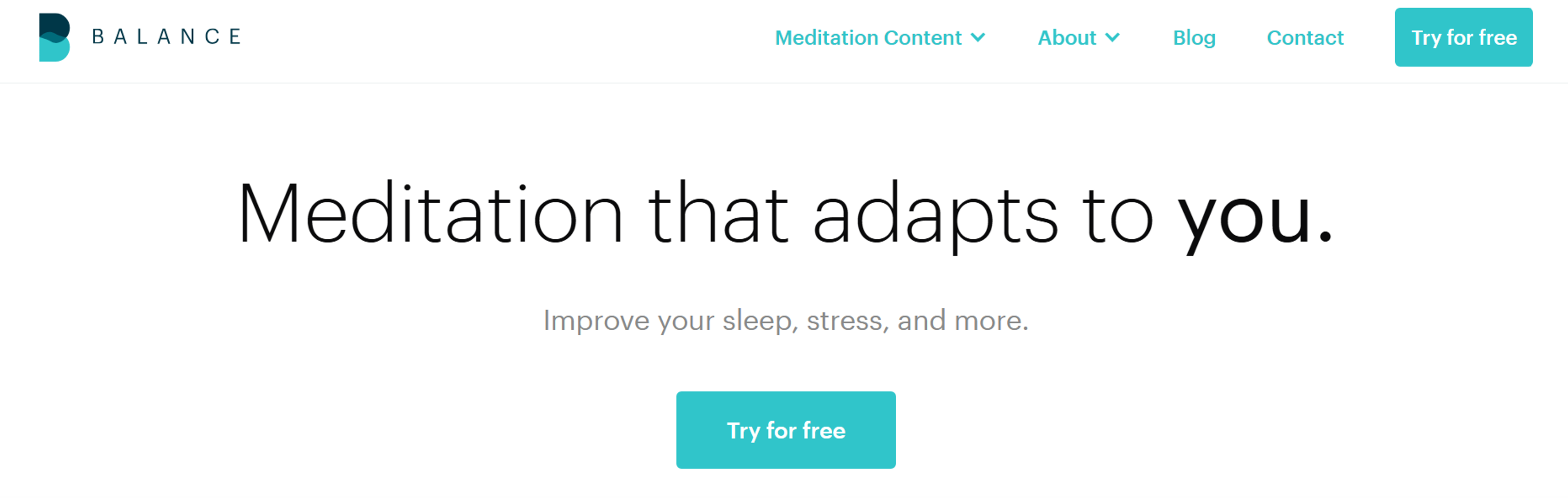
Balance doesn’t just offer meditation tracks — it creates a daily plan based on your answers and experiences. From the first use, it asks you questions like, “How did you sleep last night?” or “What are you dealing with today?”
Each response shapes the content you receive. It feels like the app is writing a story with you, adjusting the path based on your current needs. Its voice is calm, supportive, and human.
Source: balanceapp.com
Why it works:
- The story responds to the user, not the other way around.
- It builds trust by acknowledging daily changes in mood or stress.
- The design feels like a conversation, not a list of options.
Balance turns static content into a dynamic user journey — unique to each person.
Readwise
Readwise helps users retain information from books, articles, and highlights. Its storytelling isn’t flashy — but it’s smart and subtle.
The app doesn’t just show your highlights. It reminds you of what you’ve saved, when you saved it, and why it matters. Over time, it helps you “revisit your learning journey,” creating a sense of growth and depth.
Each daily email or app session feels like a page from a personal book you’re writing — with insights, reminders, and gentle prompts to reflect.
Why it works:
- It turns data into meaningful moments of learning.
- It frames reading as a story of long-term growth.
- It makes the user feel like the main character in their own learning path.
This form of storytelling builds a habit and encourages reflection — without needing long explanations or complex visuals.
The Future of UX Storytelling
Emerging Technologies and Narrative Innovation
The future of UX storytelling involves emerging technologies that create new possibilities for narrative engagement while requiring new approaches to story design and user experience.
AI-Powered Personalized Narratives
Artificial intelligence enables dynamic story generation that adapts to individual user preferences, behavioral patterns, and contextual factors in real-time. These systems can create personalized character representations and adjust narrative complexity based on user expertise. They modify emotional tone based on current mood indicators and generate culturally relevant story elements for diverse user populations.
Immersive and Spatial Storytelling
Virtual and augmented reality technologies create new possibilities for spatial narratives that surround users with story elements. They enable embodied story experiences and support collaborative story construction in shared virtual environments.
Voice and Conversational Narratives
Conversational interfaces require new approaches to narrative design that work within the constraints of voice interaction while leveraging the intimacy and natural feel of spoken communication.
FAQ
Can Storytelling in UX Design Actually Change User Behavior?
Yes, storytelling in UX design creates emotional connections that increase user engagement and retention. When users resonate with a narrative, they’re more likely to interact with and recommend the product.
How Do You Find the "Right" Story for a User Experience?
The right story is based on user research. By understanding their needs, pain points, and desires through surveys and interviews, you can craft a narrative that aligns with their real-life experiences.
How Does UX Storytelling Differ from Traditional Marketing Storytelling?
UX storytelling focuses on enhancing the user journey, guiding interactions, and solving problems. In contrast, marketing storytelling aims to promote and sell a product, often without focusing on the user's experience.
Can Bad Storytelling in UX Design Actually Hurt My Product?
Yes, poor storytelling can confuse users, detract from the user experience, and lead to frustration. A mismatched or forced narrative can hinder usability and engagement.
Read more:
Conclusion
Storytelling is one of the most powerful tools in UX design. It helps people understand your product, remember how to use it, and care about what it offers.
Whether you're writing a message, designing a screen, or planning a user flow, always ask: What story am I telling? Who is it for? How do I want them to feel?
If you focus on those answers, you’re already designing with empathy — and that’s what great UX is all about.


About Clay
Clay is a UI/UX design & branding agency in San Francisco. We team up with startups and leading brands to create transformative digital experience. Clients: Facebook, Slack, Google, Amazon, Credit Karma, Zenefits, etc.
Learn moreAbout Clay
Clay is a UI/UX design & branding agency in San Francisco. We team up with startups and leading brands to create transformative digital experience. Clients: Facebook, Slack, Google, Amazon, Credit Karma, Zenefits, etc.
Learn more