

Updated for October 2026. No paid placements.
AI is reshaping how we design digital products. We think no one can argue with that in 2026.
It's no longer just about adding a chatbot or running automated workflows. The best design teams are now building products where AI is fundamental to the experience itself. They're creating interfaces that adapt to users, systems that learn from behavior, and tools that get smarter over time.
Finding agencies that actually ship this work is harder than it sounds. Most teams talk about AI. Fewer build with it. Even fewer do it responsibly.
This list features agencies that do all three. They design human experiences and the AI that powers them.
Start Here for a Quick Review
If you want the short version, these are the strongest picks by use case:
- Best for startups: Mission Control
- Best for digital-first brands: Clay
- Best for enterprise and complex transformation: DEPT®
- Best for regulated and data-heavy industries: Work&Co
- Best for consumer-facing brands: Huge
- Best for innovation strategy and responsible design: IDEO
- Best for bold, high-visibility creative work: AKQA
- Best for next-generation product concepts: Fantasy
- Best for human-centered product design: Ustwo
- Best for rapid prototyping and technical storytelling: Instrument
The best AI-first design agency is the one that aligns with your stage, category, and the specific problem you're trying to solve.
Why The AI-First Design Approach Matters Now
Design is moving from static screens to adaptive systems. Products now anticipate needs, personalize what you see, and change with use.
The tools used to create these experiences are evolving too. This August, Adobe introduced an AI-Assisted Editor in Photoshop, giving creatives a dedicated interface for editing with natural-language prompts alongside traditional tools.
As AI becomes a standard part of both products and creative workflows, the advantage is no longer simply using it. The real differentiator is designing with AI in a way that feels useful, intuitive, and trustworthy.
Good partners start from the problem and its constraints, then use AI where it actually makes sense. That requires teams fluent on both sides. The human side, where empathy and clarity matter most, and the technical side, where model behavior, latency, and data quality shape what's actually possible.
What an AI‑First Design Agency Actually Does
Most design agencies focus on how a product looks. AI-first design agencies shape how a product thinks, including how it responds to user behavior, handles edge cases, and communicates uncertainty without losing trust.
In practice, that can include:
- Interfaces designed to show how confident the model is, so users know which outputs to rely on.
- Flows built for the cases where the system is wrong, since no model is right every time.
- Web pages written so a person and a language model can both understand them, given that a growing share of visitors now arrive through AI-generated answers.
- Copy created to survive being paraphrased by a chatbot, not just to be read on a website.
- Products shaped to adapt as they learn a user's patterns, without making the interface feel unpredictable.
How We Rate These AI‑First Design Agencies
We score every agency on this list using the same evidence‑based criteria, focused on real deliveries, responsible AI design, and measurable outcomes, not marketing claims.
Each agency can earn up to 25 points across five areas. Each area is scored 0-5, and points are awarded only when the work is verifiably demonstrated in public case studies, live products, or third‑party proof.
The Five Checks
- Problem & AI Strategy (0-5). How clearly the agency defines AI’s role in a product, including human–AI interaction, trust patterns, and feature logic.
- Human‑Centered Research (0-5). Presence of user research, testing, behavior insights, and validation evidence that informs AI design decisions.
- AI UX & Interaction Quality (0-5). Practical interaction quality, adaptive flows, conversational or predictive design where AI is baked into the experience.
- System Execution & Scalability (0-5). Evidence of scalable design systems, workflow integration, API or data pipeline consideration, and extensibility.
- Proof & Trust Signals (0-5). Depth of case studies, noteworthy clients or launches, awards, or independent validation when available.
Agencies are ranked based on their total score out of 25. If scores tie, we break ties by Proof & Trust Signals first, then AI UX & Interaction Quality, then Problem & AI Strategy.
Best AI-First Design Agencies by Business Need
A top score matters, but it rarely tells the whole story. The right agency depends on what you're building and where the design challenge actually sits.
Best AI-first design agencies for web design and development
These agencies design and build websites, from landing pages to full web platforms. Sites have their own logic, so they need a team that ships them regularly.
Top picks:
Best AI-first design agencies for UI/UX design
The deliverable here is the interface layer, including user flows and interaction patterns. These teams live on research and prototyping, and AI shows up as layouts that adapt to behavior.
Top picks:
Best AI-first design agencies for branding
The focus here is naming, visual systems, and brand guidelines. Strong identity work starts with strategy, while AI speeds up concept development along the way.
Top picks:
Best AI-first design agencies for product design
Full digital products, taken from strategy to launch. Systems thinking is the core skill, and AI gets built in as smart recommendations and experiences that improve with use.
Top picks:
Top AI‑First Design Agencies – October Rankings
1. Clay
Clay Agency
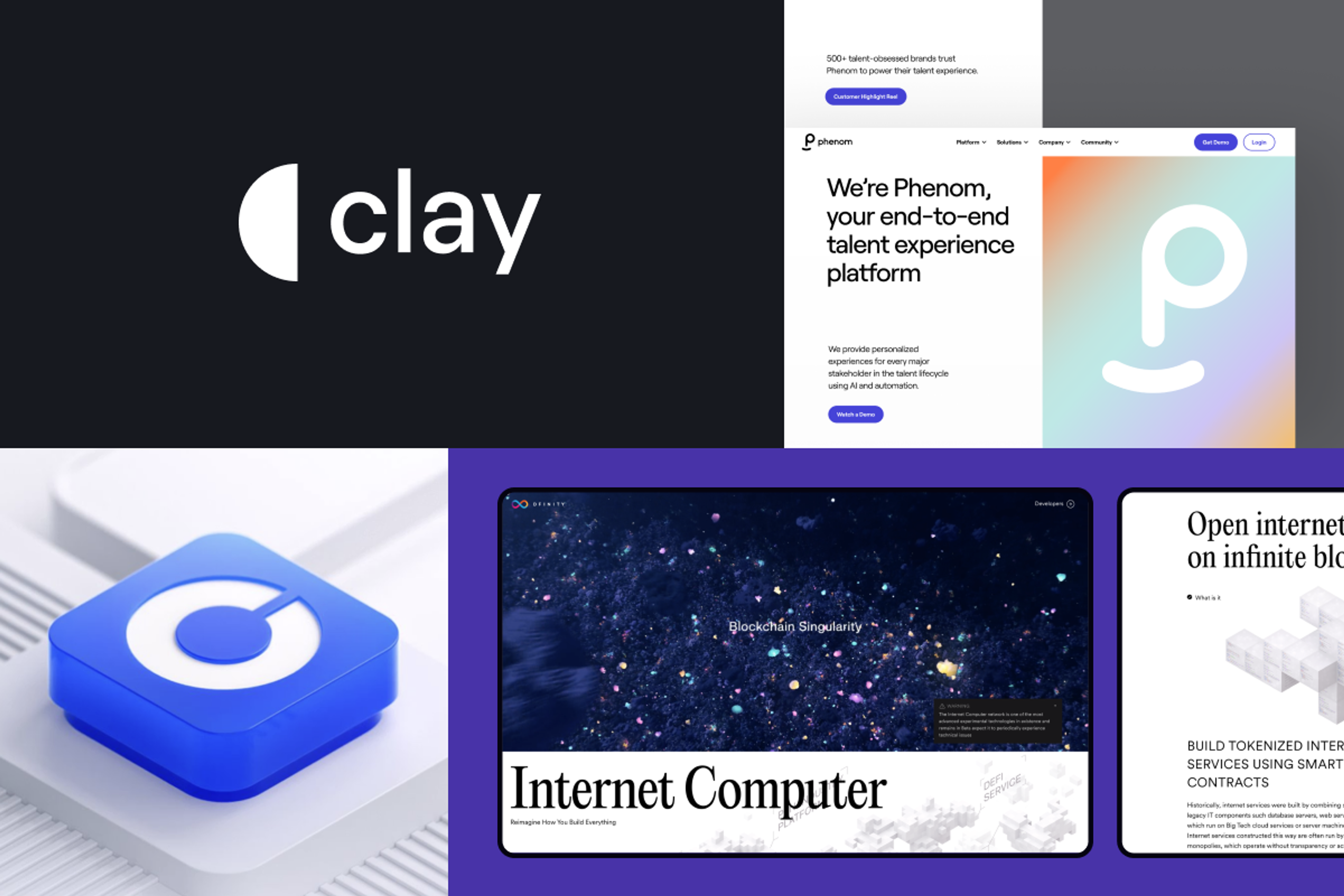
Best for: product design, design systems, web & app design, brand identity, full-stack web development
Best suited to: technology leaders, fintech, crypto/Web3, enterprise platforms
Why they stand out: Clay is known for shaping complex digital ecosystems where brand and product design work together as one. Their portfolio includes projects for Slack, Coinbase, and Google, making them a strong choice.
Clay is strongest when a brand needs product design and identity to function as one system, from the first touchpoint through to the digital product itself.
Potential drawback: Companies seeking only a light visual update may not require this degree of strategic and digital expertise.
Why companies choose them:
- Brand and product work as one, not two separate tracks
- Built for technically complex categories like fintech, B2B, and Web3
- Systems that scale, not just deliverables
Why is it AI-First? Clay embeds AI into its design processes (accelerating prototyping, testing, and system consistency) so that brands and products are polished and engineered to adapt in a rapidly evolving digital landscape.
Our Score: 23/25
- Problem & AI strategy 5/5
- Human‑centered research 4/5
- AI UX & interaction quality 5/5
- System execution & scalability 4/5
- Proof & trust signals 5/5
Reviewer's take: Clay's strength is coherence. The brand, the product, the system all hold together in a way that's rarer than it should be. For complex digital products where brand and UX need to pull in the same direction, they're one of the few agencies that can deliver that without the wheels falling off mid-project.
Independent Proof
- Clutch profile
- CSS Winner profile
- Awwwards profile
2. DEPT®
DEPT Agency
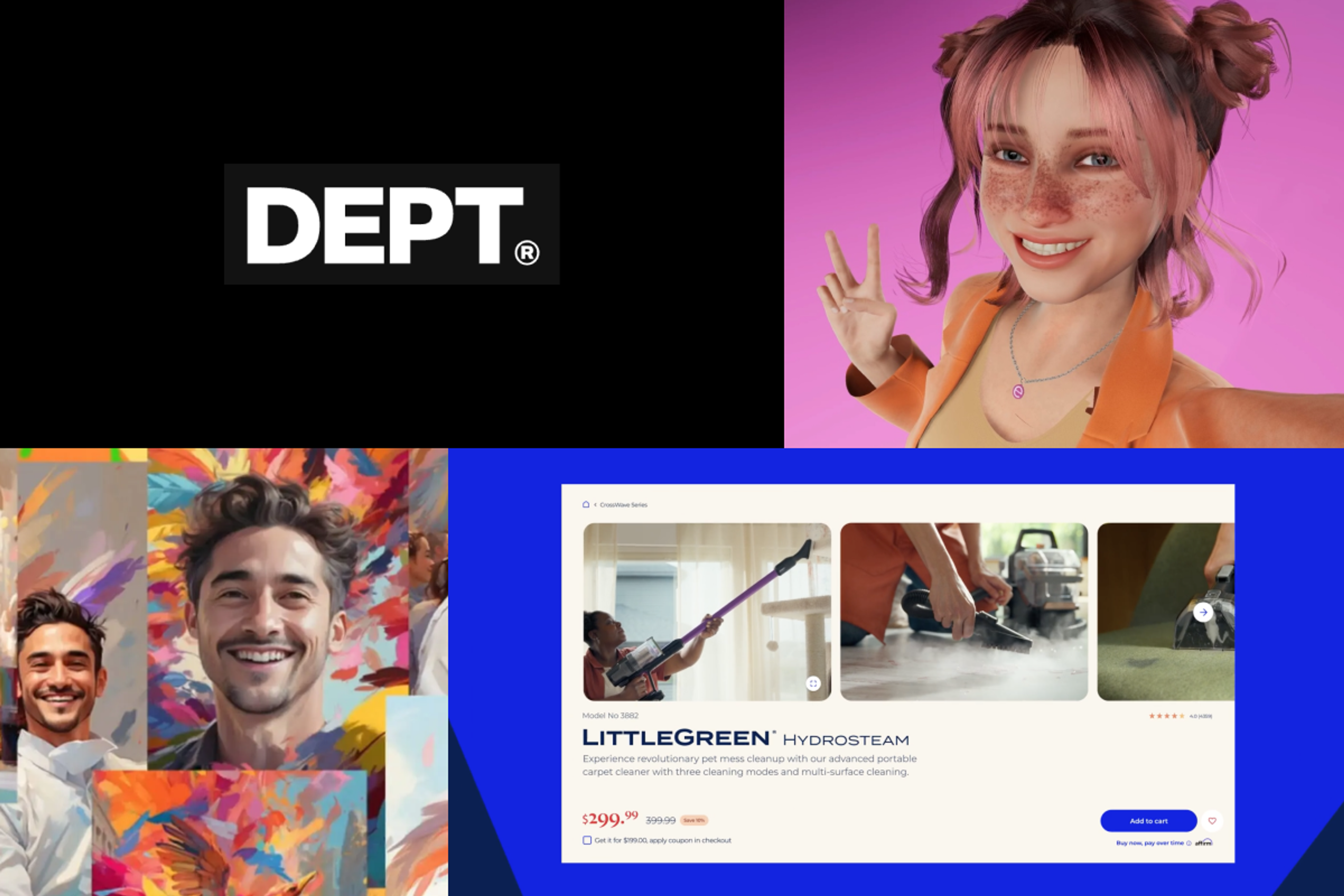
Best for: AI transformation, digital products, customer experience, brand platforms, media
Best suited to: enterprise brands, multinational companies, complex transformation projects
Why they stand out: DEPT® is one of the first major agencies to build a dedicated AI transformation practice, with a team of 4,000+ specialists spanning strategy, data infrastructure, customer experience, and AI-powered marketing across 30+ countries.
Potential drawback: Too large and process-heavy for smaller or founder-led teams.
Why companies choose them:
- End-to-end AI transformation capability
- Global scale, local execution
- Proven with eBay, Google, Samsung
Why is it AI-First? DEPT® doesn’t just use AI as a design tool: it helps organizations reimagine entire business models around AI, embedding intelligence into products, services, and customer engagement.
Our Score: 22/25
- Problem & AI strategy 5/5
- Human‑centered research 4/5
- AI UX & interaction quality 4/5
- System execution & scalability 4/5
- Proof & trust signals 5/5
Reviewer's take: DEPT® didn't add an AI practice as an afterthought. They reorganized around it early, which shows in the depth of what they offer. For enterprises that need transformation at volume across markets, teams, and channels, they're one of the few agencies genuinely built for that scope.
Independent Proof
3. Mission Control
Mission Control Agency
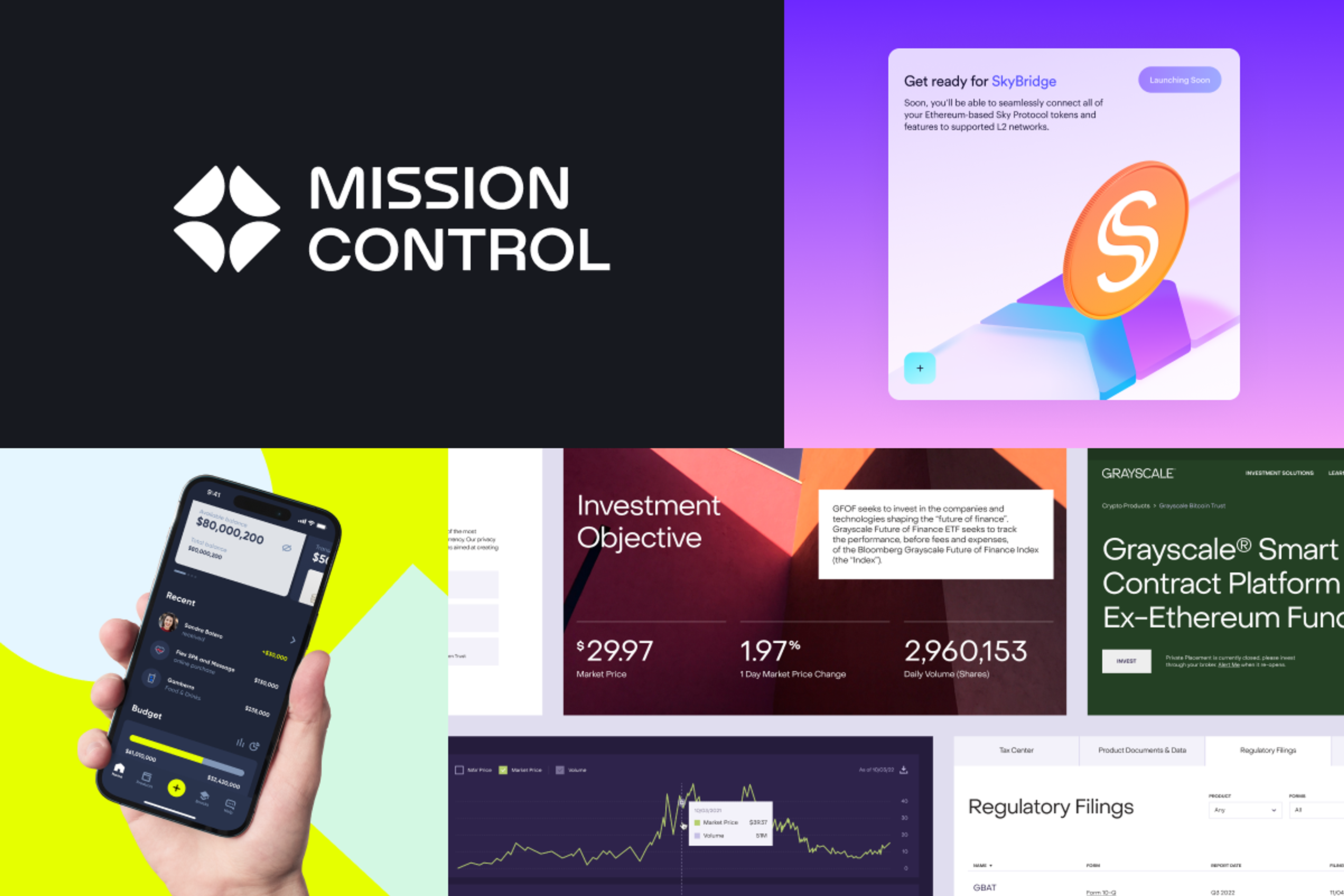
Best for: brand strategy, brand architecture and identity, brand guidelines, brand experience
Best suited to: startups, fintech, Web3 and crypto ventures, financial services, technology, B2B companies
Why they stand out: Founded by the team behind Clay, Mission Control brings hands-on experience from shaping brands like Slack, Meta, and Coinbase to an agency purpose-built for startups. The focus is on building brand systems that remain coherent under the pressure of rapid growth, with AI-driven workflows that speed up the process without cutting corners on quality.
Potential drawback: A newer agency with less historical proof than longer-established firms.
Why companies choose them:
- Built on Clay's expertise, a startup-focused process
- Flexible pricing and engagement models
- Built for fintech, Web3, and B2B
Why is it AI-First? Mission Control integrates AI tools into strategy and design workflows, enabling faster iteration, sharper insights, and scalable creative systems for startups that need to move quickly without sacrificing quality.
Our Score: 21/25
- Problem & AI strategy 4/5
- Human‑centered research 4/5
- AI UX & interaction quality 4/5
- System execution & scalability 4/5
- Proof & trust signals 5/5
Reviewer's take: The Clay lineage gives them credibility, but Mission Control earns its own. It's a studio that knows what early-stage companies actually need: a brand that holds up during growth, delivered without the process weight of a larger agency. The AI-assisted workflow is a genuine advantage, not a selling point.
Independent Proof
- Awwwards. Honorable Mention for Mission Control
- The Brand Identity feature on Mission Control
4. Work&Co
Work&Co Agency
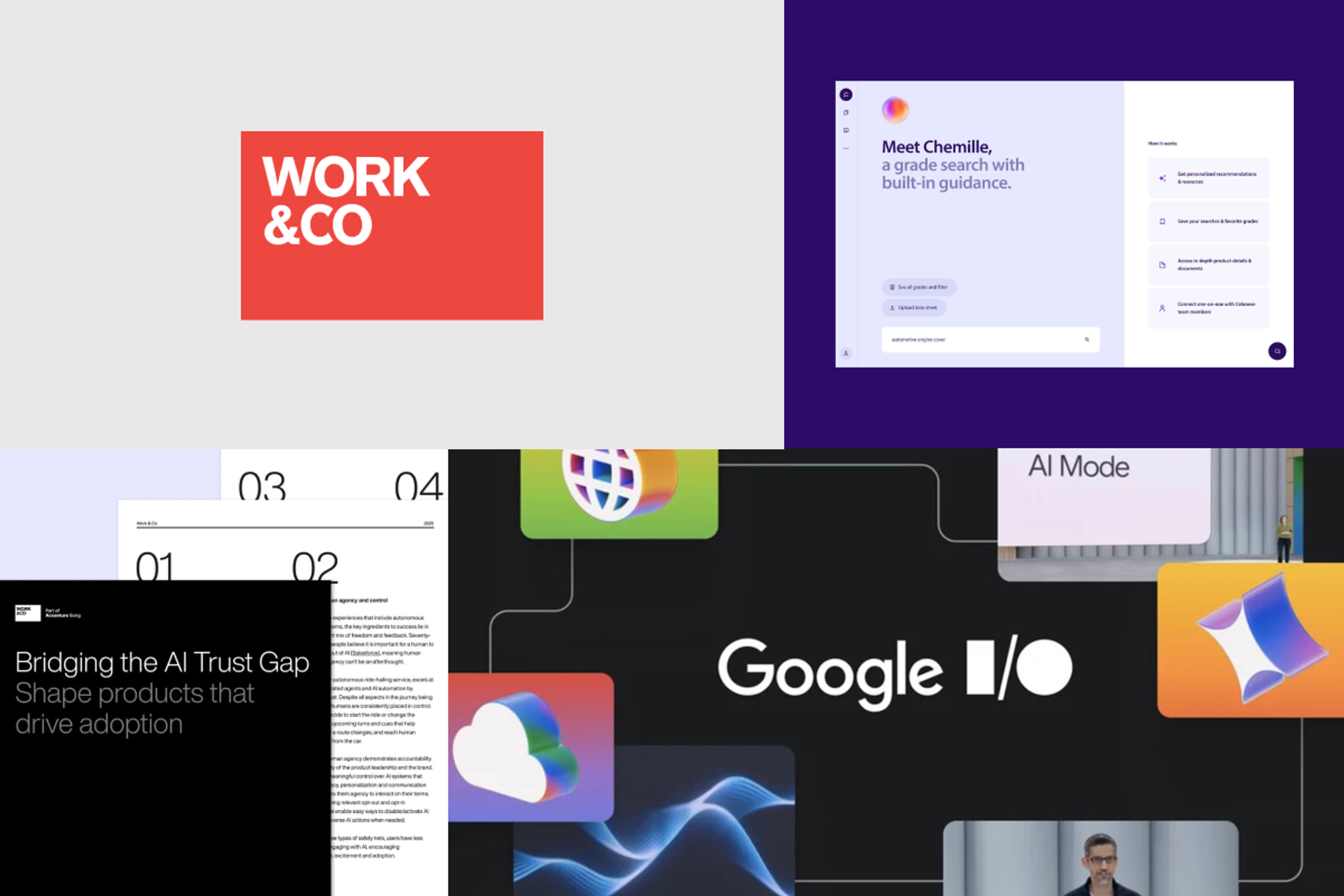
Best for: product strategy, AI-driven platforms, UX/UI design, engineering, digital transformation
Best suited to: enterprises building new AI products and platforms in data-heavy or regulated industries
Why they stand out: Work&Co is a product agency with 500+ specialists across design, engineering, and strategy, trusted by Fortune 500 companies to ship mission-critical digital products.
Founded in 2013, they have built a strong track record of taking complex AI briefs in demanding industries like pharma and materials science, all the way from concept to launched product.
Potential drawback: Less suited to companies seeking brand-first or concept-led work.
Why companies choose them:
- Ships AI products, not just concepts
- Cross-functional design and engineering teams
- Proven in regulated industries
Why is it AI-First? Work&Co treats AI as a foundational technology for new product ecosystems. Their launches, such as Pfizer’s Health Answers and Celanese’s Chemille, prove that AI can deliver enterprise-ready solutions.
Our Score: 21/25
- Problem & AI strategy 5/5
- Human‑centered research 4/5
- AI UX & interaction quality 4/5
- System execution & scalability 4/5
- Proof & trust signals 4/5
Reviewer's take: Work&Co's reputation is well-earned. For enterprises that need an AI product built and launched rather than just designed and presented, they're a strong choice.
Independent Proof
5. Huge
Huge Agency
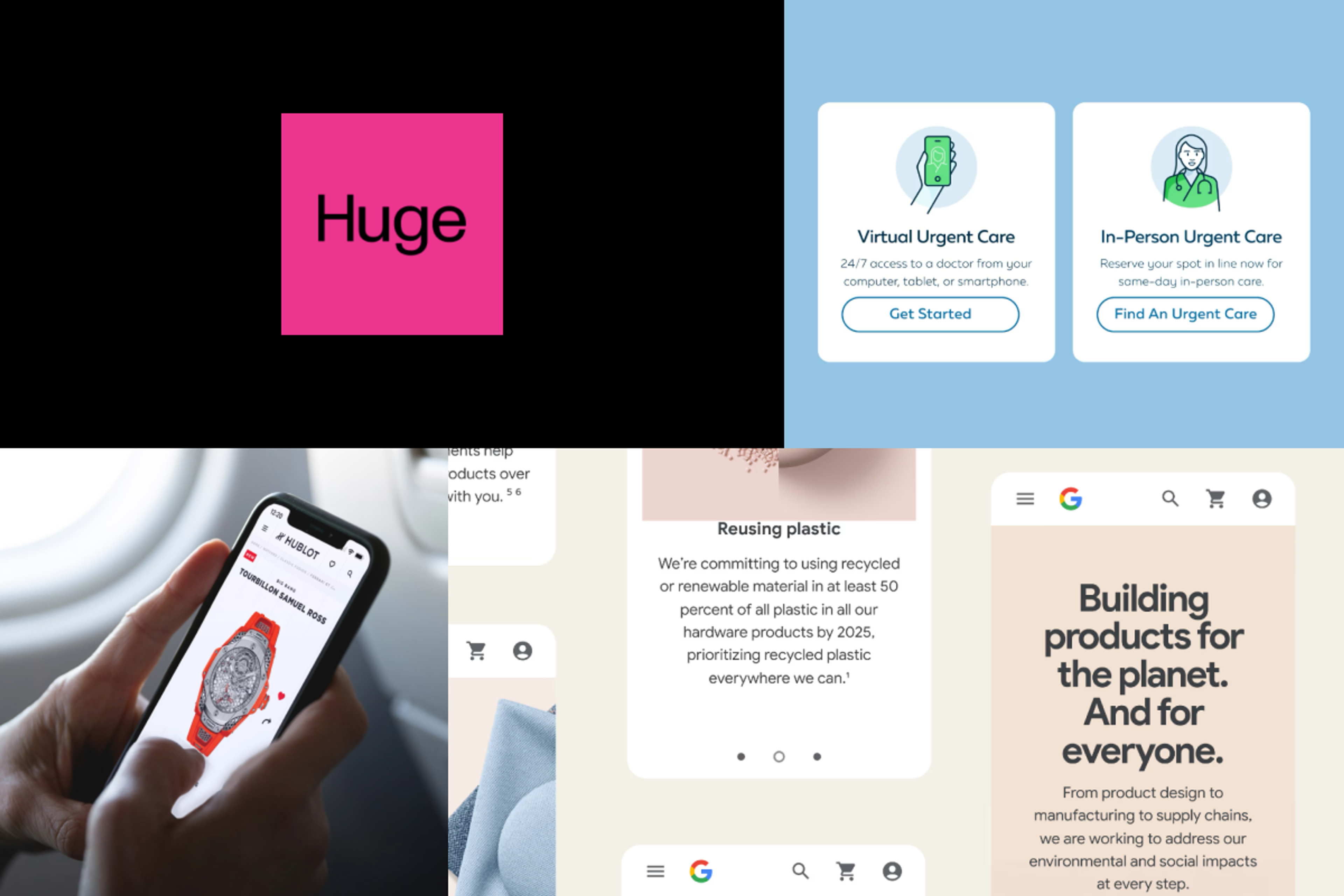
Best for: AI transformation, digital strategy, data science, brand experience, engineering
Best suited to: enterprises modernizing platforms and creating AI-powered customer experiences
Why they stand out: Huge is a global experience agency that has made AI transformation the core of its offering. With capabilities spanning strategy, data science, design, and engineering, they help large organizations rethink how customers interact with their products.
Their work on OLI, an AI-powered conversational guide for the Paris Olympics with NBCUniversal, demonstrates delivery at real scale.
Potential drawback: Smaller businesses are unlikely to need this level of global scale and infrastructure.
Why companies choose them:
- Strong AI transformation track record
- Strategy, design, and engineering combined
- Proven at high-visibility consumer launches
Why is it AI-First? Huge doesn’t just layer AI into existing processes. It uses AI as a foundation for creating new customer experiences, from intelligent assistants to adaptive platforms that learn and improve over time.
Our Score: 21/25
- Problem & AI strategy 5/5
- Human‑centered research 3/5
- AI UX & interaction quality 4/5
- System execution & scalability 4/5
- Proof & trust signals 5/5
Reviewer's take: Handled a complex, high-visibility AI experience with a strong balance of creativity and technical execution. A solid choice for organizations that need both strategic thinking and engineering depth.
Independent Proof
6. IDEO
IDEO Agency
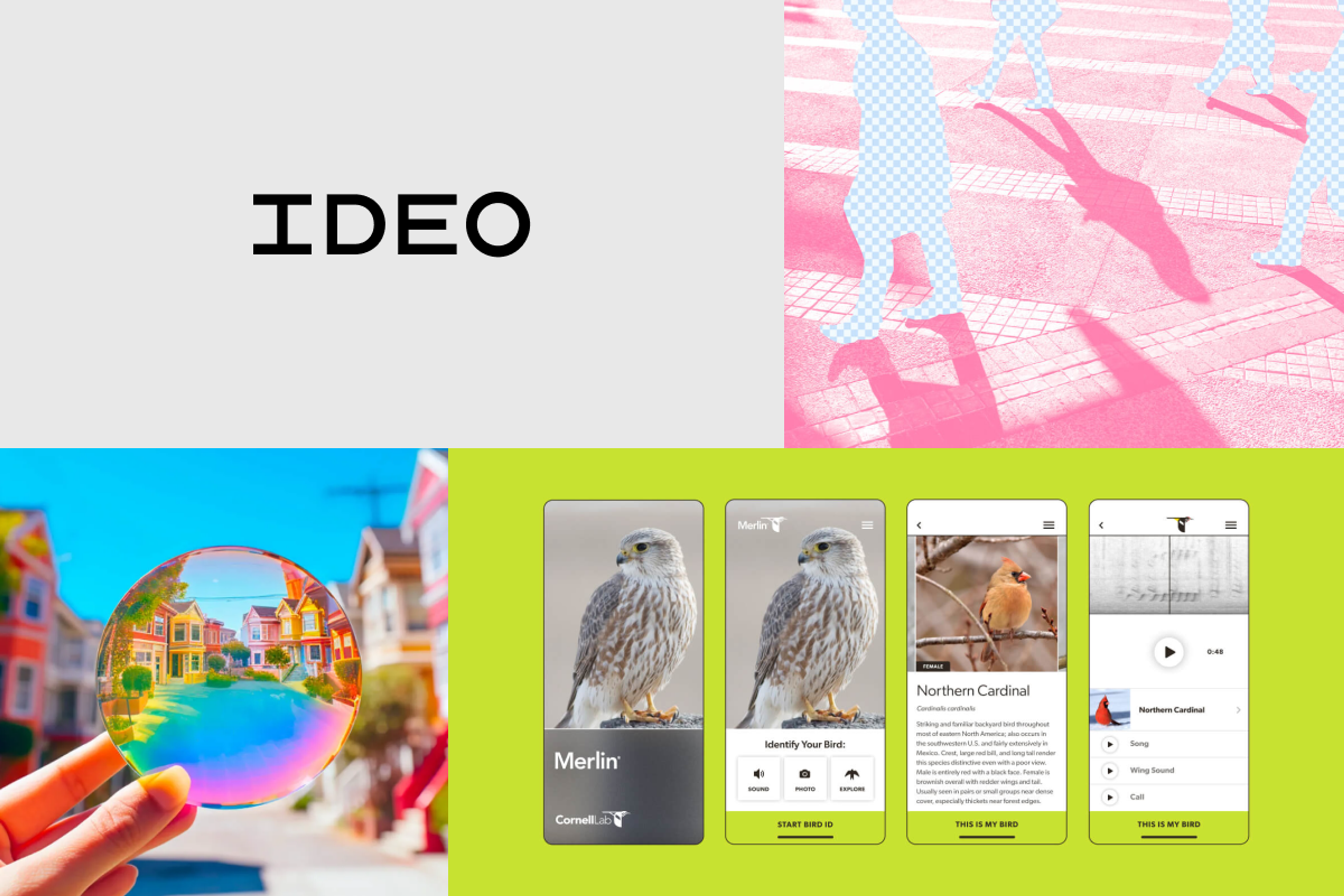
Best for: human-centered design, AI research, innovation strategy, organizational design, product development
Best suited to: organizations aligning leadership, creativity, and responsible AI adoption
Why they stand out: IDEO is one of the most recognized names in human-centered design, with decades of experience shaping how organizations approach innovation. Their work with AI goes beyond tools and interfaces, focusing on how it reshapes creativity, strategy, culture, and ethics at the leadership level.
Potential drawback: More research-oriented than execution-focused, less suited to teams needing to ship fast.
Why companies choose them:
- Pioneer in human-centered design
- Strong AI research and strategy
- Leadership alignment and innovation focus
Why is it AI-First? IDEO positions AI as a catalyst for innovation. Rather than treating AI as a productivity tool, they study and apply it as a driver of long-term growth, creativity, and cultural transformation.
Our Score: 20/25
- Problem & AI strategy 4/5
- Human‑centered research 4/5
- AI UX & interaction quality 4/5
- System execution & scalability 4/5
- Proof & trust signals 4/5
Reviewer's take: IDEO moves slower than most, which frustrates teams under pressure. But when the challenge is aligning leadership around something that doesn't yet exist, that pace becomes an asset. Few agencies combine research depth with this level of strategic thinking, especially when responsible AI adoption is central to the brief.
Independent Proof
7. R/GA
R/GA Agency
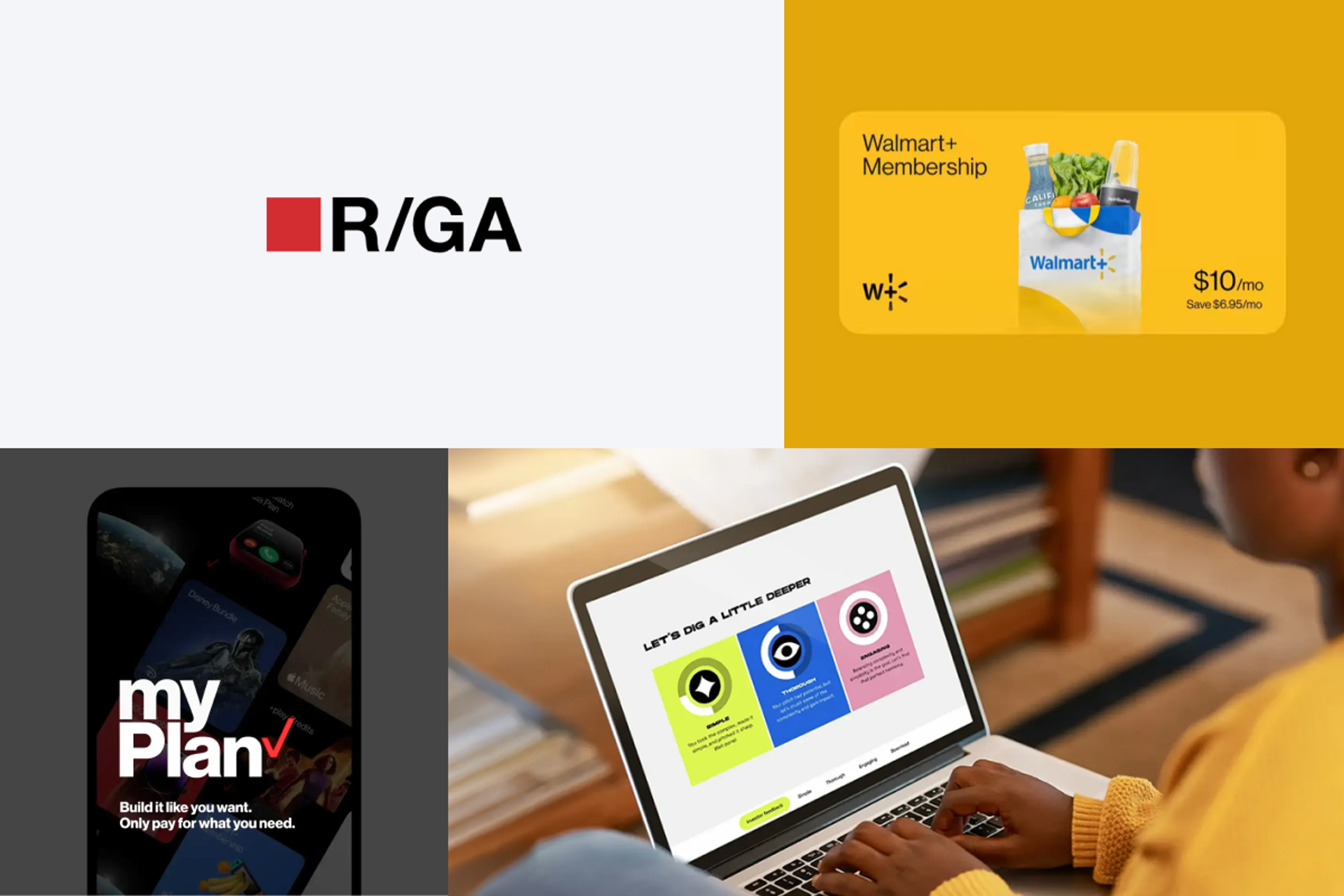
Best for: brand design, AI-powered CRM, adaptive content, product innovation, digital ecosystems
Best suited to: large brands seeking to integrate AI into marketing, customer experience, and product pipelines
Why they stand out: R/GA has reinvented itself multiple times to stay ahead of major technology shifts, and AI is no different. They've built a dedicated AI Products team, acquired AI design studio Addition, and are already shipping AI-enhanced systems for global brands.
Their focus spans creative applications, organizational transformation, and brand ecosystem design.
Potential drawback: Stronger in strategy and marketing systems than hands-on product UX execution.
Why companies choose them:
- Dedicated AI Products team
- AI embedded across brand ecosystems
- Proven track record of reinvention
Why is it AI-First? R/GA sees AI not as a bolt-on but as the next operating system for brand ecosystems. By creating AI-native tools and acquiring specialist teams, they’re embedding intelligence into every stage of brand and product design.
Our Score: 20/25
- Problem & AI strategy 5/5
- Human‑centered research 5/5
- AI UX & interaction quality 3/5
- System execution & scalability 3/5
- Proof & trust signals 4/5
Reviewer's take: What sets R/GA apart is their willingness to invest in AI rather than just apply it. Building a dedicated team and acquiring a specialist studio signals genuine commitment. For large brands that need AI working across marketing, product, and customer experience as a coherent system, they bring real depth.
Independent Proof
- Webby Awards recognition
- The Shorty Awards profile
8. AKQA
AKQA Agency
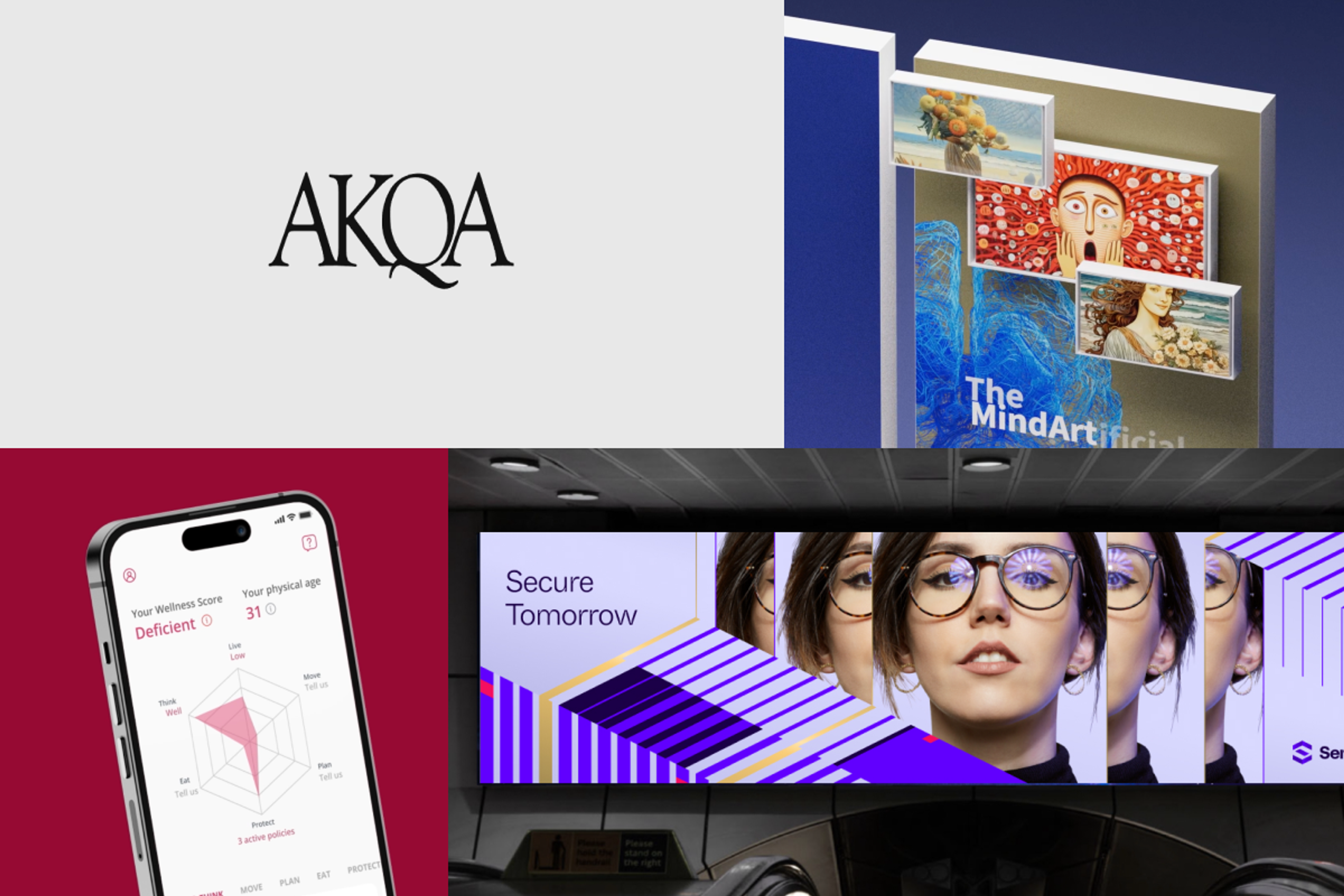
Best for: AI-driven product design, service design, creative technology, brand experiences, digital marketing
Best suited to: Global brands seeking cutting-edge AI interaction models and standout creative applications
Why they stand out: AKQA has built its reputation on the fusion of design and technology, experimenting boldly with frontier technologies to create experiences that are both imaginative and technically sophisticated.
With capabilities spanning AI-driven product design, service design, and creative technology, they consistently operate at the intersection of creativity and machine intelligence, designing entirely new categories of experience rather than refining what already exists.
Potential drawback: The frontier-first approach may exceed what pragmatic, product-focused buyers actually need.
Why companies choose them:
- Designs entirely new experience categories
- Bold fusion of design and technology
- Frontier AI creativity at scale
Why is it AI-First? AKQA doesn’t treat AI as a background tool. It’s central to their creative process. They design entirely new categories of experiences, showing how AI can shape not just brands but culture itself.
Our Score: 20/25
- Problem & AI strategy 4/5
- Human‑centered research 4/5
- AI UX & interaction quality 4/5
- System execution & scalability 4/5
- Proof & trust signals 4/5
Reviewer's take: AKQA operates at a different level of ambition than most agencies. They don't refine existing products, they invent new categories. For brands that want AI to do something culturally significant rather than just functionally useful, AKQA brings the creative conviction and technical capability to make it happen.
Independent Proof
9. Fantasy
Fantasy Agency
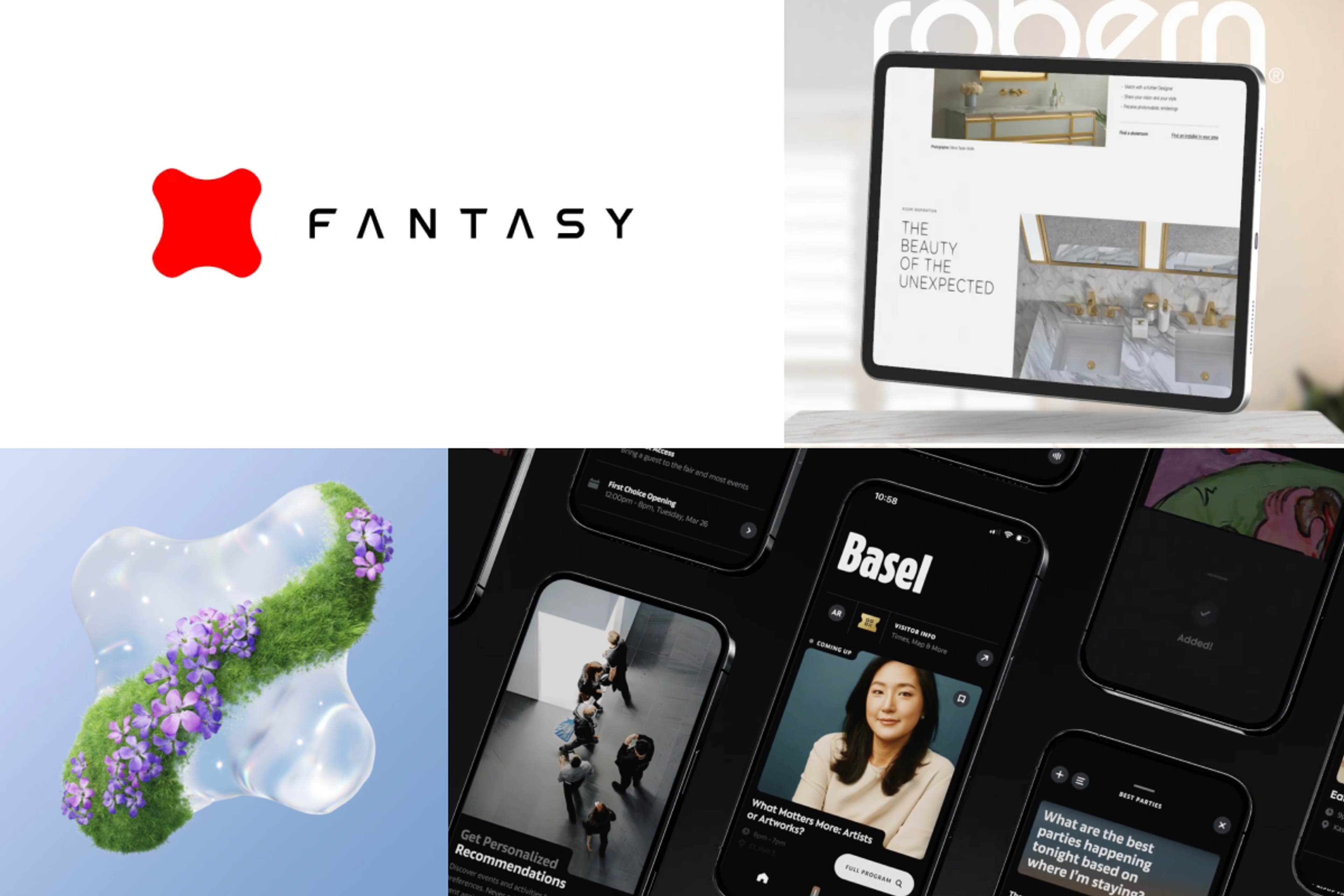
Best for: experience design, AI UX, future visioning, product innovation, workshops
Best suited to: organizations seeking cutting-edge concept design and AI-driven UX innovation
Why they stand out: Fantasy has spent decades crafting breakthrough interfaces and is now one of the few studios with a dedicated AI Design Hub focused on reimagining how people interact with technology.
Their public masterclasses and hands-on experimentation reflect a studio that treats AI as a genuine creative collaborator rather than a production tool, helping companies prototype what's next before committing to a direction.
Potential drawback: Less suited to companies that need full-scale production delivery at speed.
Why companies choose them:
- Dedicated AI Design Hub
- Decades of breakthrough interface design
- Future visioning and AI prototyping expertise
Why is it AI-First? Fantasy embraces AI not just as a tool but as a creative collaborator, using it to push the boundaries of UX and design entirely new categories of digital interaction.
Our Score: 20/25
- Problem & AI strategy 4/5
- Human‑centered research 4/5
- AI UX & interaction quality 4/5
- System execution & scalability 3/5
- Proof & trust signals 5/5
Reviewer's take: Fantasy is one of the few studios that has turned AI experimentation into a genuine practice rather than a positioning exercise. For companies that want to explore that frontier before it becomes mainstream, they're a strong starting point.
10. Ustwo
Ustwo Agency
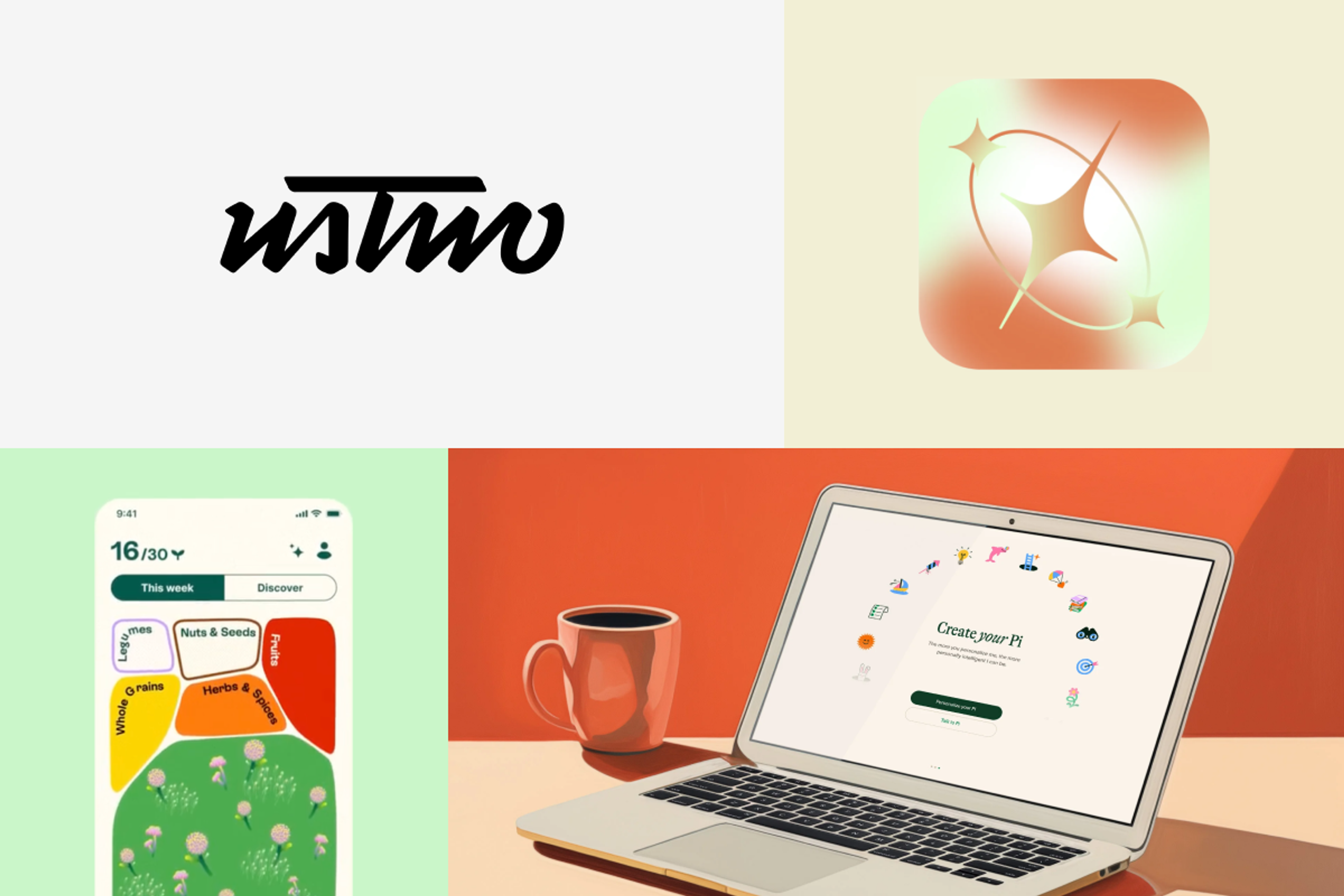
Best for: product design, UX research, AI prototyping, service design, ethical AI strategy
Best suited to: consumer brands and product companies that need trustworthy, human-centered AI interfaces
Why they stand out: Ustwo has built its reputation on digital products that balance utility with emotional resonance. Their people-first approach to technology spans product design, UX research, AI prototyping, and ethical AI strategy, ensuring that AI-powered products feel meaningful rather than mechanical.
They bring the same depth to AI interfaces as they do to any other product challenge.
Potential drawback: Less suited to enterprise-first products where function takes priority over human feel.
Why companies choose them:
- People-first approach to AI design
- Strong ethical AI strategy practice
- Makes complex technology feel approachable
Why is it AI-First? Ustwo treats AI as a design partner, using it to explore new interaction models while keeping ethics and human needs at the center of every decision.
Our Score: 19/25
- Problem & AI strategy 4/5
- Human‑centered research 4/5
- AI UX & interaction quality 4/5
- System execution & scalability 3/5
- Proof & trust signals 4/5
Reviewer's take: Ustwo understands that trust in an AI product isn't built through copy or disclaimers, it's built through every interaction the product has with its user. That understanding shows in how they approach design. For consumer products where feeling safe and intuitive matters as much as working correctly, they're one of the best options on this list.
Independent Proof
- BAFTA and Apple Design Award for Monument Valley
11. Red Antler
Red Antler Agency
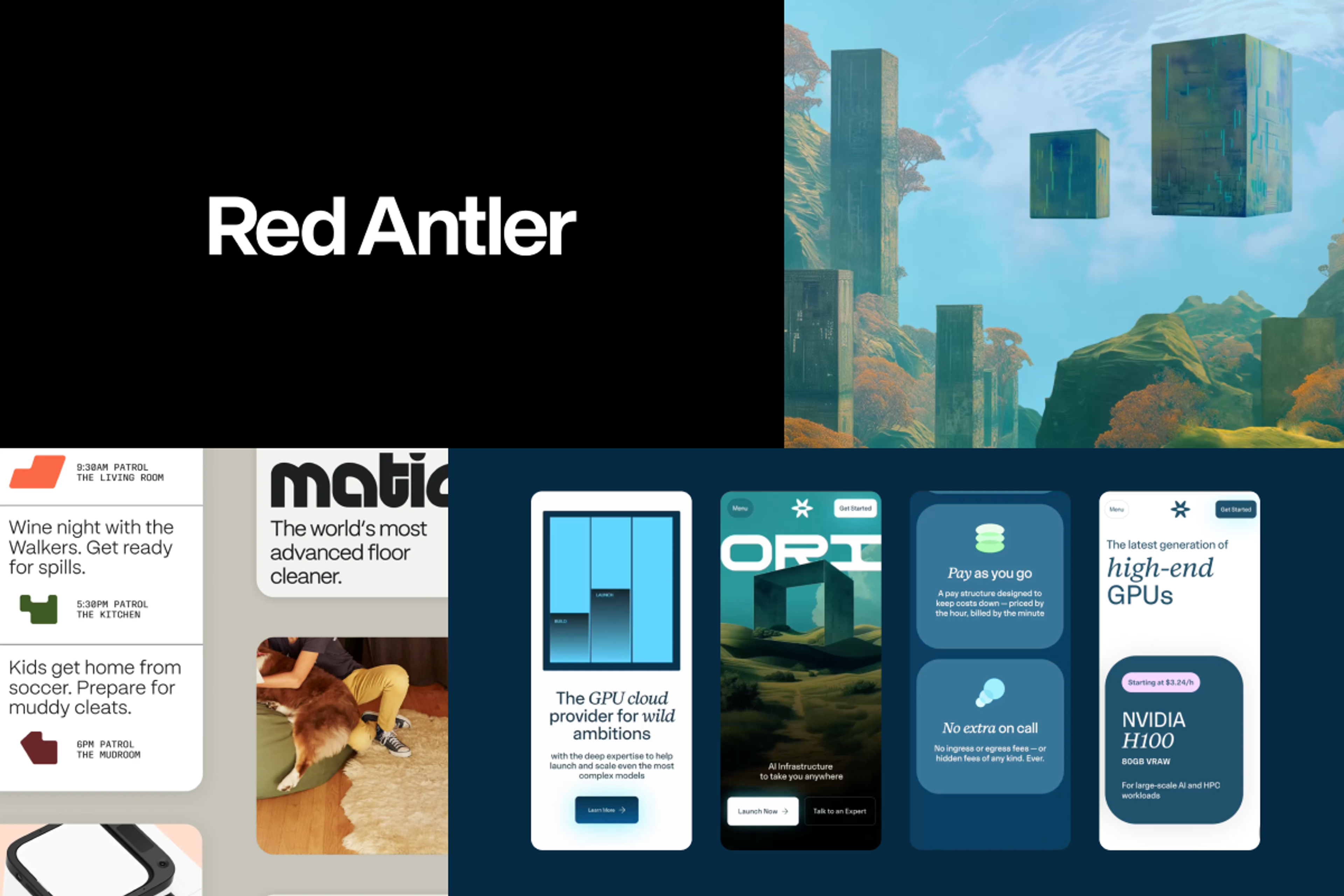
Best for: brand strategy, naming, identity systems, product design, AI branding initiatives
Best suited to: consumer startups, AI-driven companies, emerging brands seeking scale
Why they stand out: Red Antler is one of the most influential branding agencies for consumer startups, with a track record of launching high-growth brands through strategic clarity and bold identity systems.
They are now applying that same approach to AI-native companies, simplifying complex technology into identities that feel approachable and human to mainstream audiences, with AI capabilities built directly into their creative practice.
Potential drawback: Primarily brand-focused, teams needing deep AI product design may require an additional partner.
Why companies choose them:
- Proven track record with consumer startups
- Bold, strategy-led identity systems
- AI-enhanced research and concepting
Why is it AI-First? Red Antler has built AI capabilities directly into its creative practice, using AI-enhanced research and concepts to design identities for a new wave of AI-native companies.
Our Score: 19/25
- Problem & AI strategy 4/5
- Human‑centered research 3/5
- AI UX & interaction quality 4/5
- System execution & scalability 3/5
- Proof & trust signals 5/5
Reviewer's take: Red Antler's real skill is making unfamiliar things feel obvious. That ability to simplify complexity into a brand that resonates with mainstream audiences is exactly what most AI-native companies need. With AI built into their creative process, they bring both the track record and the tools to deliver it.
Independent Proof
12. Code and Theory
Code and Theory Agency
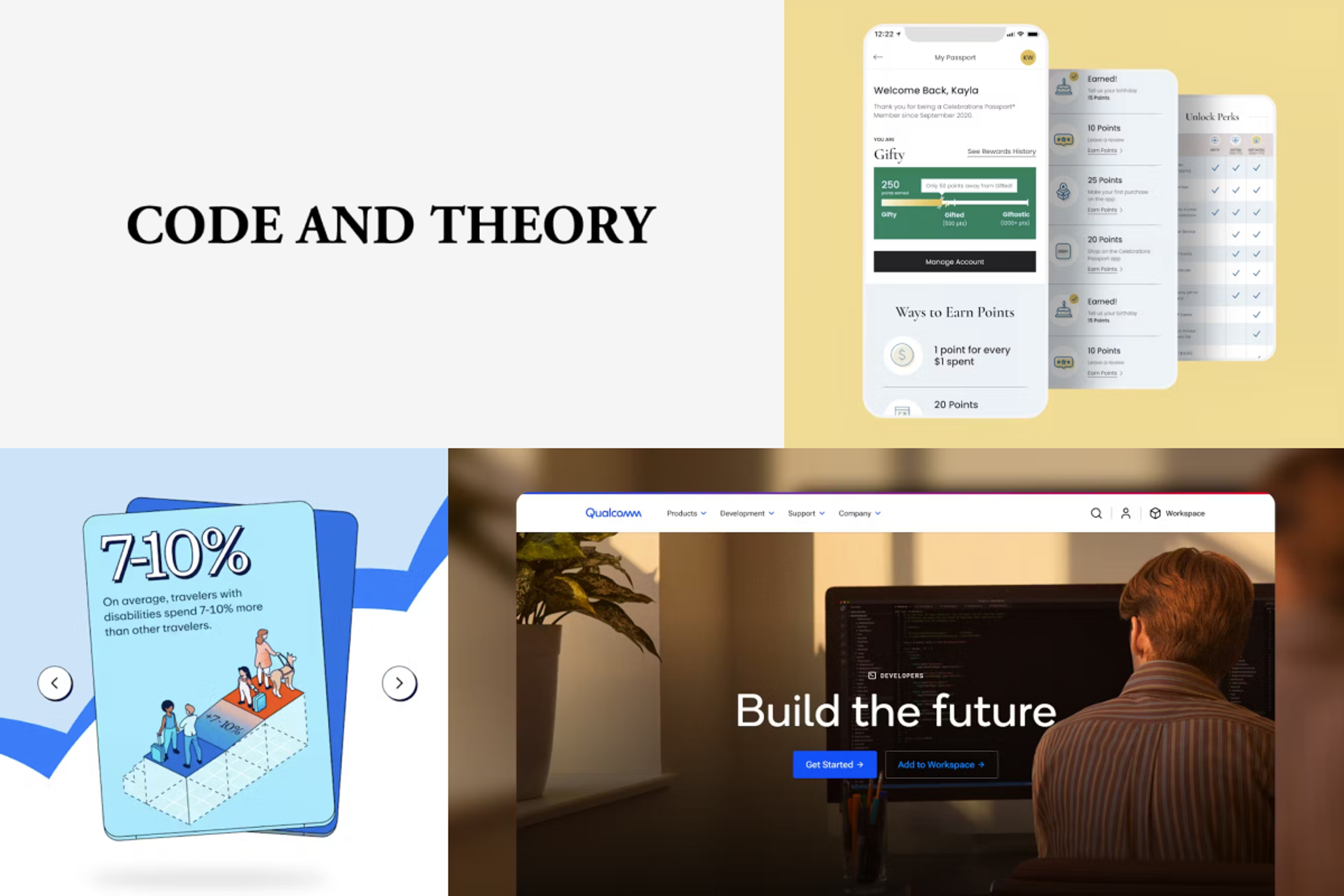
Best for: AI strategy, organizational transformation, brand experience, digital ecosystems, content design
Best suited to: Enterprises rethinking business models and customer experiences around AI
Why they stand out: Code and Theory is a full-service agency working at the intersection of design, technology, and business strategy. Where most agencies stop at the product or interface, Code and Theory goes deeper, helping organizations build AI-enabled operating models that reshape how they serve customers.
Potential drawback: Less suited to teams looking for a straightforward product or interface design engagement.
Why companies choose them:
- Design, technology, and strategy combined
- AI embedded into operations, not just products
- Full-service organizational transformation capability
Why is it AI-First? Code and Theory sees AI as a structural shift, not a feature add-on. Their work focuses on embedding AI into organizational design, ensuring companies evolve into AI-native businesses from the inside out.
Our Score: 19/25
- Problem & AI strategy 4/5
- Human‑centered research 3/5
- AI UX & interaction quality 4/5
- System execution & scalability 4/5
- Proof & trust signals 4/5
Reviewer's take: Most agencies design the interface. Code and Theory designs what sits beneath it. Their focus on embedding AI into how an organization actually operates, rather than how a single product looks, is a meaningful distinction. For enterprises where the real transformation challenge is internal, they bring a depth most design agencies can't match.
Independent Proof
13. Instrument
Instrument Agency
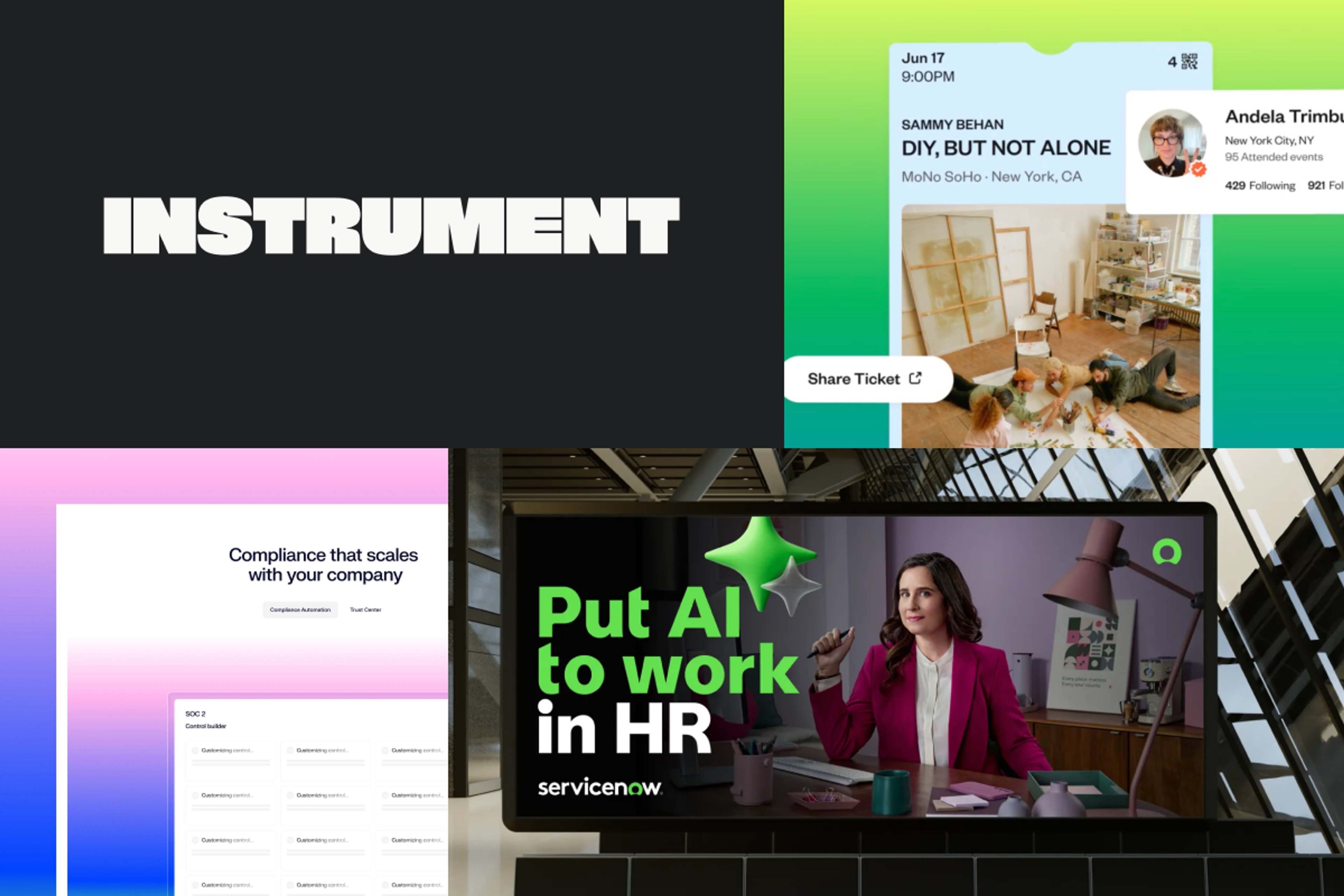
Best for: brand strategy, product design, AI experimentation, content personalization, digital storytelling
Best suited to: brands looking to prototype AI quickly and explain complex technology through clear design and narrative
Why they stand out: Instrument blends storytelling with product design in a way that few agencies do consistently. Their teams help brands experiment with AI in real time, building prototypes and pilots that demonstrate practical value before any major commitment to scale.
They are particularly strong at translating technical complexity into intuitive experiences that both users and stakeholders can actually engage with.
Potential drawback: Teams needing full-scale engineering delivery may require additional technical resources.
Why companies choose them:
- Fast from concept to prototype
- Storytelling and product design combined
- Turns complex AI into clear experiences
Why is it AI-First? Instrument actively uses AI as both a design tool and a narrative driver, helping brands move from abstract AI concepts to user-friendly experiences that can be tested and refined rapidly.
Our Score: 18/25
- Problem & AI strategy 4/5
- Human‑centered research 3/5
- AI UX & interaction quality 4/5
- System execution & scalability 3/5
- Proof & trust signals 4/5
Reviewer's take: Instrument's strength is making AI ideas legible to users and to stakeholders. They don't just prototype, they build the narrative around it that makes buy-in possible. For companies stuck between an abstract AI brief and something they can actually test and present, they bridge that gap well.
Independent Proof
- Finalist for 2026 Campaign US Agency of the Year Awards
14. Bakken & Bæck
Bakken & Bæck Agency
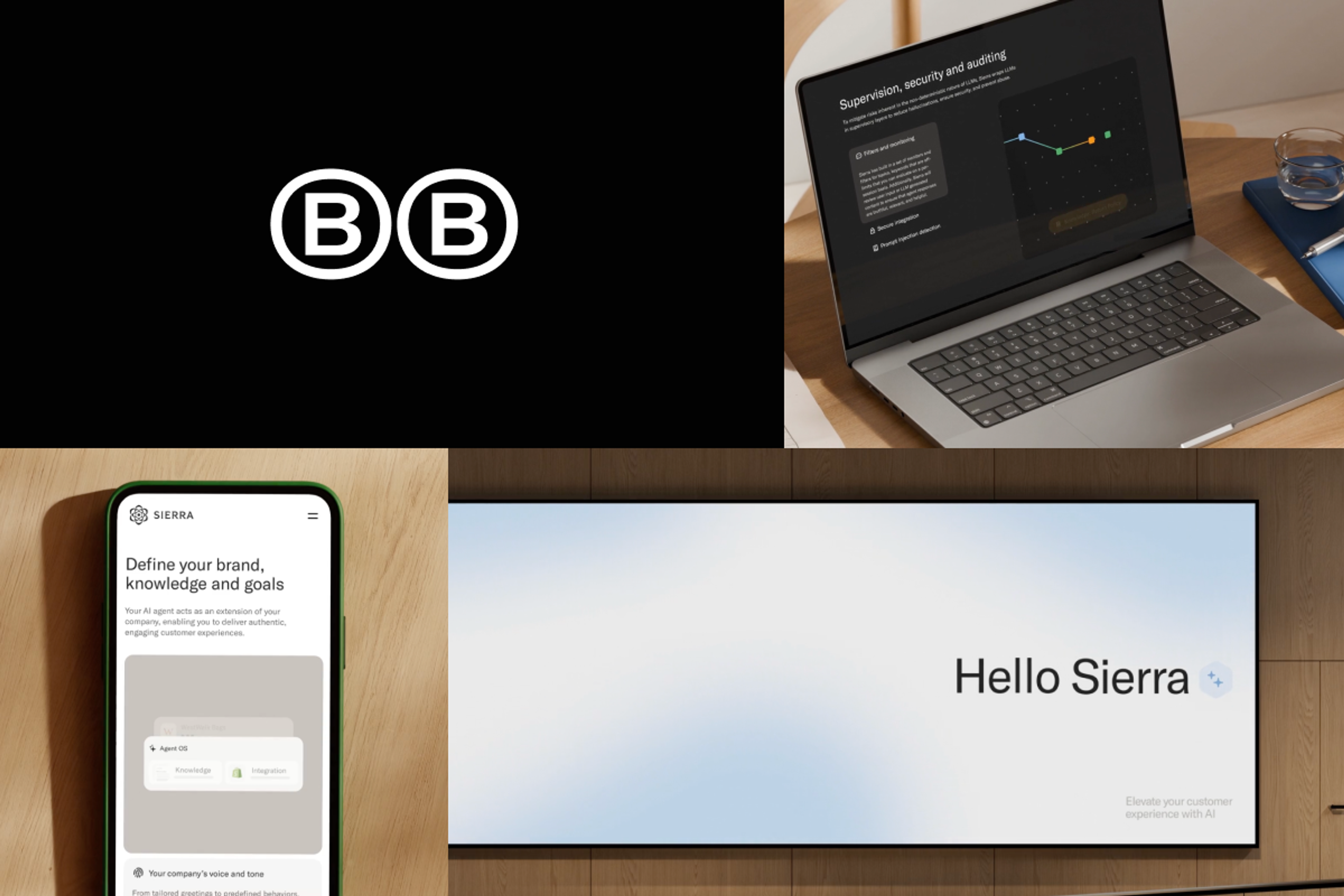
Best for: digital product design, AI applications, data-driven platforms, brand systems, R&D
Best suited to: ambitious product companies blending design, machine learning, and data science
Why they stand out: Bakken & Bæck is a digital product studio operating at the intersection of design and emerging technology, with capabilities spanning AI applications, data-driven platforms, and brand systems.
What sets them apart is their genuine investment in R&D and their practice of publishing openly about their AI experiments, making them one of the more credible studios working in this space.
Potential drawback: Smaller scale limits capacity for large enterprise programs or multi-market rollouts.
Why companies choose them:
- Design and machine learning fully integrated
- Genuine R&D investment and transparency
- Technical rigor alongside design flair
Why is it AI-First? Bakken & Bæck positions AI as a core part of their design toolkit, using it to create intelligent platforms, generate insights, and accelerate product development for forward-thinking clients.
Our Score: 18/25
- Problem & AI strategy 4/5
- Human‑centered research 3/5
- AI UX & interaction quality 4/5
- System execution & scalability 3/5
- Proof & trust signals 4/5
Reviewer's take: Publishing openly about AI experiments is rare in an industry that tends to guard its methods. Bakken & Bæck do it consistently, which speaks to both confidence and integrity. For product companies that need design and data science genuinely integrated rather than bolted together, they stand out as one of the more credible options available.
Independent Proof
15. Shoreditch Design
Shoreditch Design Agency
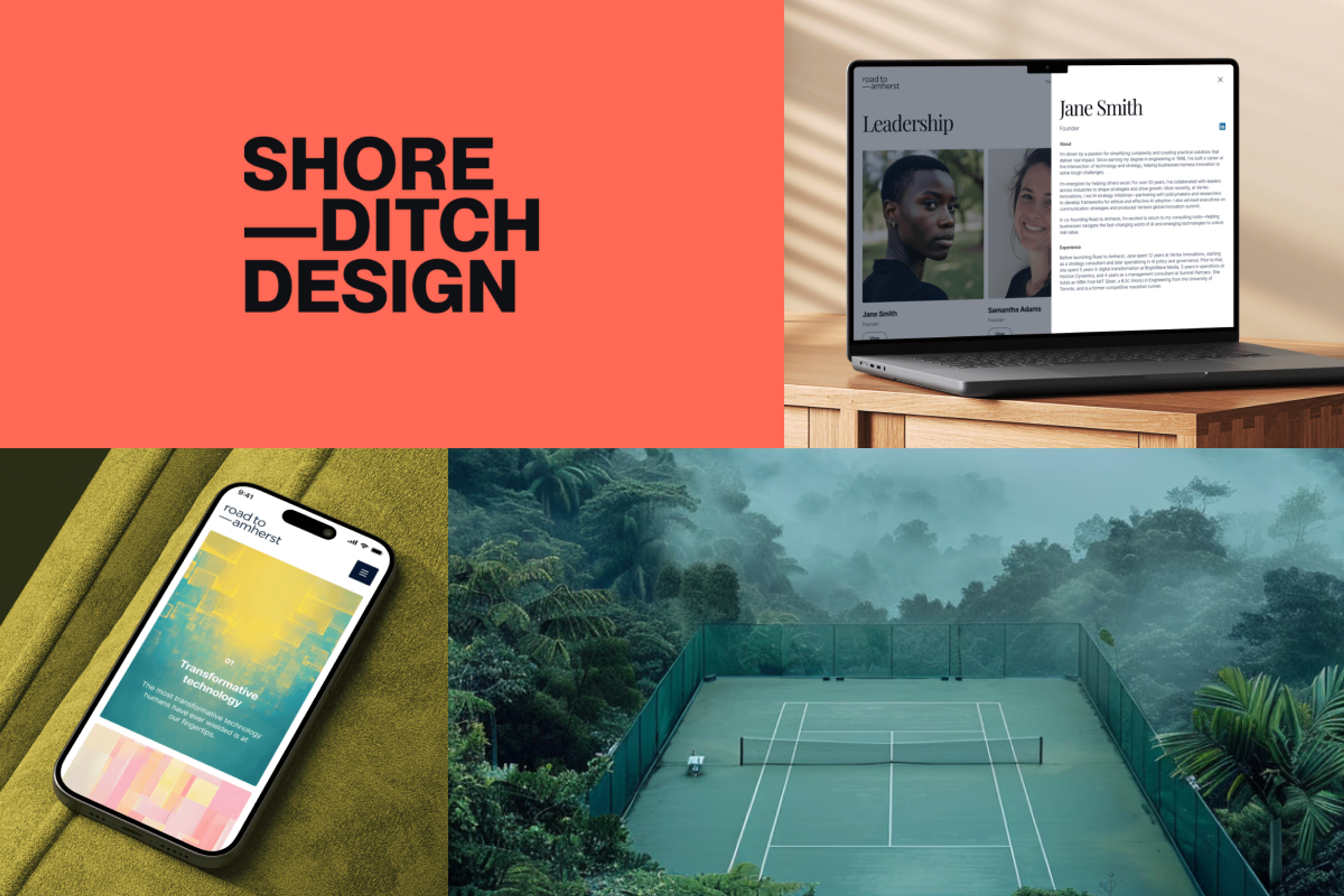
Best for: brand identity, product design, AI-assisted design services, marketing assets, web design
Best suited to: startups and scaleups in tech, fintech, and consumer apps seeking quick, flexible design support
Why they stand out: Shoreditch Design is a London-based boutique studio built around the speed and budget realities of startup life. Their services span brand identity, product design, marketing assets, and web design, with a recent expansion into AI-assisted design workflows.
Transparency and clear service packages make it easy for fast-moving teams to get started quickly.
Potential drawback: Not suited for large-scale enterprise projects or complex technical AI product design.
Why companies choose them:
- Startup-friendly pricing and packages
- Fast, agile delivery model
- AI-assisted workflows for faster output
Why is it AI-First? Shoreditch Design uses AI as a way to extend creative output for startups, helping teams move faster on branding, product assets, and iterative campaigns without compromising design quality.
Our Score: 18/25
- Problem & AI strategy 3/5
- Human‑centered research 3/5
- AI UX & interaction quality 3/5
- System execution & scalability 4/5
- Proof & trust signals 4/5
Reviewer's take: Shoreditch Design fills a gap that many agencies ignore, including early-stage teams that need professional design output without the overhead of a large agency. Their AI-assisted workflows make them faster and more accessible, and their transparent pricing removes the friction that typically slows startups down at this stage.
Which AI-First Design Agency Is Best for Your Company?
Picking the right agency isn't just about who scores highest. It's about fit, which depends on where you are, what you're building, and how much the AI work needs to drive the experience versus support it.
The stakes are rising. McKinsey’s State of AI report found that 72% of organizations now use AI in at least one business function, up from 55% a year earlier. Design and product experience are also becoming some of the fastest-growing areas of AI investment.
Choose Clay if you need brand and product design to function as a coherent system, especially in technically demanding categories like fintech, B2B platforms, or Web3, where a disconnected brand and UX will show under pressure.
Choose Mission Control if you're an early-stage startup that needs a brand built for rapid growth, fast, structured, and scalable from day one, without the overhead or process weight that comes with a larger agency.
Choose DEPT® if your organization is undertaking a genuine AI transformation across multiple teams, markets, or channels, and you need a partner with the scale and operational depth to see it through end to end.
Choose Work&Co if you're in a regulated or data-heavy industry like pharma, financial services, or materials science, and you need an AI product that actually ships, not one that stalls at the concept stage.
Choose Huge if you're a large consumer brand that needs AI embedded into the customer experience at scale, with a team that can handle the full weight of strategy, design, and engineering in one place.
Choose IDEO if your challenge is less about building a specific product and more about aligning your leadership team around responsible AI adoption, the kind of organizational work that has to happen before a brief can even be written clearly.
Choose AKQA if you want to do something culturally significant with AI, not just functionally useful, and you're prepared for a partner that thinks in categories that don't exist yet.
Choose Fantasy if you need to prototype what's next before committing to a direction, particularly if your team is still exploring what the AI-powered version of your product should actually feel like.
Choose Ustwo if you're building a consumer-facing product where trust and emotional resonance matter as much as functionality, the kind of product where a cold or mechanical interaction will cost you users fast.
Choose Red Antler if you're an AI-native company that needs a brand identity capable of making unfamiliar technology feel approachable to a mainstream audience, and you want a team that already has AI built into their creative process.
How to Choose the Right AI-First Design Agency
AI can make an early concept look convincing very quickly. It is harder to turn that concept into a product that feels specific, behaves reliably, and still works once design and engineering start to make real trade-offs.
Separate prototypes from production work
Find out what happened after the prototype and how the team handled real data, model limitations, latency, edge cases, QA, and implementation.
The strongest evidence is a product that shipped and kept working after launch.
See where the agency creates its own point of view
As generation gets faster, generic output gets easier to produce too. Pay attention to how the team uses product context, brand systems, research, and design judgment to create work that fits only your company.
Check how design and engineering work together
AI products rarely move through a clean design-then-development handoff. Model behavior, interface decisions, and technical constraints affect one another throughout the project.
Look for teams that can prototype with engineers early and make those decisions together.
Find out what the system knows
Modern AI workflows depend more and more on context, such as components, responsive layouts, design systems, product rules, data, and previous decisions.
Ask how the agency keeps that context consistent across designers, developers, and AI tools as the product changes.
Test how the agency handles uncertainty
A useful AI experience still needs to work when the model is slow, wrong, incomplete, or unsure. Review how the agency designs fallback states, correction flows, user control, and ways to keep user trust in those moments.
Judge the last mile
Speed at the beginning matters less if the project slows down before launch. Ask whether the agency can carry the work from exploration through refinement, implementation, and measurement and keep the original idea intact.
How Much Does an AI-First Design Agency Cost in 2026?
Cost depends on your brief, and any agency quoting numbers before understanding it is a red flag. The main factors are agency size and reputation, project scope, engagement model, industry complexity, and geographic location.
As a rough guide:
- $15K to $60K covers focused brand and design engagements, typically suited to early-stage teams with a defined scope, such as brand identity, design systems, or a single product surface
- $60K to $120K applies to more complex projects involving adaptive UX, AI prototyping, or integrated product and engineering work across multiple touchpoints
- $120K+ reflects end-to-end AI transformation programs, spanning strategy, design, engineering, and organizational change at enterprise scale
The right agency isn't the most expensive one. It's the one that understands your problem, has shipped work like it before, and can prove it.
Common Mistakes Companies Make When Hiring an AI-First Design Agency
Choosing the wrong design partner for AI work is an expensive mistake. MIT research on generative AI adoption found that while most organizations are actively experimenting, only about 5% of pilot projects generate measurable revenue impact.
The main reasons cited are not model quality, but breakdowns in implementation that prevent AI from moving beyond isolated use cases.
Chasing credentials over fundamentals
An agency that leads with model names and technical jargon but can't demonstrate sharp UX thinking will build something sophisticated that nobody wants to use. Strong AI design starts with strong design, full stop.
Rushing the brief
Companies that haven't clearly defined what role AI should play in their product end up briefing agencies on the wrong problem entirely, then wondering why the proposals feel misaligned.
Prioritizing scale over fit
A globally recognized agency isn't automatically the right choice. Larger agencies bring process weight and account layers that can slow early-stage work to a halt and inflate costs without adding proportional value.
Treating the portfolio as proof
Case studies show what an agency wants you to see. Without speaking to past clients, using a live product they shipped, or understanding what went wrong on a project, you're making a high-stakes decision on curated highlights.
Underestimating switching costs
Companies that hire fast and discover a poor fit mid-project rarely just swap agencies cleanly. Knowledge transfer, rebriefing, and lost momentum compound quickly. Getting the decision right the first time is always cheaper than fixing it later.
AI products fail at the interface, not the model. We've helped teams turn complex, technical experiences into something users trust and come back to. Tell us what you're building.
FAQ
Picking the Right AI-First Agency
What is an AI-first design agency?
An AI-first design agency builds products where artificial intelligence is fundamental to the experience itself, not layered on afterward.
They design interfaces that adapt to users, systems that learn from behavior, and tools that improve over time, while keeping human needs at the center of every decision.
How do I know if an agency truly understands AI design?
Ask them to walk you through a specific AI design decision from a past project. Agencies like Clay, which has shipped complex digital products for clients like Slack, Coinbase, and Google, will answer in specifics.
Agencies that don't will default to generalities about innovation and technology.
Should I choose a specialist AI design agency or a full-service agency?
It depends on your scope. Specialist studios like Fantasy and Ustwo tend to move faster and think more deeply about AI interaction design.
Full-service agencies like DEPT® and Huge offer broader capabilities, but suit larger transformation programs better. If AI is the core of your product, a specialist is usually the stronger starting point.
Is an AI-first agency right for a startup?
Yes, if the agency has an engagement model built for early-stage constraints. Startups need speed, flexibility, and a partner that can move without creating technical debt.
Mission Control is specifically built for this stage, with startup-friendly pricing and lean processes designed to keep pace with fast-moving teams.
Budget and Contracts
How are AI-first design agency fees typically structured?
Most agencies offer project-based pricing, retainers, or sprint models depending on the brief. Larger transformation programs are usually scoped and priced individually. Always clarify what's included in the fee and what triggers additional costs before signing.
What should I watch out for in an AI design agency contract?
Pay close attention to IP ownership, particularly around any AI models, training data, or design systems developed during the engagement. Also, clarify revision limits, handoff deliverables, and what happens if the scope changes mid-project. Vague contracts become expensive disputes later.
Scope and Deliverables
How to UX design for AI?
UX design for AI means designing around intelligence, not just visuals. The process includes identifying clear user jobs that AI can support, mapping trust points around transparency, feedback, and error recovery, prototyping with real AI models early to test behaviors, and creating adaptive interfaces that evolve as the system learns. It's about ensuring the AI feels reliable.
What deliverables should I expect from an AI-first design engagement?
At minimum, expect research outputs, interaction models, prototype builds, and a documented design system.
For AI-specific work, you should also receive defined logic, error states, and trust patterns. If engineering is in scope, expect API documentation and handoff-ready specifications.
How do I define the scope for an AI design project?
Start by pinpointing exactly where AI enters the user experience and what problem it's solving there. From that anchor, work outward to identify what surfaces need designing, what behaviors need defining, and what the system needs to handle when something goes wrong.
Agencies that help you scope this before pitching are the ones worth working with.
Timeline and Collaboration
How long does an AI-first design project typically take?
A focused brand or UX engagement can run four to twelve weeks. A full AI product build, including research, prototyping, and engineering, typically takes 6 months or more.
The timeline depends heavily on how clearly the brief is defined at the start and how quickly decisions are made on the client side.
How involved do I need to be during the project?
More than most clients expect. AI design involves ongoing decisions about behavior, trust, and edge cases that can't all be made upfront.
Plan for regular checkpoints, prompt feedback cycles, and a named internal owner with the authority to make quick calls.
What does a typical collaboration process look like with an AI design agency?
Most agencies work in defined phases. AI projects add a layer of behavior testing and iteration that sits between prototyping and final delivery. Expect the process to be more iterative than linear.
AI Strategy and Product Positioning
How do I position a product built on AI without overpromising?
Lead with what the product does for the user, not how it works underneath. AI is the engine, not the headline. The strongest AI product positioning focuses on outcomes, speed, accuracy, personalization, or reliability, and lets the experience prove the technology rather than marketing.
When should AI be central to a product's strategy versus a supporting feature?
AI should be central when it fundamentally changes what the product can do, enabling something that wasn't possible without it. It works better as a supporting feature when it improves an existing workflow without altering the core experience.
Getting this distinction right early prevents over-engineering and misaligned user expectations.
Results and Measurement
How do I measure the success of an AI-first design project?
Define success metrics before the project starts, not after. For AI products, relevant measures include task completion rates, error recovery rates, user trust scores, and behavioral engagement over time.
One-time usability scores are not enough. AI products need longitudinal measurement to show whether the system improves with use.
What does a strong proof of concept look like for an AI design project?
A strong proof of concept is testable with real users, built on actual AI behavior rather than simulated responses, and scoped tightly enough to produce a clear decision. Instrument is particularly strong at this stage, helping teams move from abstract AI briefs to something presentable before any major commitment to scale.
If it can't tell you whether the core AI interaction works for the people it's designed for, it isn't a proof of concept. It's a demo.
How do I know if my AI design investment is working?
Look beyond vanity metrics. Meaningful signals include user return rates to the AI-powered feature, decreasing error and abandonment rates over time, and outputs that consistently meet the user needs they were designed for. If you can't answer those questions, your measurement framework needs work before your product does.
How long before I see measurable results from an AI design engagement?
For brand and identity work, results are visible at launch. For AI product design, meaningful behavioral data typically takes three to six months post-launch to accumulate. Agencies that promise faster proof are usually measuring the wrong things. Patience and clear baseline metrics set before launch are what make the results readable.
Conclusion
Choosing the right partner in this space matters more than ever. The best AI-first agencies combine human insight with technical depth. They understand how to design for trust, while also shipping products that scale in the real world.
If you’re a startup looking to launch with impact, or an enterprise ready to reframe your customer experience, the firms above represent the leaders who are shaping what comes next.
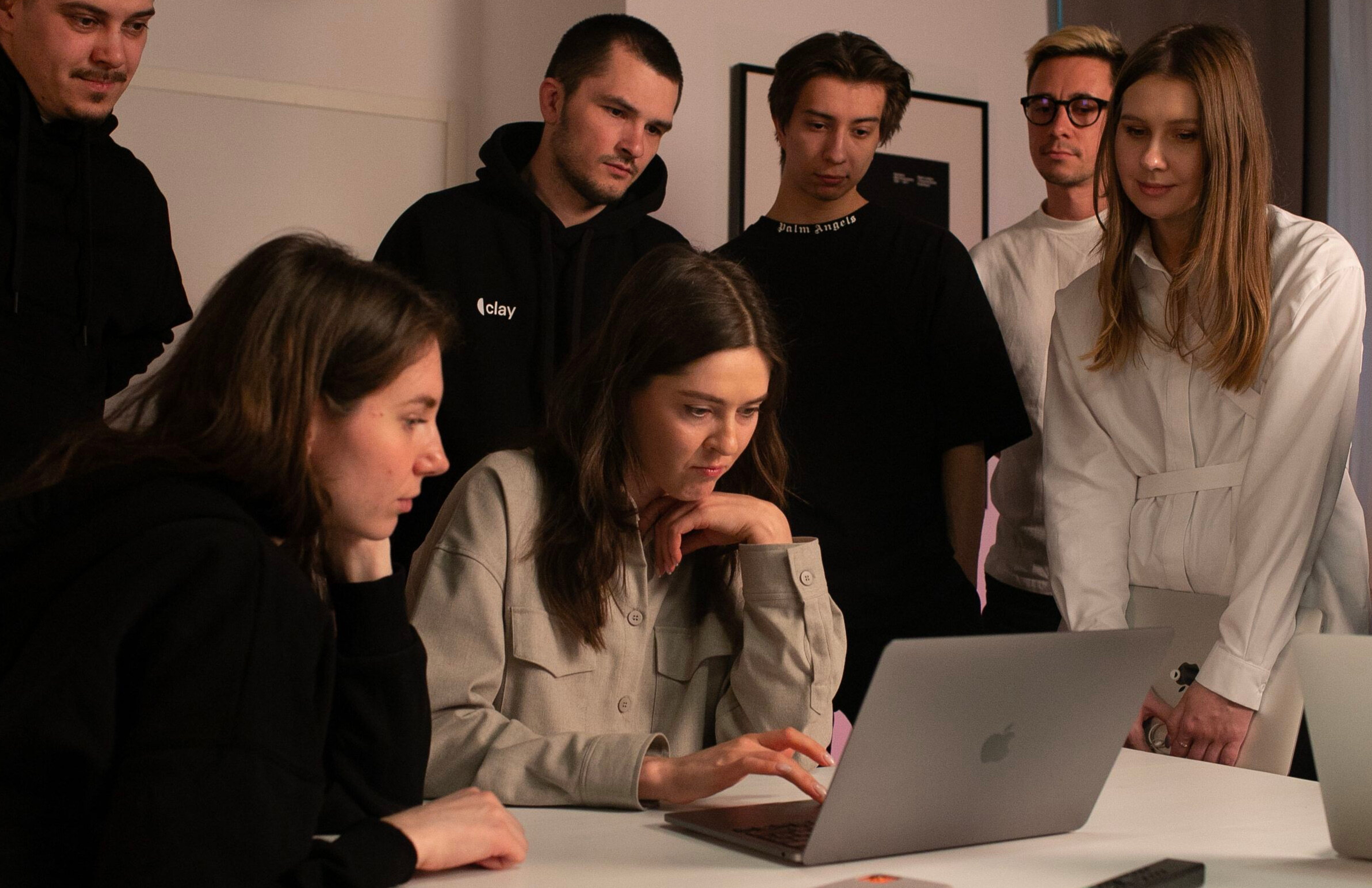

About Clay
Clay is a UI/UX design & branding agency in San Francisco. We team up with startups and leading brands to create transformative digital experience. Clients: Facebook, Slack, Google, Amazon, Credit Karma, Zenefits, etc.
Learn moreAbout Clay
Clay is a UI/UX design & branding agency in San Francisco. We team up with startups and leading brands to create transformative digital experience. Clients: Facebook, Slack, Google, Amazon, Credit Karma, Zenefits, etc.
Learn more