

Product design turns user needs into viable business outcomes. Good design feels invisible because everything simply works. Practice shows that disciplined design correlates with stronger business results. Investing in UX pays off through higher conversion, retention, and loyalty.
This guide walks you through six proven phases of product design. You'll learn how to research users, create strategy, design solutions, test ideas, launch products, and improve over time. Whether you're a startup or an established company, this process helps you build products people actually want to use.
What Is Product Design?
Product design solves real problems for real people while making business sense. The process starts by spotting a market opportunity. Then you define the problem clearly, develop the right solution, and test it with actual users.
Three core principles guide every design decision. Desirability asks whether users want or need your product. Feasibility checks if you can actually build it with available technology and resources. Viability ensures the product makes smart business sense and generates sustainable value.
Desirability keeps you focused on user needs and desires. Without it, you risk building something nobody wants. Feasibility prevents you from promising impossible features or wasting resources on dead ends. Viability connects design to business goals like revenue, retention, and growth.
These principles work together. A desirable product that's impossible to build helps nobody. A feasible product that nobody wants wastes time and money. A beautiful design that loses money kills companies. Great product designers balance all three principles throughout the process.
Product Design Process Tools
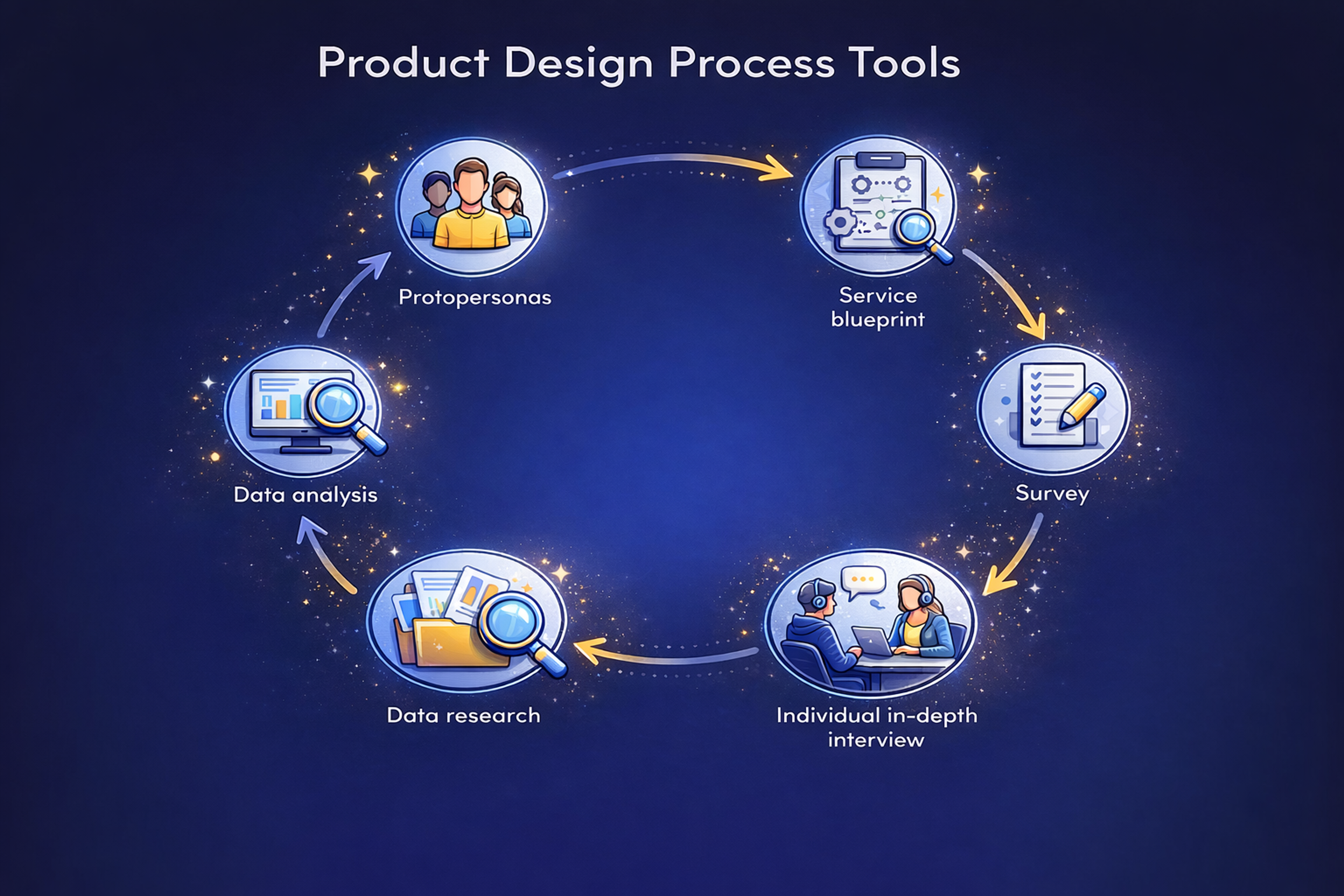
Leading agencies like Clay in San Francisco deliver full-service design spanning brand strategy, visual identity, and digital product creation. Other top firms including Mission Control, IDEO, Work & Co, Fantasy, and MetaLab combine user research, interaction design, and product strategy to create intuitive, high-impact experiences.
What Are the Steps of the Design Process?
Here are the steps of product design cycle:
1. Discovery Phase
A discovery phase is the part of the process that entails understanding the problem at hand by doing the appropriate research and analysis to guide further product development. In the product design cycle, three significant steps include:
User Research Methods
To improve the design process, it is necessary to conduct user research to understand user preferences and behaviors and their pain points through various user research methods. These can include interviews, surveys, observations, and focus group discussions.
Market Analysis and Competitive Research
To gain a broader perspective on product design, it is useful to conduct user and market research to examine the market landscape and the products and strategies used by competitors.
This assists in identifying areas where a product will be needed and how to position oneself in the marketplace where the product will be offered.
Identifying User Pain Points and Needs
This includes understanding the user's perspective and recognizing their pain points. This enables product designers to seek out real problems in the world and respond with appropriate solutions. It entails studying users' responses, testing the users in practical situations, and researching to understand the audience broadly.
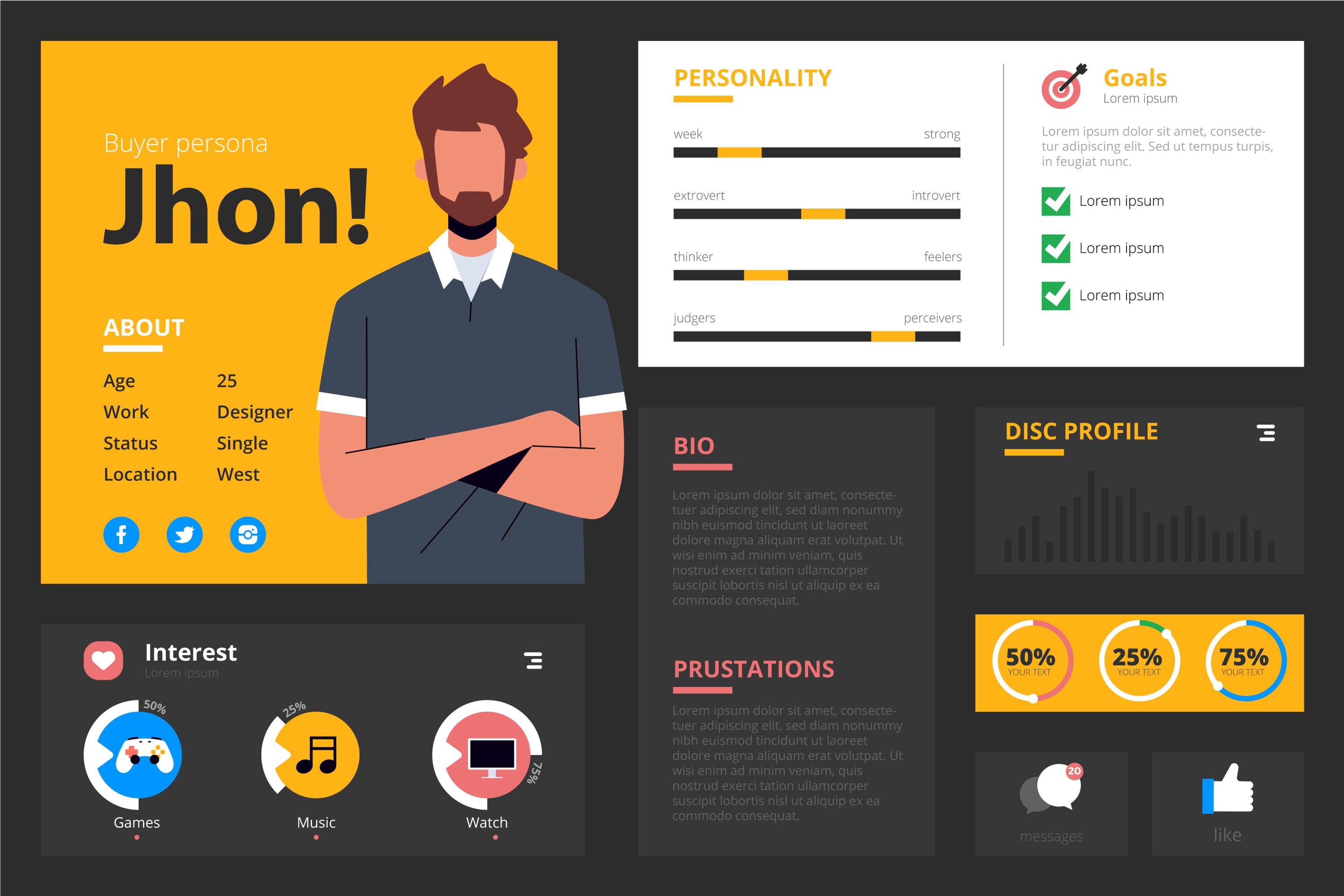
Creating User Personas and Journey Maps
A persona portrays a potential market for specific user groups. It describes users' goals, characteristics, and reasons for using the application.
A journey map is a framework that outlines the user's experience and allows the designer to understand the user's interactions, pain points, and other points of contact during usage.
Source: Image by freepik
Stakeholder Interviews and Business Requirements
It is important to work with stakeholders such as business owners, product managers, and developers to design the product in line with business objectives and technical capabilities, emphasizing cross-functional collaboration. The requirement gathering and constraints understanding activities influence the design process.
During the discovery phase, the designers obtain a working knowledge of the three main components necessary for a successful product design: the user, the market, and the business.
Working out these components assists the following stages of the product development process in designing innovative solutions relevant to the end user.
2. Definition & Strategy
The efforts made in the discovery phase are further developed and put into conclusion in the Definition & Strategy stage of the design process. Key activities occur during this phase, providing a clear direction and product development targets. Below are the main elements of product design workflow in the Definition & Strategy phase:
Problem Statement Formulation
It is essential to state that the product is supposed to address the aim. Formulating a comprehensive problem statement is intended to act as a guide for all design and development activities.
Setting Project Goals and Success Metrics
Establishing specific objectives and success metrics, guided by effective project management techniques, makes it clearer where the product will succeed. Such objectives and metrics will assist the firm in measuring the success of the products post-launch.
Defining Core Features and Requirements
It is also fundamental to identify the product's core features and requirements as determined in the discovery phase. This entails defining several functions, the core features required, and the expected level of such functionalities.
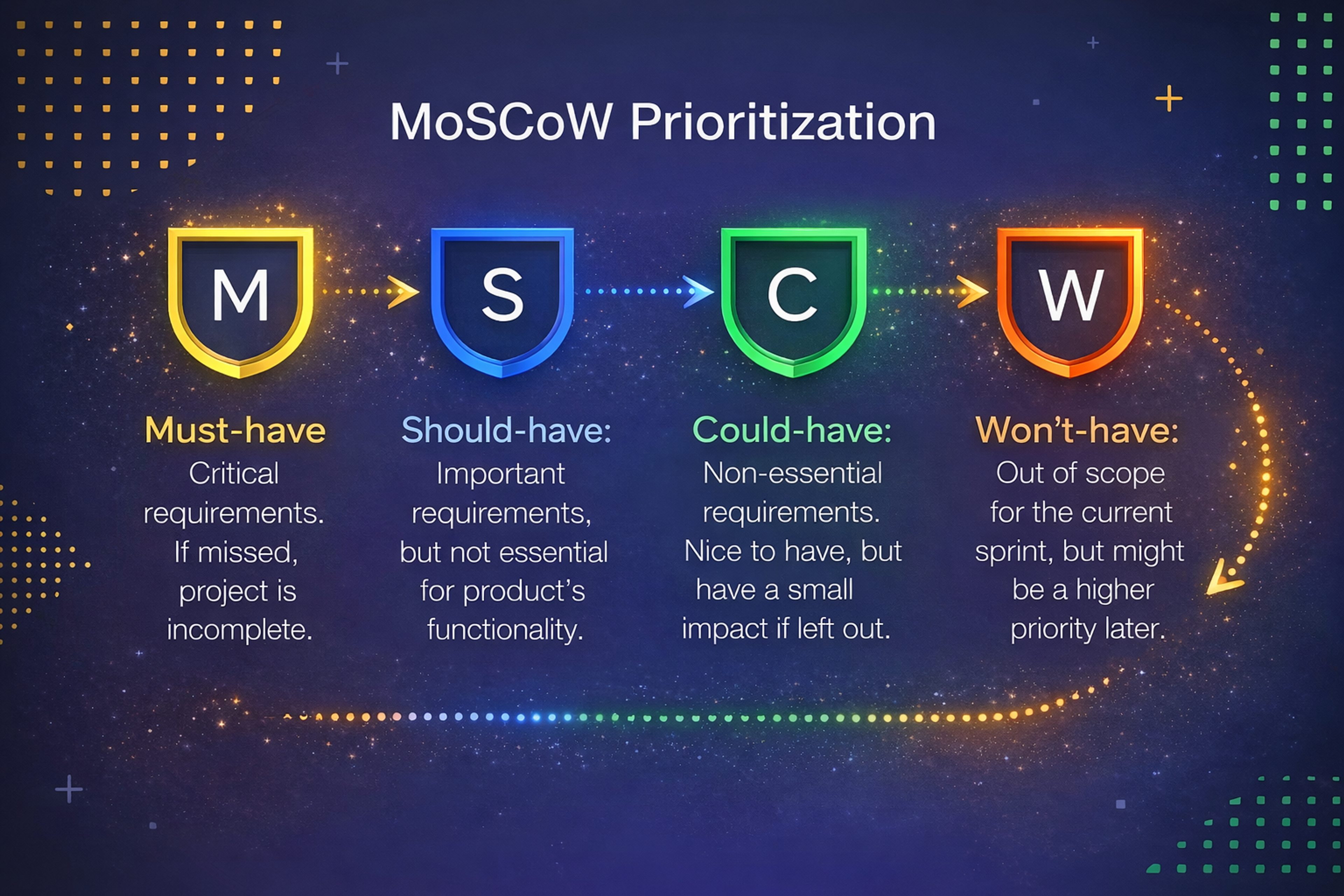
Prioritization Frameworks (MoSCoW, etc.)
The MoSCoW model is a good prioritization framework designed to measure the essentialness and need of specific features/requirements. This ensures that they start with the features that are most important first.
MoSCoW Prioritization Framework
By carefully defining the problem, setting clear goals, and outlining essential features and requirements, the Definition & Strategy phase provides a solid foundation for the subsequent stages of product development.
3. Ideation & Conceptualization
In the Ideation & Conceptualization phase, there is action and creation as ideas are formed and then made into fundamental concepts. Various activities in this phase target idea creation, idea expansion, and concept development activities.
Utilizing modern prototyping tools can significantly enhance the efficiency and quality of concept development. Activities in the Ideation & Conceptualization phase encompass:
- Brainstorming techniques: Engage in brainstorming sessions to encourage open and creative thinking, allowing team members to generate a wide range of ideas and concepts.
- Sketching of ideas and first concepts: Make rough sketches of ideas and come up with very preliminary concept designs to try to understand how the final solutions will look and also as a means of communication.
- Designing activities and interactive sessions: Engage members and other relevant participants by designing activities and interactive sessions. This will enable you to incorporate different and varied views to come up with effective ideas.
- Concept generation and concept selection: Prioritize and gauge the concepts generated using standards such as possible successful contributions to the project’s aim and intended objectives. Only the best and most realistic ideas should be chosen and worked on.
- Concept generation followed by concept testing: This activity starts by examining the different aspects of the project and later selecting the best strategies based on cost, practicality, or ability to use the resources.
The Ideation & Conceptualization phase occurs early in the product development process and narrows the focus to the ideas defining the final product.
4. Design & Prototyping
The Design and prototyping phase of the product development process is essential because it is the period within which ideas materialize into designs and stretches. This stage consists of several vital elements that realize the product’s image and set the stage for its manufacturing.
Information architecture: Establish an organization’s structure with explicit content and functional areas within the products and make it simple to navigate.
Source: Image by vectorjuice on Freepik
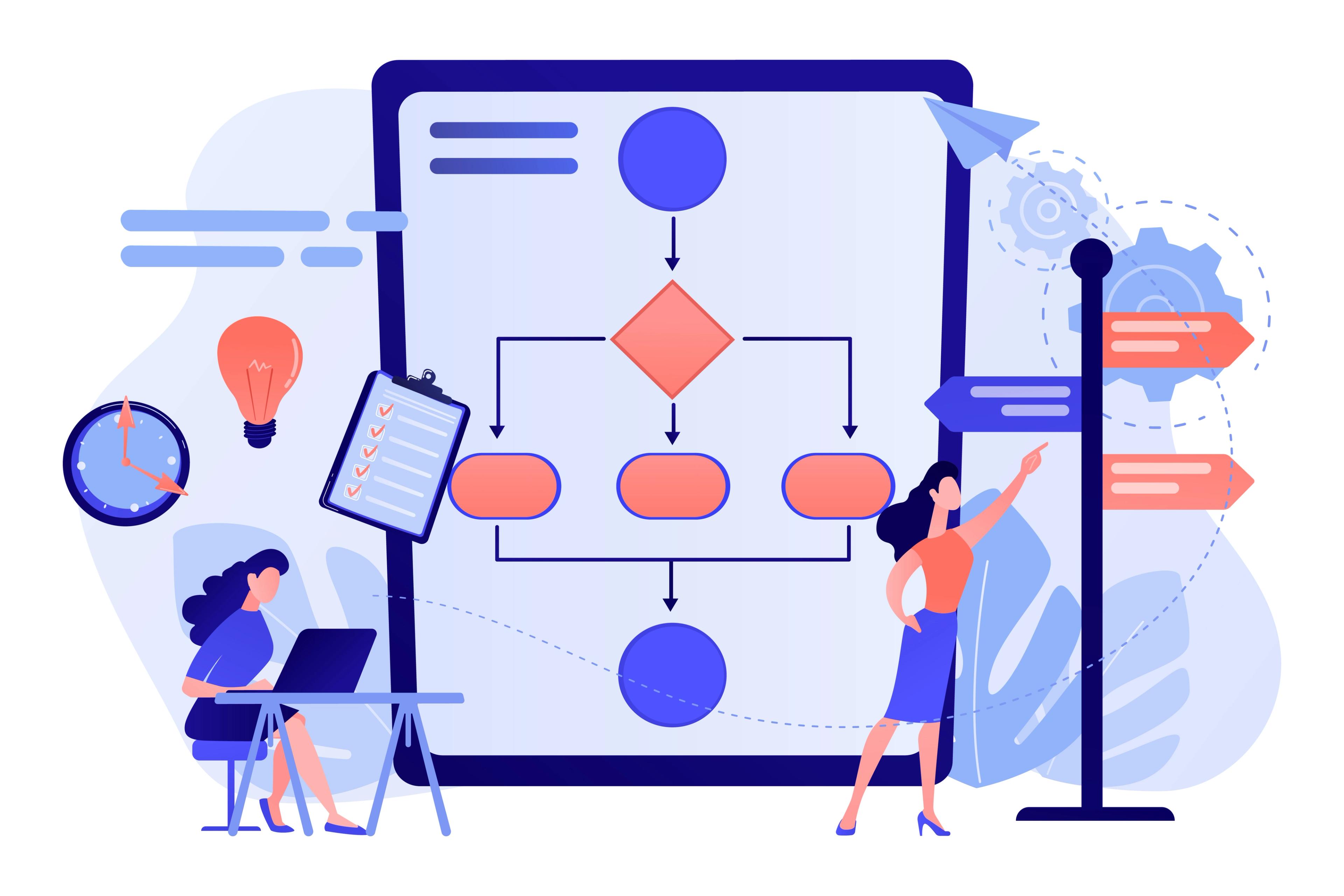
Wireframing and user flow: To demonstrate the overall arrangement and design of the main interaction areas, create a wireframe that outlines the user interfaces and maps out the user interface. Create user flows to detail the sequential order of events within the product.
Visual style: Create a look with colors, fonts, and images that convey the brand and customer expectations. Design systems should also be defined to encourage uniformity and expansion of all visual components of the product during its development.
Interactive Prototyping: This is the final phase, and it involves creating mockups, which are three-dimensional representations of the single-bil materials. The target audience should try to achieve these mockups in their products so that these prototypes will be very helpful.
Documentation and design specification: These could include decisions made by the design teams, the strategies and guidelines they provided, and the blueprint drafts created. Such documents ensure proper design implementation within the organization.
Several scholars view the design and prototyping phase as an essential stage in the growth of the product and its eventual execution. As thoughts become matter, the user interface is designed, and images are produced that reflect the general picture of the future prototype.
The phase paves the way for subsequent development and iteration, culminating in a successful product that meets user requirements.
5. Implementation & Launch
Once the design is completed in the implementation & launch phase, the life cycle of the product development is completed, meaning that an actual product is ready to be marketed. This phase stands along the following activities and concerns:
Developer Handoff
The designer works in tandem with developers so that there is a seamless transfer of design assets and specs. As such, adequate descriptive and prescriptive communication guarantees the construction of a design with minimal concerns.
Beta Testing and Usability Testing
The next stage of delivery of this new product is to introduce it to some people who can conduct beta tests. Based on feedback from beta testers, various suggestions on how to enhance the product, whether there are any issues people need to see, and how users interact with the product to improve user experiences are obtained.
Quality Assurance
A systematic approach employs multiple testing stages to track down and address bugs, problems, and individual product inconsistencies. Quality assurance is a general term for ensuring that the intended product delivery has no flaws.
Launch Strategy
This stage strongly focuses on designing a launch strategy that will help many people. This includes designing promotional campaigns, public relations campaigns, and targeted audiences.
Post-launch Monitoring
The moment the product is launched, user feedback, metrics, and performance data can be constantly monitored and analyzed so that ongoing optimization and refinement can be done. Such a process is iterative, enabling the product to adapt to user demands and changing market environments.
Implementation & Launch is the phase where the product is formally introduced to the target consumers. It calls for teamwork, a very high concentration level, and ensuring end users have the best experience possible.
This is why a well-executed implementation and launch plan should be followed: the impact of the product on the market would be made, and competitiveness would be created for it.
6. Continuous Improvement
All these activities are under continuous improvement, which is most important in developing the product as it aims to improve it from the perspectives of the users, industry, and data.
It involves a cycle whereby the product or service is designed, developed, and subjected to evaluation and refinement to ensure it continues fulfilling its intended purpose. There are specific components within continuous improvement that we will outline below:
Analytics and Metrics Tracking
Using appropriate metrics makes it possible to engage in productive activities and understand users by providing and analyzing the necessary data. Such insights are valuable in making decisions and discerning the trends that require improvement.
User Feedback Loops
Different platforms, such as feedback forms, surveys, usability testing, customer support, etc., should be utilized to gather users’ thoughts on their pain points and suggestions on how to better address their concerns, ultimately enhancing the user's experience.
Performance Optimization
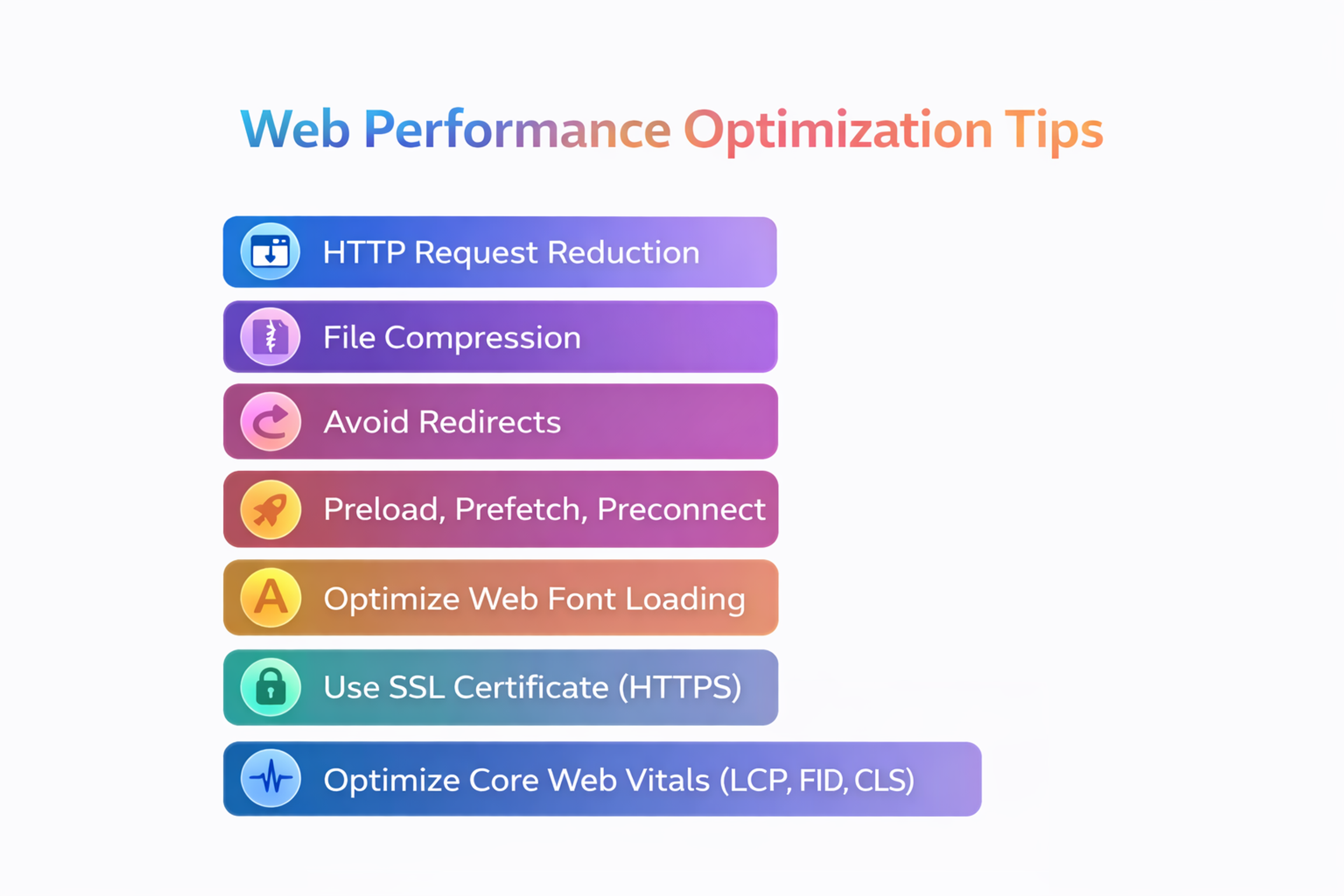
The smoothness of utilizing a product depends on how quickly the system works, how many errors occur, and how well it can scale with increased usage. Continuous improvements are thus imperative.
Web Performance Optimization Tips
Regular Updates and Iterations
Whenever possible, user feedback and market demand should drive regular updates to existing products in the form of new features, fixes, enhancements, etc.
Product teams engaged in agile development should embrace the idea of improving the product consistently to retain and attract users and satisfy them with the product.
Common Pitfalls in the Product Design Process
Common Pitfalls In Product Design
- Scope Creep: Adding features without removing anything bloats the product. Use MoSCoW prioritization and weekly goal reviews. Say no to work that does not serve core goals.
- Siloed Teams: Poor handoffs create gaps between design and development. Use shared tools like Figma, run cross-functional workshops, and include engineers in design reviews from the start.
- Ignoring Technical Feasibility: Concepts that cannot be built waste time and trust. Involve engineers early, and prototype high-risk elements to validate feasibility before you commit.
- Skipping Accessibility: Missing accessibility excludes users and creates compliance risk. Build it in from the start, test with assistive tech, and follow WCAG guidelines.
- Weak Or Missing Design System: No design system means inconsistent UI and duplicated effort. Invest early in reusable components and tokens to speed development and improve quality.
- No Post-Launch Optimization: Shipping once and stopping lets competitors pass you. Use analytics and feedback to plan regular improvements so the product does not stagnate.
Key Considerations Throughout the Process
Key Considerations Throughout The Process
- Empathy And Design Thinking: Ground decisions in real user needs, frustrations, and goals. Use research, observation, and heuristics (like Jakob Nielsen’s) instead of assumptions.
- Document Decisions: Record key design choices, research findings, and reasoning. This keeps context, speeds up onboarding, and prevents teams from relitigating old decisions.
- Use The Right Tools: Pick tools that fit your workflow: Figma for co-design, Miro for mapping and brainstorming, Jira for tracking work. Aim for a simple, well-integrated stack.
- Work Cross-Functionally: Involve designers, developers, product managers, and business stakeholders early. Diverse perspectives catch issues sooner and create stronger solutions.
- Balance Speed And Quality: Use Design Sprints for fast decisions and validation. Use more phased, research-heavy approaches for complex or high-risk products. Match method to constraints and goals.
Read more:
Conclusion
Product design creates solutions that satisfy users while achieving business goals. The six-phase process guides you from research through launch to continuous improvement. Each phase builds on previous work and prepares for what comes next.
Start by implementing user research in your next project. Even testing with five users will uncover eighty-five percent of usability issues. Use the tools and frameworks described here. Learn from experts who pioneered these methods.
As tools evolve and new technologies emerge, human-centered principles remain essential. AI assists with design tasks but doesn't replace understanding users.


About Clay
Clay is a UI/UX design & branding agency in San Francisco. We team up with startups and leading brands to create transformative digital experience. Clients: Facebook, Slack, Google, Amazon, Credit Karma, Zenefits, etc.
Learn moreAbout Clay
Clay is a UI/UX design & branding agency in San Francisco. We team up with startups and leading brands to create transformative digital experience. Clients: Facebook, Slack, Google, Amazon, Credit Karma, Zenefits, etc.
Learn more