

Web designers (any kind of - freelance, or those who work in top web design agencies) contribute the strategic groundwork that shapes successful website projects. They deliver discovery briefs that define who the site serves, such as clients and companies, and what success looks like.
These briefs include stakeholder insights, competitor analysis, and analytics review. This foundation gives teams clear direction and helps everyone say no to features that don’t serve core goals.
Success stories from past website projects demonstrate the real-world impact of strategic design decisions, showing how thoughtful planning leads to measurable improvements for both clients and companies.
The designer’s first contribution is clarity. They translate vague business objectives into specific, measurable targets that guide every decision throughout the project.
Information Architecture That Makes Content Findable
Designers contribute to the site's organizational backbone. They deliver sitemaps that show how content connects and user flows that map critical journeys from start to finish.
These documents define navigation systems, establish content hierarchies, and identify where users might get stuck or confused.
This architecture contribution ensures visitors can find what they need quickly. Designers remove confusing loops and create clear pathways through the site.
They also plan for edge cases like empty states, search results with no matches, and error messages that guide users forward instead of leaving them stranded.
Wireframes and Prototypes That Reduce Risk
Designers contribute tested structures before teams invest in final designs or development. They deliver wireframes showing page layouts, component placement, and content hierarchy.
These low-fidelity documents let stakeholders debate structure without getting distracted by colors or images. Wireframes and prototypes are essential for mastering the basics of web design, especially for the beginner who is just starting out.
Wireframing Importance and Benefits by Clay

Clickable prototypes are another key contribution. These interactive models simulate real user journeys and expose problems early. Teams discover issues like confusing button placements, forms with too many fields, or unclear navigation before developers write a single line of code.
This contribution saves significant time and budget. Catching structural problems in the wireframe stage prevents costly rework during development or after launch.
Design Systems That Enable Consistency and Speed
Designers contribute comprehensive design systems that transform brand identity into reusable digital components. Design systems are essential for ensuring consistency and scalability across website projects.
They deliver color scales with proper contrast ratios, typography systems for readability, spacing rules that create visual rhythm, and icon sets that communicate clearly.
The component library is a critical contribution. Designers document buttons, cards, forms, tables, and alerts with specifications for every state: default, hover, focus, disabled, and error.
They capture these as design tokens that developers can implement once and reuse everywhere.
This systematic approach contributes to consistency across the entire site and speeds up future development. When the design system is solid, updates roll out predictably instead of requiring custom work for each new page.
Accessibility Standards That Expand Reach
Designers contribute accessibility built into every design decision from the start. They deliver color combinations that meet WCAG contrast standards, focus indicators visible to keyboard users, and touch targets sized appropriately for mobile devices.
Accessibility standards ensure all users have the ability to interact with and benefit from the website. They structure heading hierarchies that screen readers can navigate and create labels that don’t assume specialized knowledge.
These contributions expand the site’s audience and improve conversion rates. Accessible sites work better for everyone, not just people with disabilities. Designers who bake accessibility into their work contribute to broader reach and better business outcomes.
Accessibility Elements by Clay

Content Strategy and Microcopy That Guides Behavior
Designers contribute content frameworks that give words their proper context and power. They work with writers to define voice, establish messaging hierarchy, and ensure page's purpose is clear. They deliver microcopy specifications for button labels, helper text, and form validation messages.
To write clear and effective microcopy, consider tips such as using concise language, focusing on user intent, and providing actionable guidance that helps users complete tasks confidently.
This contribution determines whether users feel confident or confused. Clear labels like “Create your account” work better than vague ones like “Submit.” Designers contribute small but critical words that reduce errors and help people complete tasks faster.
The content strategy contribution includes layout decisions that support scannability, brevity guidelines, and real content samples in prototypes. This prevents surprises when actual words replace placeholder text.
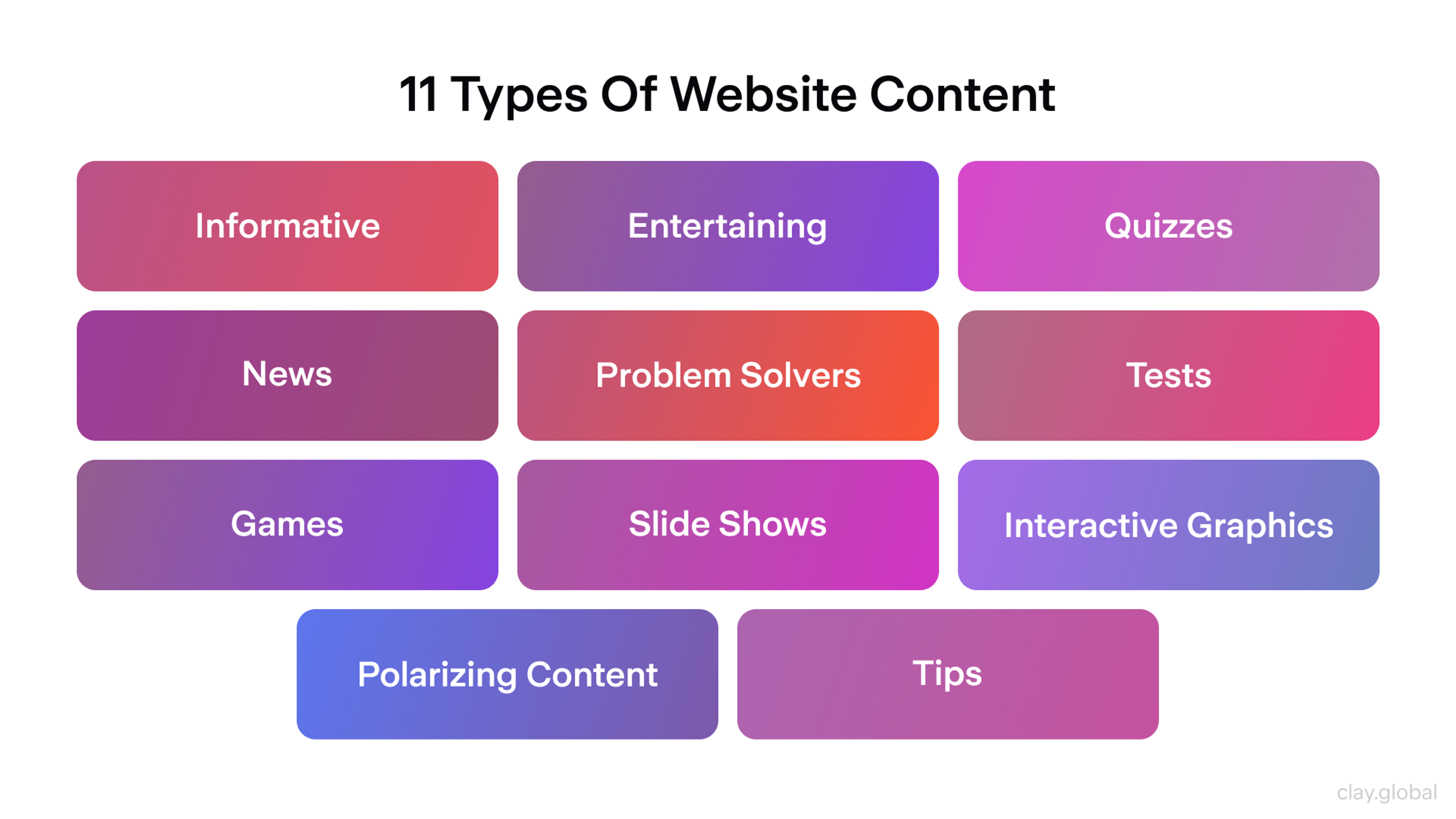
11 Types of Website Content by Clay
Interaction Specifications That Build Trust
Designers contribute detailed interaction specifications that make interfaces feel responsive and trustworthy. Well-designed interactions create a sense of trust and reliability for users, ensuring they feel confident navigating the interface.
They define transitions, micro-interactions, and feedback mechanisms that confirm actions and reveal context. These specifications include button press animations, skeleton screens for loading states, and progress indicators for multi-step processes.
The interaction contribution also includes safety mechanisms. Designers specify undo options after destructive actions, autosave indicators, and non-blocking notifications. These details transform static pages into responsive experiences that feel like conversations.
Motion specifications contribute perceived performance even when actual load times can’t improve. Users tolerate longer waits when they see clear progress feedback.
Responsive Design Specifications for Every Context
Designers contribute responsive specifications that ensure the site works well on every device. They deliver breakpoint definitions, component behavior rules, and content reflow guidelines. These specifications show how layouts adapt from small phones to large desktop monitors.
This contribution goes beyond simply shrinking desktop layouts. Designers specify different approaches for different contexts. Mobile might get a sticky action button and progressive disclosure forms. The desktop might show comparison tables and scheduling tools. Each version feels native to its device.
The responsive contribution ensures users get optimized experiences regardless of how they access the site.
Responsive Example by Clay

Performance Guidelines That Speed Up Pages
Designers contribute performance specifications that make sites load faster. They deliver image compression targets, asset loading strategies, and layout stability guidelines.
These specifications prevent common performance killers like oversized images, heavy hero videos, and complex animations that slow page loads.
The performance contribution includes designing skeleton states that keep layouts stable while content loads. Designers specify how to avoid layout shifts that frustrate users and hurt conversion rates. They work with developers to trade minor visual polish for major speed improvements.
Performance specifications contribute directly to business results. Faster sites convert better and rank higher in search engines.
SEO-Friendly Structure That Improves Discoverability
Designers contribute structural decisions that help search engines understand and rank the site. They deliver heading hierarchies, navigation architectures, and internal linking strategies that search engines reward. These contributions include shallow click depths to important pages and crawlable pathways through all content.
The SEO contribution ensures important content has text alternatives instead of image-only headers. Designers specify how pagination and filters work to avoid creating duplicate content issues. They design clear URL structures and canonical pathways.
This structural contribution makes the site coherent for both machines and humans. Better structure means more qualified traffic from search engines.
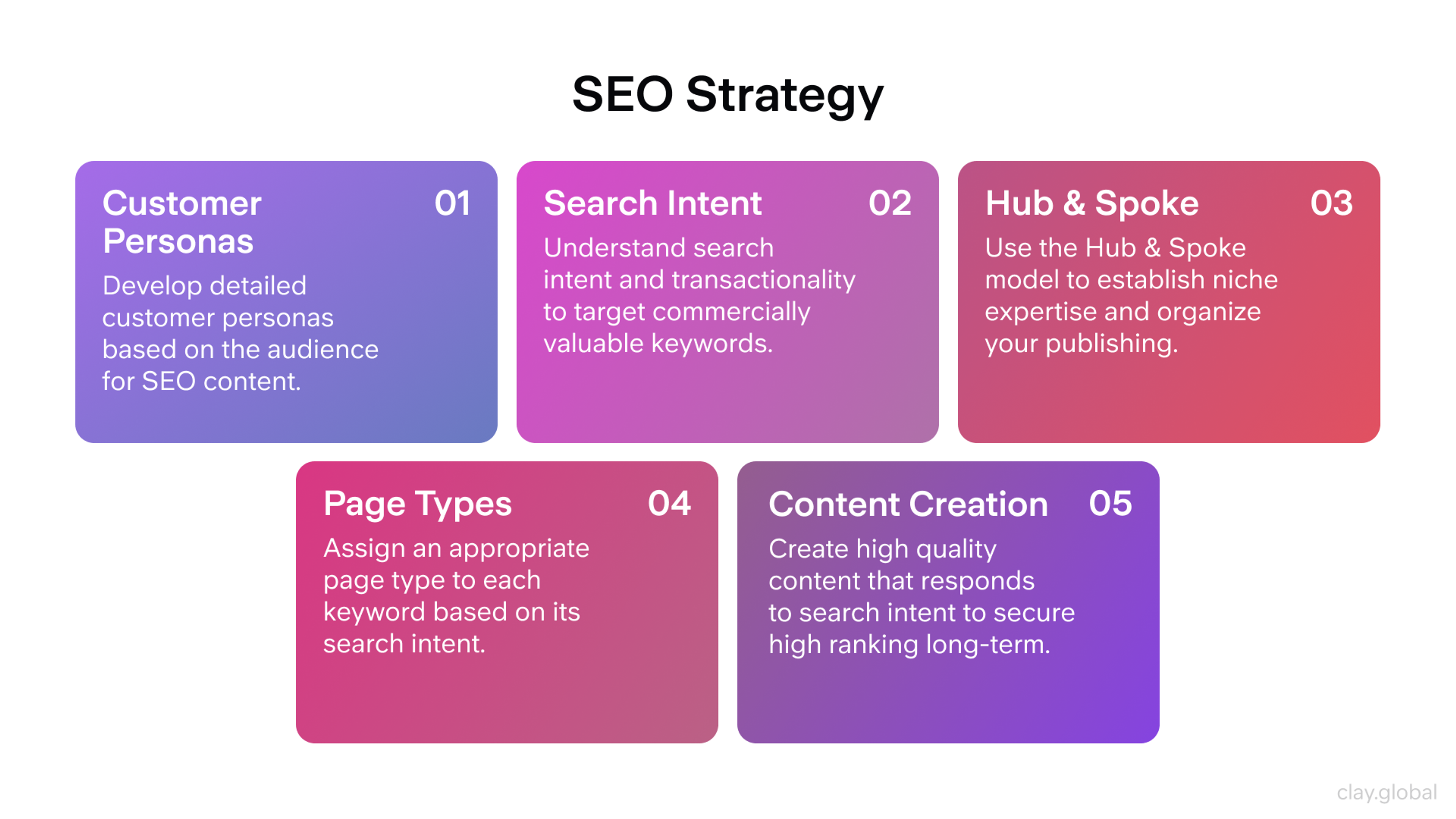
SEO Stages by Clay
Developer Handoff Documentation That Speeds Implementation
Designers contribute comprehensive handoff documentation that translates design into development reality. They deliver design tokens for colors, typography, spacing, and border radius. They provide component specifications with all states documented.
They write acceptance criteria that define when implementation matches intent. Handoff documentation may also include annotated source code to help developers implement designs accurately.
This documentation contribution includes annotations for tricky interactions, edge cases, and accessibility requirements. Designers contribute review cycles during development where they check staging builds, log issues with clear reproduction steps, and verify fixes.
The handoff contribution keeps teams focused on outcomes instead of debating implementation details. Good documentation speeds development and maintains design quality.
Content Management Specifications That Empower Teams
Designers contribute content management structures that make ongoing updates easier. They help define which fields exist in the CMS, which are required, and what character limits protect layouts. They specify validations that prevent broken pages and flexibility levels that maintain consistency.
This contribution includes content preview systems, image focal point controls, and reusable block specifications. Designers think through how marketing teams will assemble pages from components. They design the author's experience knowing it directly impacts the user experience.
The CMS contribution reduces the need for developer involvement in routine content updates. This speeds up marketing operations and reduces bottlenecks.
Quality Assurance Checklists That Ensure Polish
Designers contribute comprehensive QA checklists that catch issues before launch. They test layouts with edge cases like long headlines, unusual addresses, missing images, and large numbers. They verify keyboard navigation order, check focus behavior in modals, and confirm forms work with slow connections.
The QA contribution includes checking favicons, social media preview images, and browser color metadata. Designers document these checks in systematic lists that teams can follow for every launch. This contribution prevents embarrassing oversights and maintains quality standards.
Quality assurance contributions ensure the public sees polished work that reflects well on the brand.
Analytics Frameworks and Testing Plans for Continuous Improvement
Designers contribute analytics frameworks that measure what matters. They specify which user actions to track, define success metrics, and create A/B testing plans for key pages and flows. They design instrumentation that answers real business questions instead of collecting vanity metrics.
The post-launch contribution includes experiment designs that test hypotheses about user behavior. Designers specify what to test, document expected outcomes, and analyze results to inform future decisions. They contribute insight into where users struggle, which pages lose visitors, and how fast critical actions happen.
These analytical contributions turn sites into learning systems that improve over time. Small optimizations compound into major performance gains.
Design Documentation That Maintains Consistency Over Time
Designers contribute living documentation that keeps websites consistent as they evolve. They deliver component usage guidelines, spacing rules, icon standards, and pattern libraries.
They maintain version histories and changelogs that track design system updates. They contribute onboarding materials that help new team members understand and use the system correctly.
This governance contribution protects quality as teams grow and change. Documentation reduces guesswork, speeds up decision-making, and prevents the design system from fragmenting. Designers contribute processes for how new patterns get added without breaking existing consistency.
The documentation contribution keeps websites maintainable and scalable over years, not just months.
The Complete Contribution: Measurable Business Value
When you add up all these contributions, website projects get clear strategic direction, efficient structure, tested flows, reusable components, accessible design, fast page loads, discoverable content, smooth developer collaboration, empowered content teams, and systems for continuous improvement.
This comprehensive contribution delivers measurable results. Users complete tasks with fewer errors. Search engines send more qualified traffic. Marketing teams publish updates without developer bottlenecks. Product teams learn faster from real data.
The business value is concrete: fewer revision cycles, faster launches, better performance metrics, and outcomes that justify the investment in professional design.
FAQ
What Do You Mean by Web Project?
A web project is a planned digital product or service built for the internet, such as a website, web app, or platform, designed to meet specific business or user goals.
Examples of web development project ideas for beginner, intermediate, and advanced web developers include building landing pages with HTML and CSS, creating interactive applications with JavaScript, developing back-end systems using Python, PHP, or Java, and integrating multiple programming languages to enhance functionality. These projects help web developers build essential skills and can be showcased in a portfolio to demonstrate expertise and versatility.
How to Make a Website Project?
Define goals, plan structure, design layouts, develop front end and back end code, test across devices, deploy to hosting, and maintain with updates and analytics.
As you start your website project, consider following a learning path that allows you to explore creative project ideas, build essential web development skills, and develop a strong portfolio to showcase your work.
What Is a Web Example?
Examples include ecommerce sites like Amazon, social networks like Facebook, and informational websites like Wikipedia.
A web page can be designed for fun, to offer services, to encourage user engagement, or to create familiar experiences for users.
Is Netflix a Website Or Web App?
Netflix is a web app. Building a Netflix clone helps developers become familiar with world-renowned platforms and encourages creative approaches to web app development. It runs in the browser and behaves like software, streaming content dynamically and saving user preferences in real time.
What Are The 7 Steps Of Web Development?
The main steps are planning, design, content creation, coding, testing, launch, and maintenance. Each ensures usability, performance, and security.
Mastering essential web development skills and choosing the right programming language are in high demand for web development jobs. Building a strong portfolio is key to showcasing your expertise and achieving career success.
Conclusion
Professional web design contributions become invisible when they work well. Users experience the results without seeing the thousands of careful decisions behind them. Designers contribute strategic thinking, systematic problem-solving, detailed specifications, and continuous improvement processes.
These contributions create websites where business goals, user needs, and technical capabilities align. Both users and businesses win when designers bring their full contribution to website projects.


About Clay
Clay is a UI/UX design & branding agency in San Francisco. We team up with startups and leading brands to create transformative digital experience. Clients: Facebook, Slack, Google, Amazon, Credit Karma, Zenefits, etc.
Learn moreAbout Clay
Clay is a UI/UX design & branding agency in San Francisco. We team up with startups and leading brands to create transformative digital experience. Clients: Facebook, Slack, Google, Amazon, Credit Karma, Zenefits, etc.
Learn more