

A product roadmap sounds simple until a real team has to use one. Leadership wants clarity. Engineering wants priorities. Sales wants something they can talk about. want to know what is coming next.
The mistake is trying to satisfy all of those needs with one bloated document full of dates, features, and vague promises.
In 2026, the pressure is even higher. Product teams are working in shorter cycles, using AI to move faster, and facing more scrutiny around business impact, reliability, and customer value.
Atlassian’s 2026 research found that product work is under tighter timelines, more pressure to prove outcomes, and more pressure to make decisions with less room for guesswork.
Key Takeaways
- A product roadmap is a strategic plan that shows where the product is going, why those priorities matter, and what progress should look like.
- The best roadmaps in 2026 are outcome-led. They focus on customer problems, business goals, and learning, not just feature delivery.
- A roadmap is not a backlog, a release plan, or a project tracker. It should stay above day-to-day execution.
- Different audiences need different roadmap views. Internal teams, executives, sales teams, and customers should not all see the same version.
- The most useful roadmaps are updated often, explained clearly, and are honest about uncertainty.
What Is a Product Roadmap?
Product Roadmap Example
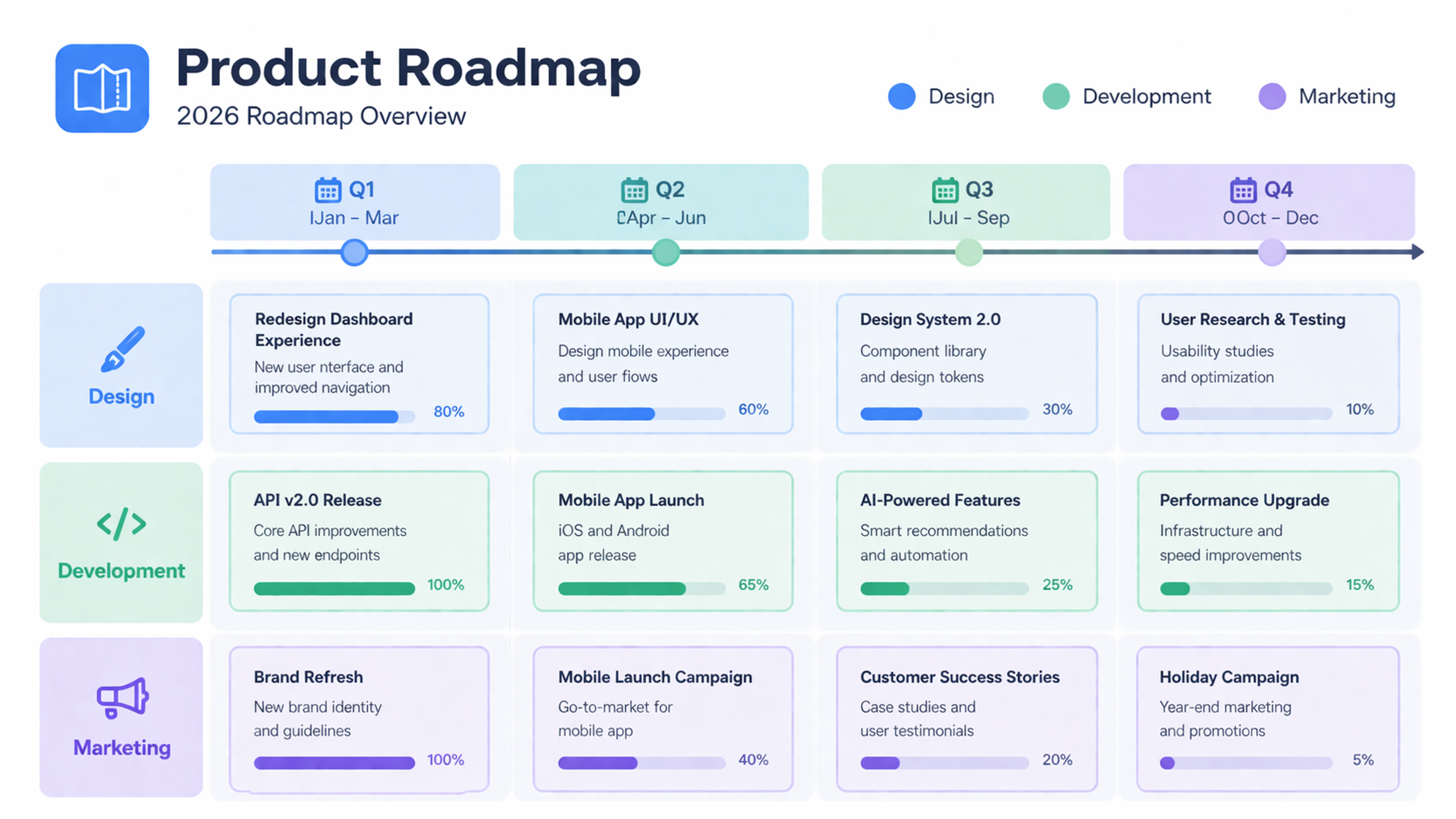
A product roadmap is a strategic document that explains where a product is headed, why those priorities matter, and how major initiatives connect to business and customer outcomes.
Atlassian describes it as a shared source of truth for a product’s vision, direction, priorities, and progress over time. Productboard places it one level above release plans, which are more execution-focused.
That distinction matters. A roadmap is not supposed to answer every delivery question. It is supposed to help people understand the logic behind the work. When a roadmap is doing its job well, it answers a simple set of questions clearly:
- What are we trying to change for the user?
- Why are we focusing on this now?
- What are the biggest bets ahead?
- What does success look like?
A roadmap is a living map that helps the whole team align around what is being built and why. That idea still holds up.
What changes in 2026 is the level of discipline required. Teams can gather more feedback and generate more ideas than ever, but the real value of a roadmap comes from filtering, not collecting.
Why Product Roadmaps Matter in 2026
Roadmaps matter more now because product teams are moving faster, but certainty has not increased with speed. AI tools can summarize research, cluster feedback, draft specs, and help teams ship faster.
What they do not remove is the need for judgment. In fact, faster execution often creates more pressure to choose well, because bad bets can now move just as quickly as good ones.
Atlassian’s 2026 reporting shows that product teams feel both more influential and more stretched, with many lacking enough time for strategic planning and experimentation.
That is why a roadmap should not just show activity. It should show intent. A team that ships a lot without a coherent roadmap can still look busy while drifting. A strong roadmap keeps the product tied to outcomes, gives stakeholders a shared narrative, and prevents every loud request from becoming a priority.
This is also why the best roadmaps are honest about uncertainty. In stable periods, a roadmap can look more fixed. In more volatile markets, it needs to leave room for discovery, testing, and reprioritization.
Good roadmaps do not hide that uncertainty. They organize it.
Product Roadmap vs Backlog vs Release Plan
One of the fastest ways to improve a roadmap is to stop asking it to do three different jobs at once.
A product roadmap is strategic. It explains direction and priorities.
A backlog is tactical. It is a working inventory of tasks, stories, bugs, and ideas.
A release plan is executable. It gets closer to timing, dependencies, and launch readiness.
Product Roadmap vs Backlog vs Release Plan
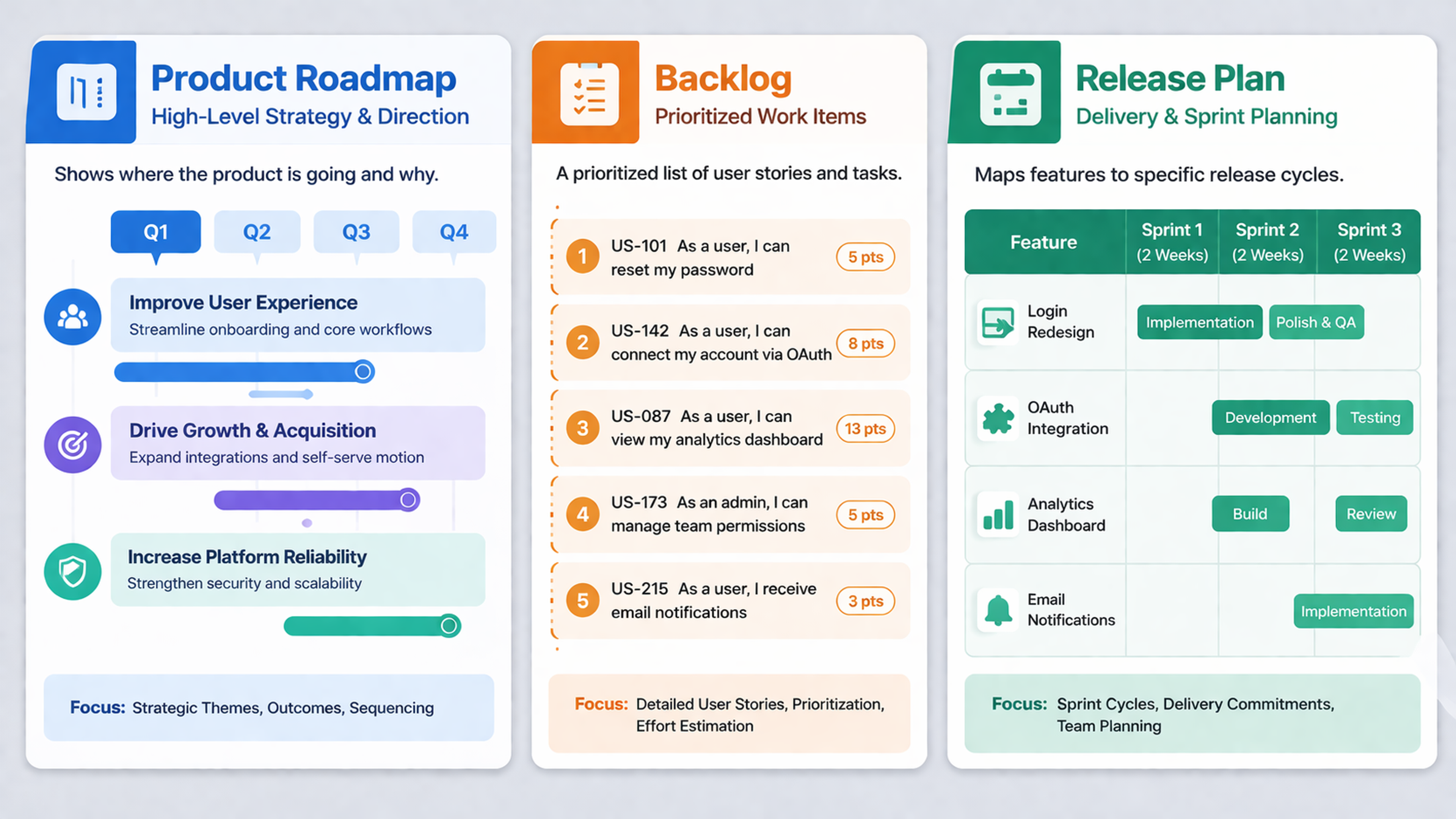
This is where many teams lose clarity. They call something a roadmap, but what they really have is a crowded project tracker with dates attached to everything. That creates two problems at once.
First, the strategic signal gets buried under operational detail. Second, stakeholders start treating every estimate like a promise.
A roadmap should create alignment, not trap the team in outdated commitments. If it reads like a sprint board with nicer colors, it is too detailed.
The Roadmap Formats That Work Best Now
There is no single perfect roadmap format. There is only a format that matches the audience and the level of certainty.
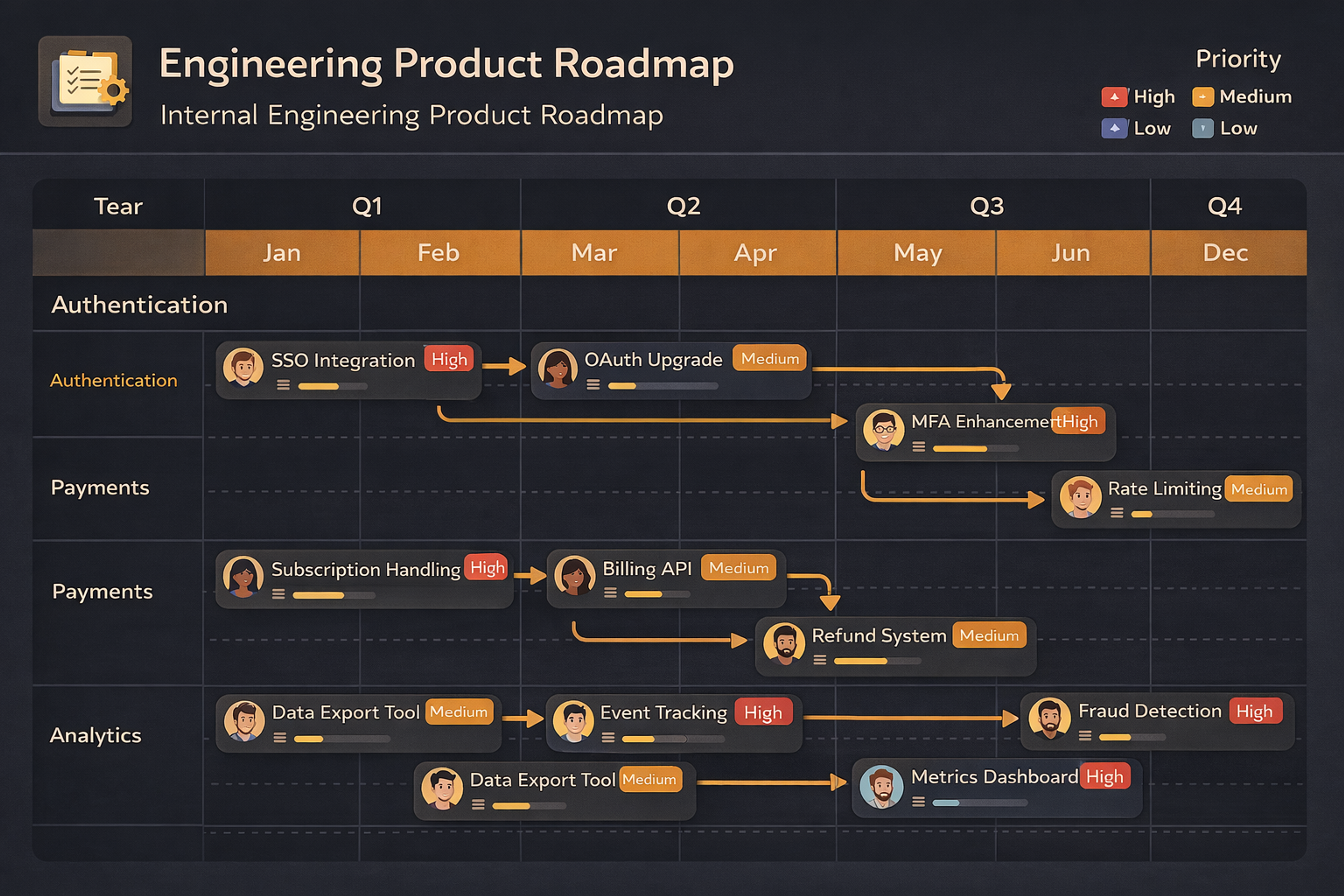
Internal Roadmaps
Internal roadmaps are for the people who build, support, and launch the product. They can go deeper into priorities, dependencies, milestones, and reasoning, but they should still stay above the task level.
Internal Product Roadmap Example
External Roadmaps
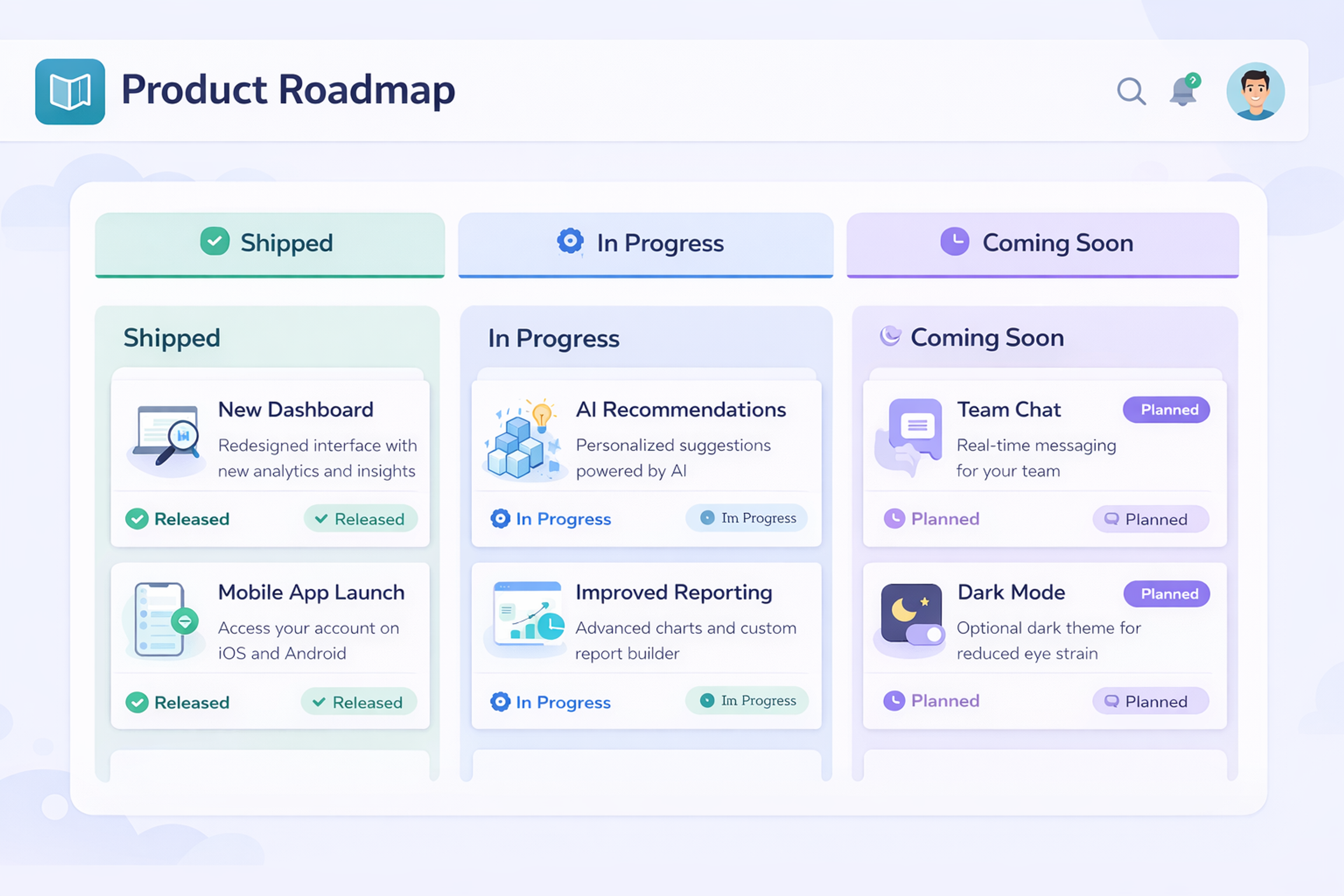
External roadmaps have a different job. They should build confidence, show direction, and help customers understand where the product is going without overcommitting the company.
A good external roadmap sounds less like “feature X on June 12” and more like “we are investing in faster onboarding, better reporting, and stronger admin controls.”
That gives customers a useful signal without forcing the team to defend every internal shift in public.
External Product Roadmap Example
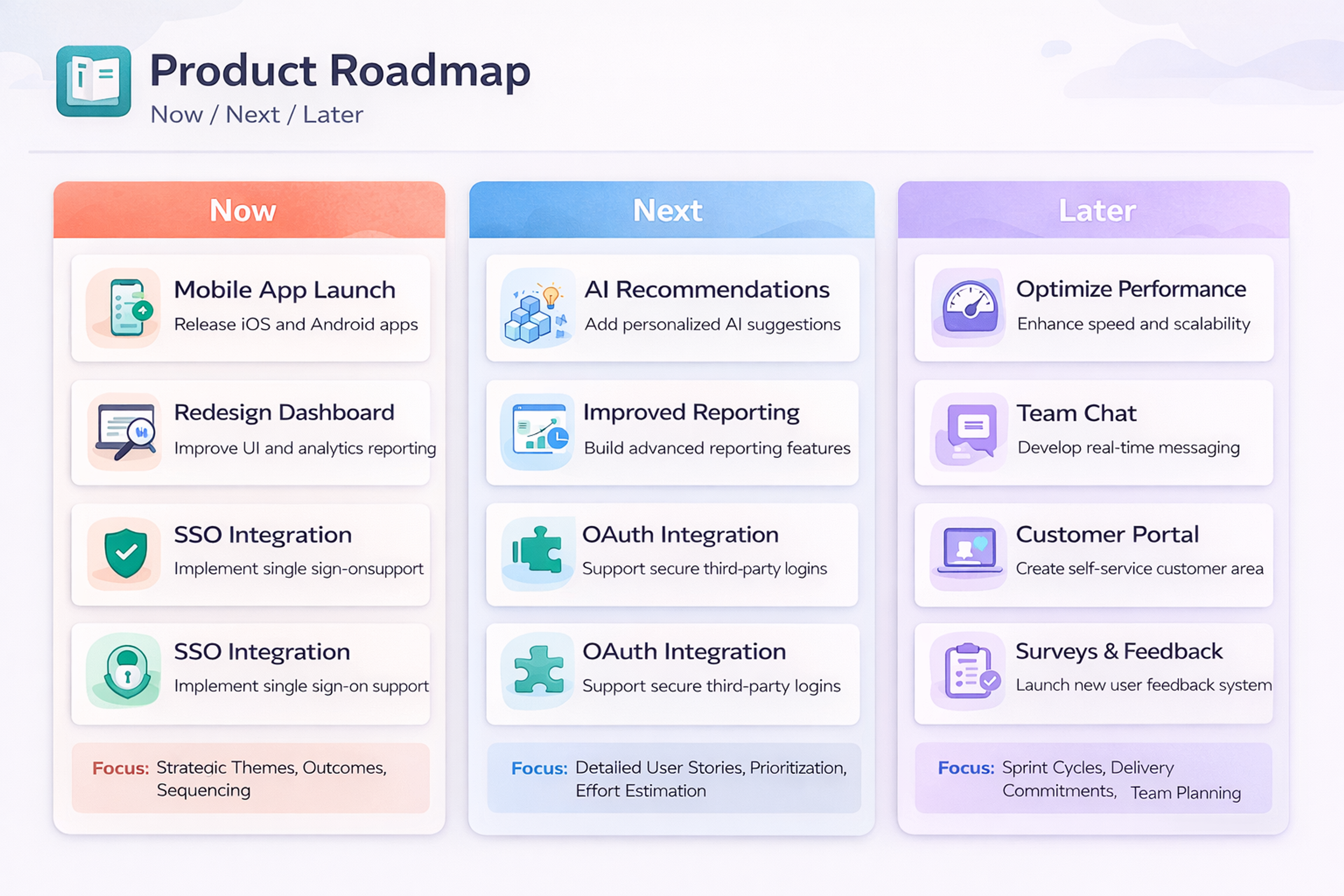
Now, Next, Later Roadmaps
Now, Next, Later became popular for a reason. It reduces false precision. It is recommended to use broader time chunks like months or quarters instead of very specific dates, and it explicitly points to Now, Next, Later as a way to keep roadmap discussions focused on goals and strategy rather than timing debates.
That format works especially well when discovery is still active, priorities may shift, or the goal is to communicate sequencing without overpromising. It is not the only good format, but it is one of the most useful for modern product teams because it respects uncertainty without becoming vague.
Now, Next, Later Roadmap Example
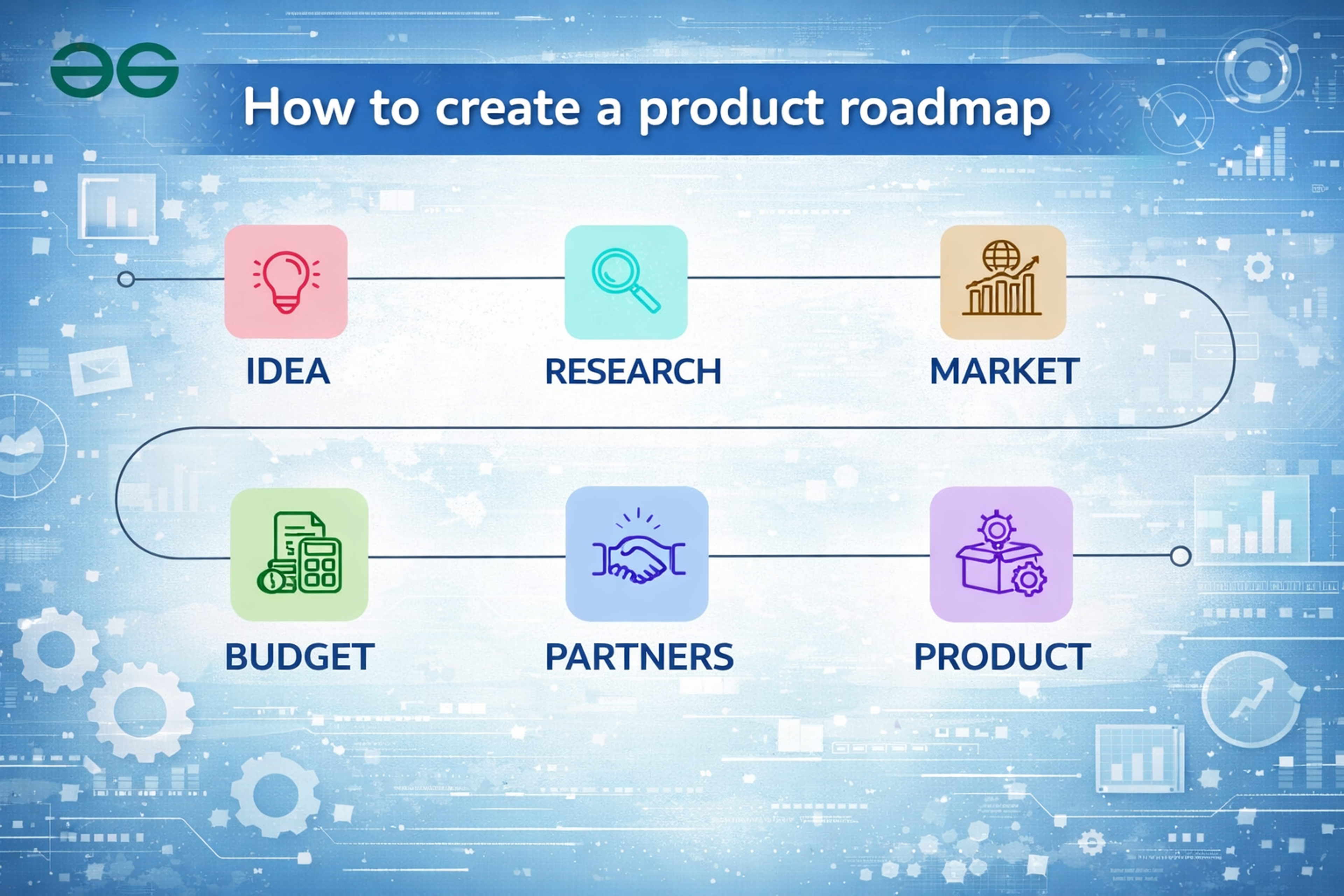
How to Create a Product Roadmap in 5 Steps
Start with Vision, Outcomes, and Guardrails
A roadmap cannot rescue a weak strategy. Before anyone starts arranging initiatives on a board, the team needs to be clear on where the product is headed and what outcomes matter most.
The guidance should start exactly there, with vision, strategy, and objectives. Objectives should be high-level enough to represent meaningful outcomes, but specific enough to guide prioritization.
In practice, this means your roadmap should begin with a few clear answers. What change do we want for users? What business result are we aiming for? What constraints matter no matter what, such as privacy, accessibility, reliability, or trust? Those guardrails matter more in 2026 because speed without boundaries leads to costly mistakes.
Collect Signals, not Just Requests
Every team has no shortage of ideas. Customer feedback, support tickets, stakeholder opinions, analytics, sales asks, market shifts, and competitive moves all compete for attention. The job is not to collect everything equally. It is to tell the difference between a loud request and a meaningful signal.
Prioritize a shift from “I think we should build this” to “we are prioritizing this because of XYZ.” That reasoning is what turns roadmapping from opinion into product judgment. The teams should gather ideas from multiple sources and keep the roadmap tied to customer and business goals.
AI can help here. It can summarize notes, cluster recurring themes, and surface patterns from large volumes of input. But it should support judgment, not replace it. The roadmap still needs human choices about which problem is worth solving now and which opportunity is worth waiting on.
Product-roadmap
Prioritize Bets, Not Piles of Work
The strongest roadmaps do not frame every initiative as a guaranteed feature delivery. They frame major items as bets. A bet has an expected outcome, a reason it matters, and some level of uncertainty.
This way of thinking is more realistic. Some roadmap items deserve a full launch plan. Others deserve a prototype, experiment, or smaller validation step first. Atlassian’s 2026 product research found that many teams still do too little experimentation and do not involve engineering early enough, both of which make big bets riskier than they need to be. A smarter roadmap reflects that by showing not just what will be built, but what needs to be learned first.
That is also why the best roadmaps link every major initiative to a measurable outcome. If a roadmap item has no clear impact, no visible problem behind it, and no success signal, it probably does not belong there yet.
Build the Right View for the Right Audience
A roadmap should be adapted for the people using it. That sounds obvious, but many teams still send one master roadmap to everyone and wonder why it creates confusion.
Roadmap should tailor views to different stakeholders:
- Executives need a high-level view tied to goals, metrics, and business direction
- Development teams need enough context to understand why work is prioritized and how it connects to delivery
- Sales and customer-facing teams need visibility into likely value without being handed rigid dates they cannot control
- External audiences need the highest-level version of all
This is less about formatting and more about respect. Good communication recognizes that different people need different levels of detail to make good decisions.
Review It Often, Explain Changes, and Keep It Alive
A roadmap stops working the moment people stop trusting it. That usually happens for one of three reasons.
It is out of date, it changes without explanation, or it becomes a decorative file that no one really uses. The roadmap guidance is clear that effective roadmaps are regularly updated to reflect changing priorities.
The practical fix is simple:
- Review the roadmap on a regular basis
- Explain what changed and why
- Keep the connection between the roadmap and real-world learning visible
The update matters, but the rationale matters just as much. When stakeholders can see the reasoning, they are far more likely to accept the change.
Best Product Roadmap Examples
Let us consider some of the best roadmaps in product management:
AWS: Scaling Up for the Future
Amazon Web Services (AWS) crafts a product roadmap that is deeply rooted in meeting the diverse and complex needs of enterprise customers. The roadmap is heavily centered around expanding AWS’s cloud infrastructure and diversifying its service offerings.
Source: aws.amazon
Key areas of focus include cutting-edge technologies like machine learning, artificial intelligence, and big data analytics. AWS’s strategic approach helps it stay ahead of the curve, providing its clients with innovative tools that support large-scale, mission-critical applications across industries.
Atlassian: Supporting Development Teams
With tools like Jira, Confluence, and Bitbucket, Atlassian aims to empower software development teams to work collaboratively and more efficiently. The company is constantly refining its roadmap with new updates, features, and integrations that help improve team workflows.
Whether the requirements are broad or niche, Atlassian aims to address them all. The company makes sure that it remains in sync with the needs of its user base by using data to prioritize updates and refine its tools for maximum impact.
Source: atlassian
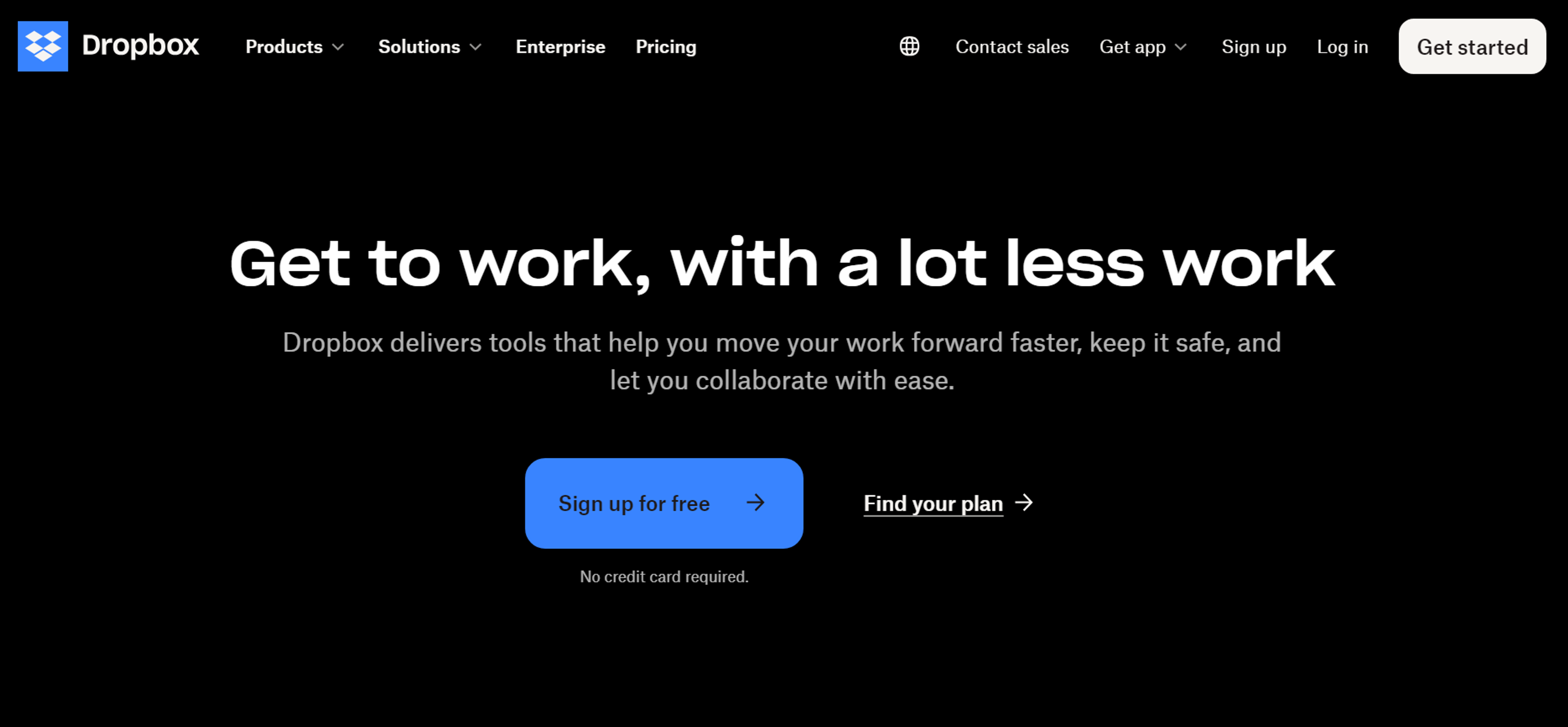
Dropbox: A Holistic Approach to Collaboration
With a focus on collaboration tools like Dropbox Paper, the company's roadmap suggests expanding its product ecosystem. Alongside bolstering core storage and file-sharing, the company expands storage's versatility by integrating third-party applications.
The roadmap is regularly updated based on user feedback and data analytics, enabling Dropbox to stay responsive and agile. By improving the platform's user experience, Dropbox ensures that teams worldwide can continue to rely on the platform as a crucial tool.
Source: dropbox
What Strong Product Roadmap Examples Actually Show
The most useful roadmap examples today tend to be public ones, because they reveal how mature teams communicate direction without pretending to know everything.
GitHub’s public roadmap is a strong example because every item is an issue with labels that show release phase, feature area, and related context. It gives users a clear sense of what GitHub is working on, what stage an item is in, and how the roadmap itself is structured. That makes it more than a list. It becomes a communication system.
Atlassian’s Cloud Roadmap is useful for a different reason. It presents upcoming work through status labels such as “Coming soon” and time windows like quarters, instead of pretending that every item needs a precise delivery date months in advance. It also shows an update cadence that keeps the page current.
The common lesson is simple. Good roadmap examples communicate movement, confidence, and relevance. They do not just show ambition.
Common Mistakes That Make Roadmaps Harder to Trust
The first mistake is making the roadmap too detailed. Once it starts reading like a task tracker, people lose the bigger picture.
The second mistake is presenting the roadmap like a promise sheet. This often happens when teams attach precise dates too early or share internal planning assumptions without enough context. The result is predictable. Priorities change, dates move, and trust takes the hit.
The third mistake is failing to connect initiatives to outcomes. A roadmap item should make sense because it solves a meaningful customer problem, supports a strategic goal, reduces a risk, or opens a real opportunity. If it does none of those, it is probably just work for the sake of work.
The fourth mistake is neglect. A roadmap does not need to be rewritten every week, but it does need to reflect reality. Effective roadmaps are clear and regularly updated.
How to Choose the Right Product Roadmap Tool
With the right product roadmap tool selection, a business can utilize maximum collaboration within the team, making work efficient and effective. An agile product roadmap template is essential for continuous planning and collaboration, visually organizing tasks and aligning them with strategic goals. Below are some options.
- Jira: This is best suited for agile teams that require fast and accurate tracking of assigned tasks. They perform best in complex workflows with sprints and functions and excel in different features related to report generation, task allocation, and backlog setting.
- Aha!: Provides a way to build visual roadmaps and align strategy with execution. It also provides larger teams with features like idea management, prioritization, and product planning, making connecting higher-level goals with day-to-day tasks easier.
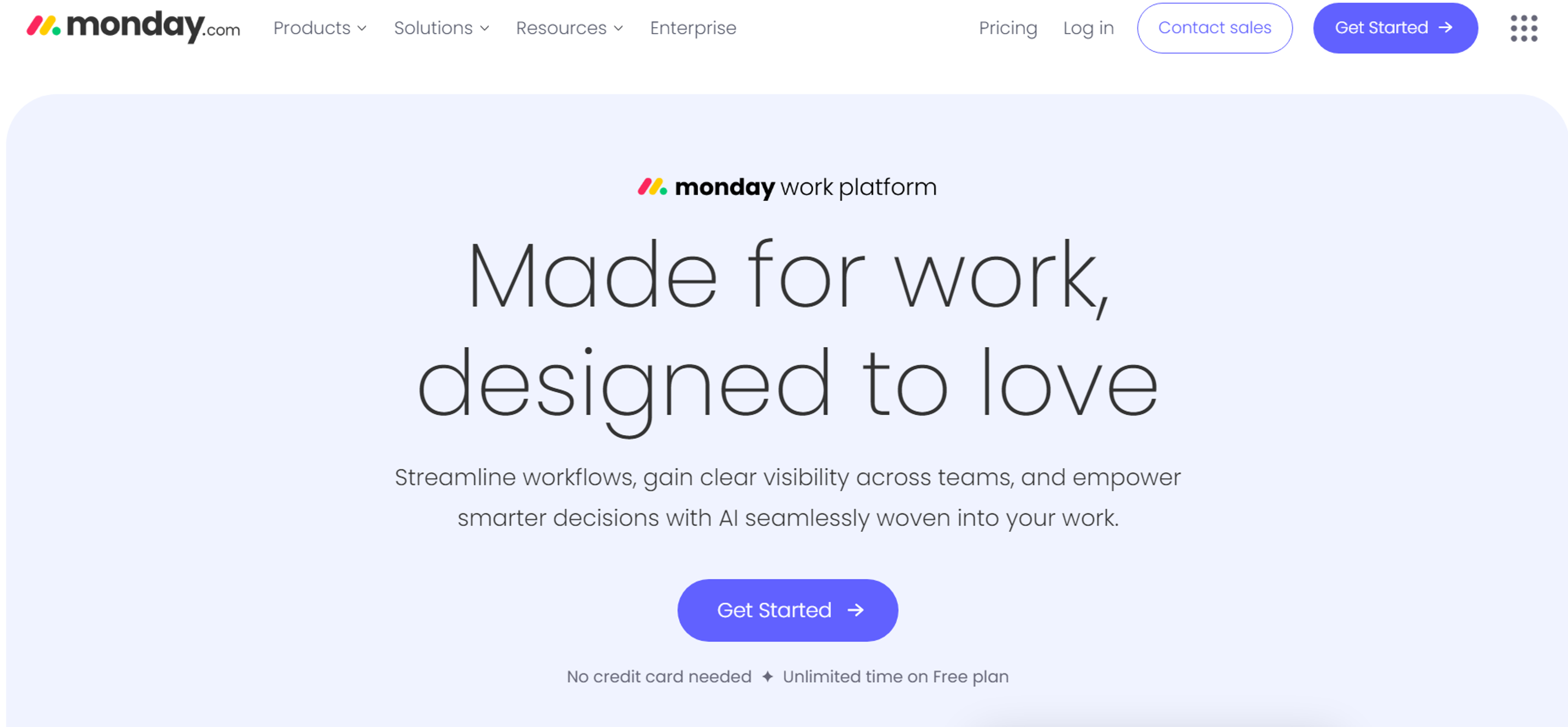
- Monday.com: Provides flexible road mapping and intuitive team collaboration. This tool is suited for teams juggling several projects simultaneously and needing a user-friendly interface and templates to assist them.
Source: Monday.com
Read More
Conclusion
The main takeaway is that a roadmap isn’t a one-time plan. It’s a living guide that helps teams stay on course, make better decisions, and adapt as new evidence and priorities emerge.


About Clay
Clay is a UI/UX design & branding agency in San Francisco. We team up with startups and leading brands to create transformative digital experience. Clients: Facebook, Slack, Google, Amazon, Credit Karma, Zenefits, etc.
Learn moreAbout Clay
Clay is a UI/UX design & branding agency in San Francisco. We team up with startups and leading brands to create transformative digital experience. Clients: Facebook, Slack, Google, Amazon, Credit Karma, Zenefits, etc.
Learn more