

Every business eventually reaches a point where the next move is unclear. A Design Sprint gives a team a structured way to move from an important question to a prototype and user feedback in days.
Instead of committing immediately to development, the team can make an idea tangible and see how target users respond before making a larger investment.
For UI/UX teams and founders, a Design Sprint can help when a decision is important, expensive, or hard to resolve through discussion alone.
Key Takeaways
- The classic Design Sprint is a five-day process for moving from a problem to a user-tested prototype.
- It requires focused participation from a small, cross-functional team and a clear decision-maker.
- Design Sprints can reduce uncertainty by testing important assumptions before full development.
- They are particularly useful for high-stakes, time-sensitive, or stalled product decisions.
- The original five-day Sprint is still the standard reference, but four-day and other adapted versions are also common today.
What Is the Design Sprint Methodology?
Jake Knapp created the Design Sprint at Google and later refined it at Google Ventures, now GV. He documented the method with John Zeratsky and Braden Kowitz in their 2016 book Sprint: How to Solve Big Problems and Test New Ideas in Just Five Days. More resources from Knapp and Zeratsky are available on the official Sprint website.
The classic version takes a small team through five focused days.
- Monday focuses on mapping the problem and choosing a target.
- Tuesday focuses on sketching competing solutions.
- Wednesday is used to decide what to test and create a storyboard.
- Thursday is used to build a realistic prototype.
- Friday is used to test it with target users.
The goal is to investigate critical assumptions before committing substantially more time and money.
The methodology has evolved since the book was published. Google's Design Sprint Kit organizes Sprint activities into six phases called Understand, Define, Sketch, Decide, Prototype, and Validate.
Google's methodology guide also allows teams to adjust the number of days and choose methods that fit a specific goal.
Three Sprint Formats Compared
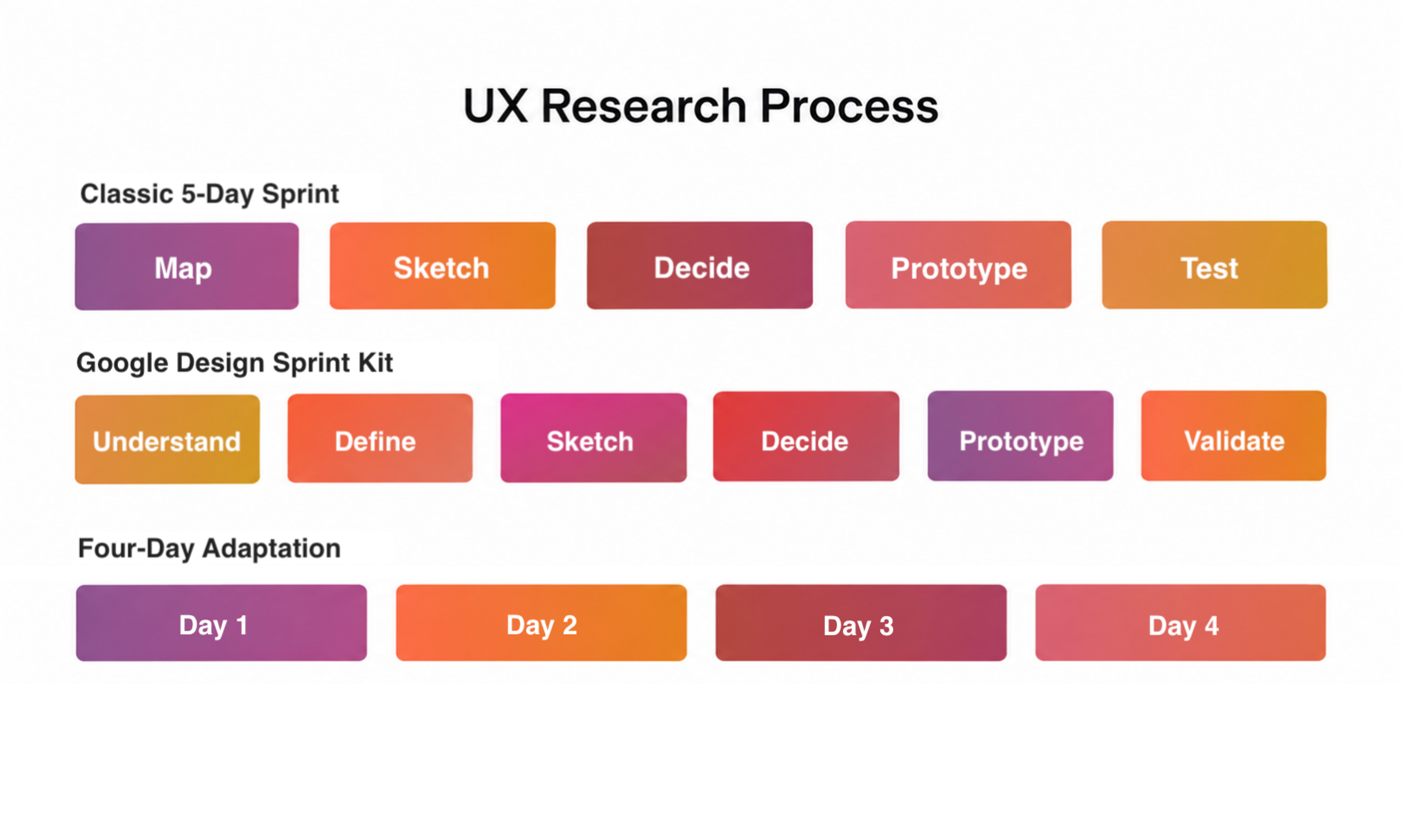
Other practitioners have developed four-day and customized versions as well. By 2026, several Sprint schedules are in use, although Knapp's five-day framework remains the foundation for many of them.
Why UI/UX Teams and Businesses Run Design Sprints
Teams often use a Design Sprint when an important decision has become difficult to resolve through meetings or internal debate.
A product team may need to choose between competing feature directions. A founder may want to investigate a product concept before funding a full build. An established company may be considering a redesign or changes to its customer journey without a clear direction.
A Sprint gives the team a realistic version of the proposed experience that they can test with people in the target audience.
The business consequences of digital friction can be significant. Across digital experiences, conversion rates fell by 5.1% in the latest benchmark, which gives teams another reason to identify weak experiences before investing heavily in scaling them.
User tests conducted during a Sprint are normally small and qualitative. They can expose misunderstandings, usability problems, weak assumptions, and promising reactions early enough for a team to change direction.
A Design Sprint provides useful early evidence as one part of a broader product validation process.
Classic Five-Day Design Sprint
The original Sprint described by Jake Knapp, John Zeratsky, and Braden Kowitz follows a Monday-to-Friday schedule.
Monday for Mapping
Monday is about understanding the challenge and deciding where the Sprint should focus.
The team reviews the long-term goal, identifies key questions and risks, maps the customer journey, and brings in knowledge from people who understand different parts of the problem.
By the end of the day, the team chooses a specific target for the Sprint.
Tuesday for Sketching
Tuesday shifts the focus toward possible solutions.
Participants work individually and review relevant ideas and inspiration. Then they create detailed solution sketches that the team can evaluate without lengthy presentations.
An Early Structural Sketch of a Screen Layout by Clay Global
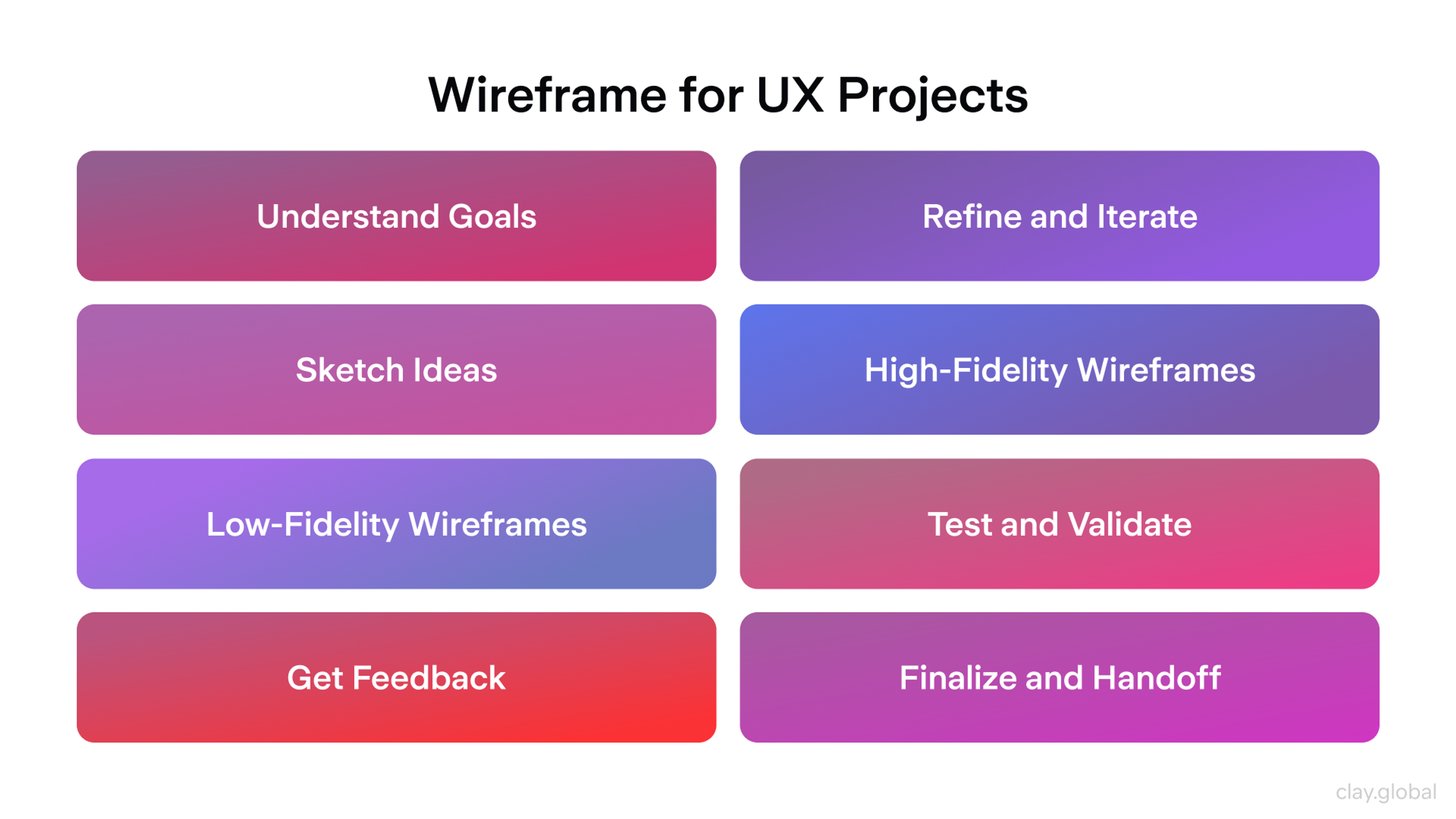
Designers are only one part of the process. Product, engineering, marketing, operations, or other specialists can contribute because the objective is to generate competing approaches rather than polished artwork.
Wednesday for Decision-Making
By Wednesday, the team has several possible solutions and limited time to prototype them.
The classic Sprint uses structured review and voting exercises to evaluate the sketches. The Decider has final decision-making power when necessary.
Once the team chooses a direction, it creates a storyboard that maps out how the prototype will work from start to finish.
Thursday for Prototyping
Thursday is devoted to producing a realistic prototype of the chosen experience.
Why Prototyping Pays Off Before You Build by Clay Global
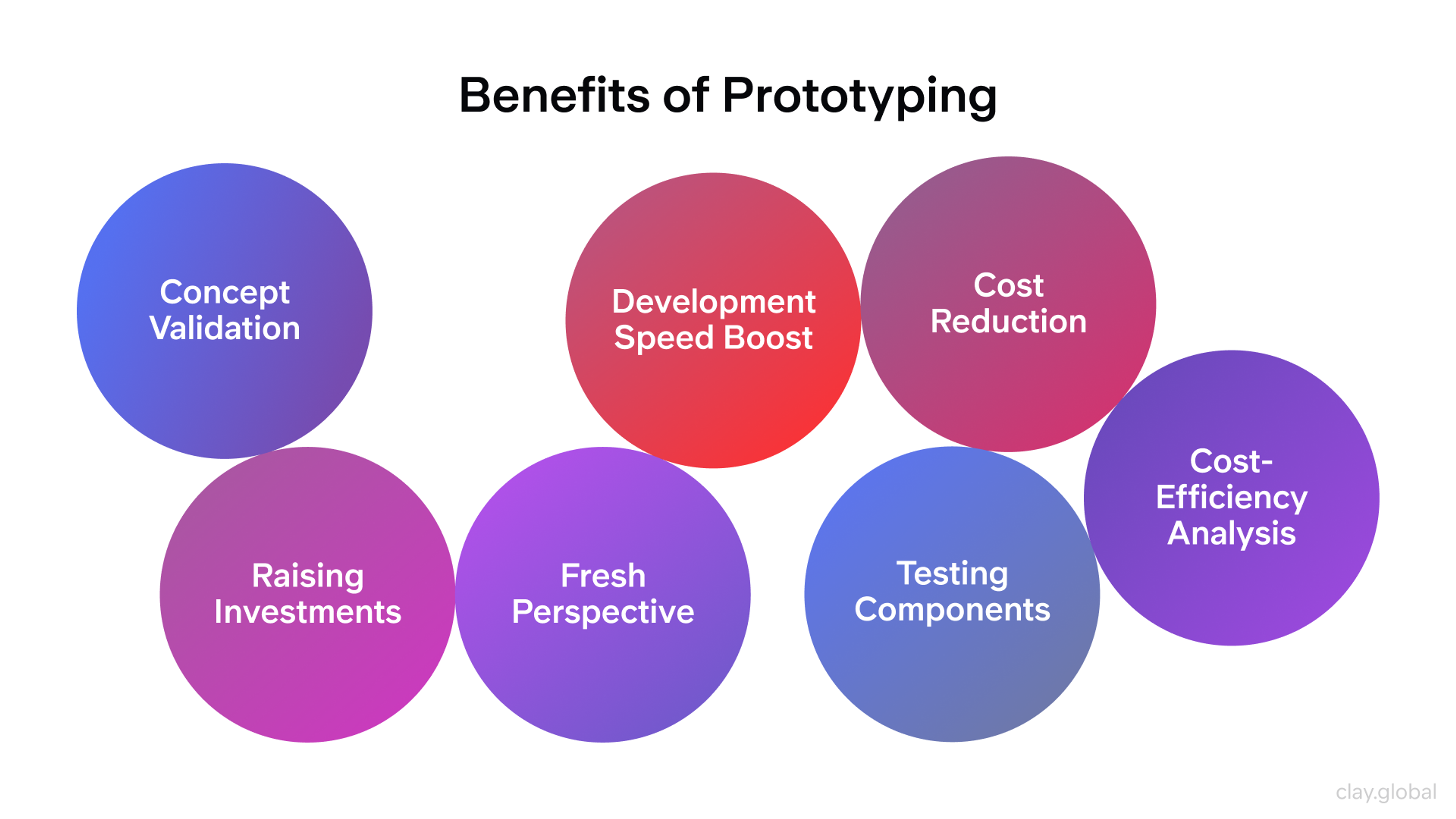
For a software product, that may mean a clickable interface instead of functioning production code. The prototype only needs enough detail to generate credible reactions from users.
The main goal is to make the parts users interact with feel realistic without spending time on systems that are unnecessary for the test.
Friday for Testing
In the classic Sprint, Friday is dedicated to five one-on-one interviews with target customers.
The team observes how participants interpret and respond to the prototype and looks for repeated patterns across the sessions.
How a Usability Test Actually Runs by Clay Global
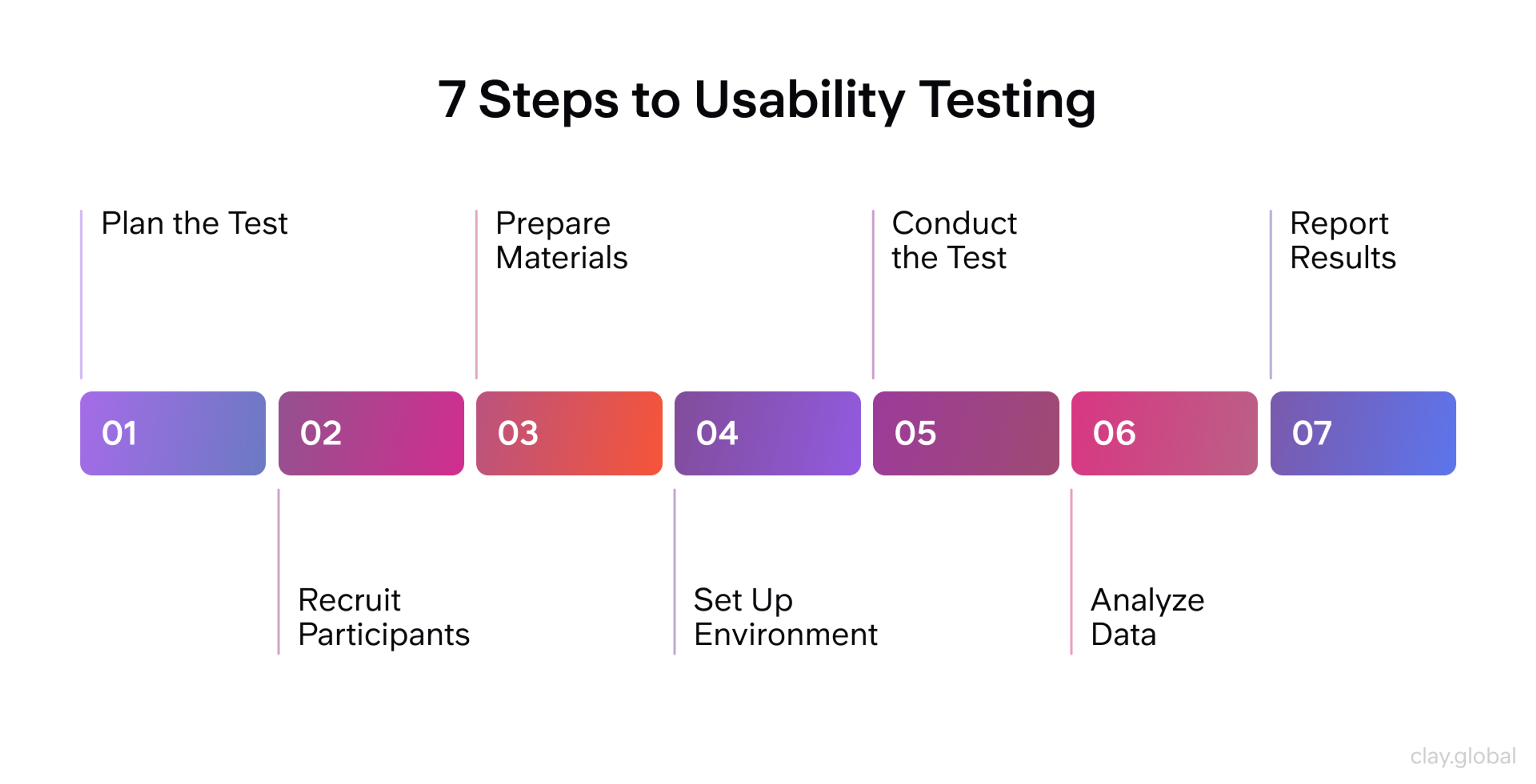
Five participants provide a small sample for fast qualitative learning.
The sessions can reveal recurring usability problems, misunderstood concepts, and reactions that help guide the next decision.
Mozilla used a similar process with its Firefox for iOS team.
Eight people across engineering, design, content strategy, marketing, product, program management, and user research ran a four-day, Google Ventures-style remote Design Sprint focused on privacy and mobile browsing.
The team developed a solution from individual sketches, built a prototype, and tested it with users on the final day.
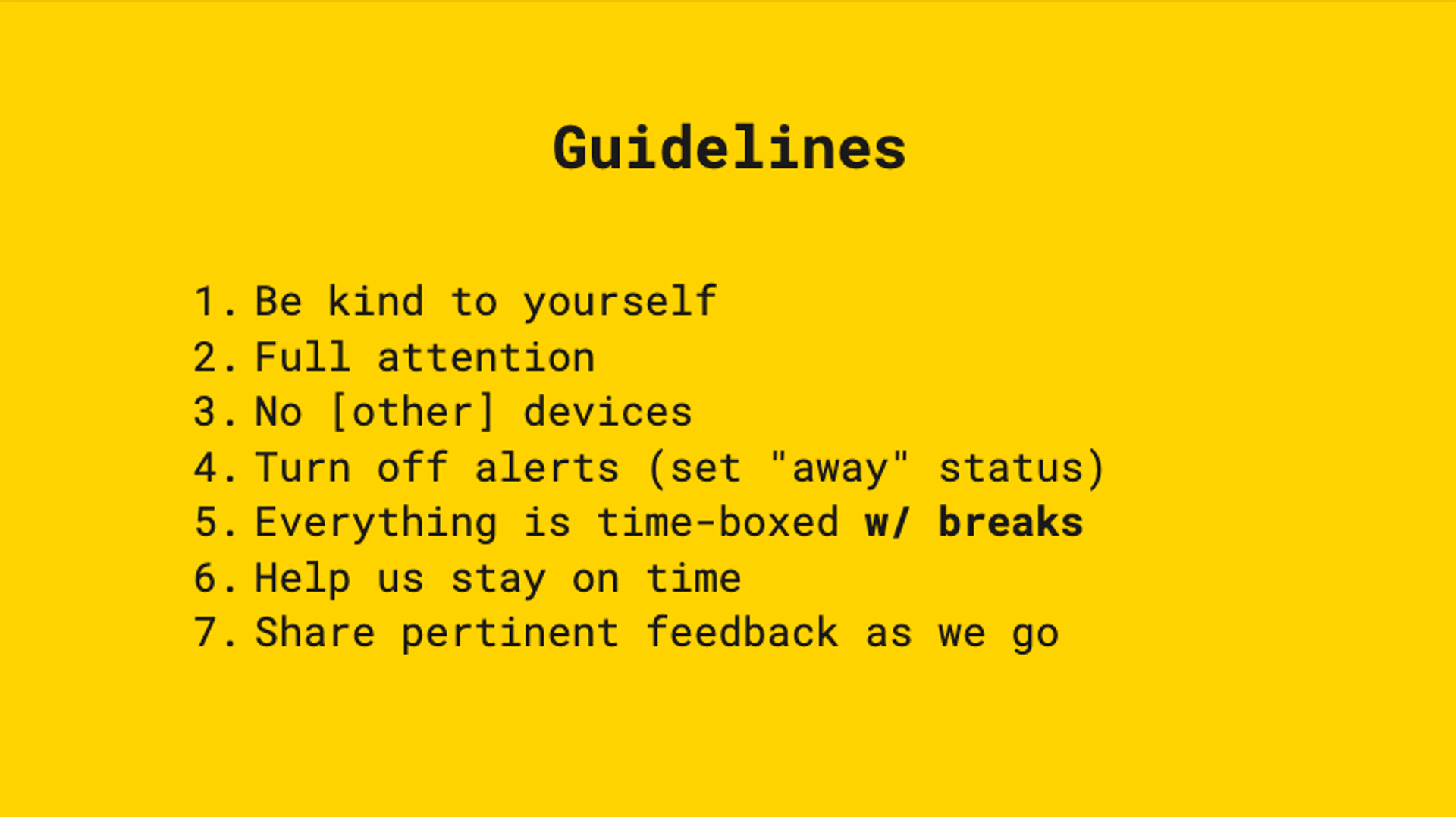
For the remote Sprint, Mozilla also set clear working guidelines around full attention, turning off alerts, time-boxed activities with breaks, staying on schedule, and sharing relevant feedback as the work progressed.
Building the Design Sprint Team
The original Sprint recommends a core team of seven people or fewer. What matters most is having the right mix of knowledge and decision-making authority for the challenge.
A product Sprint might involve people from design, engineering, product management, marketing, customer support, research, operations, or another relevant discipline.
Two roles deserve particular attention:
- The Decider is the person who can make the final call when the team reaches an important decision.
- The Facilitator manages the Sprint process, exercises, timing, and discussion without dominating the solution itself.
The exact team can vary by project. A small group can move quickly while still covering the knowledge required to make useful decisions.
Planning a Design Sprint
A successful Sprint usually begins before the first scheduled workshop.
Steps to Take Before the Sprint Begins
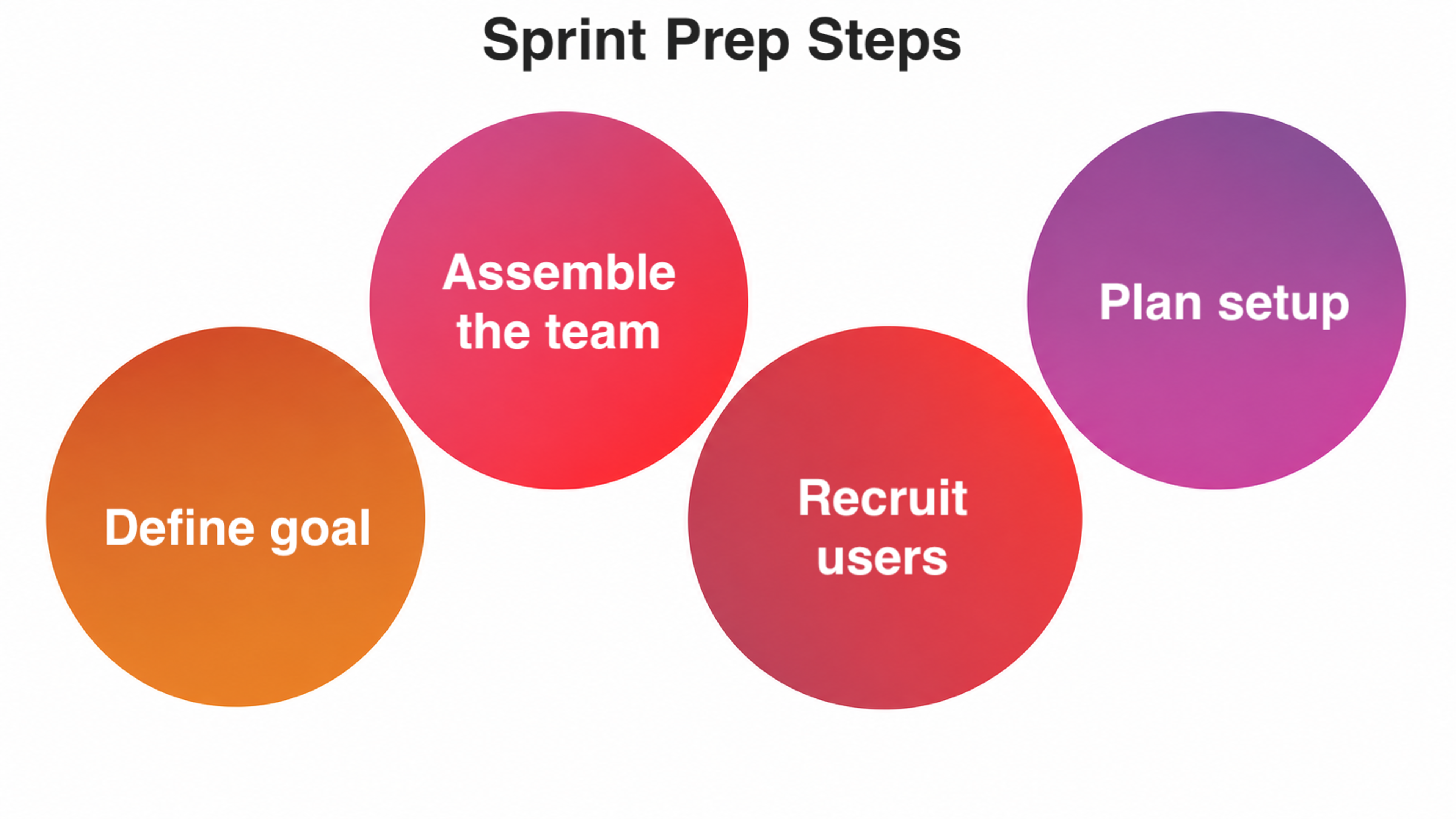
Start by identifying the decision or uncertainty that makes the Sprint necessary. A broad goal such as “improving our app” gives the team little direction.
A goal like “making sure first-time users can understand and complete the new onboarding flow” gives the team a much clearer focus.
Next, make sure the right people can participate and identify the Decider. Recruit test participants early.
Teams should also decide how to produce the prototype, what existing research can inform the Sprint, and how remote or in-person collaboration will work.
Preparation should establish the conditions for the Sprint while leaving the solution open.
We're a UI/UX and product design team that helps turn complex product questions into clear flows, prototypes, and digital experiences. See our work here.
Design Sprint Week Formats
The original framework is a five-day process, while shorter and modified versions are now well established.
AJ&Smart, for example, popularized a four-day variation known as Design Sprint 2.0. Design Sprint Academy developed its own Design Sprint 3.0 approach, which combines pre-Sprint Problem Framing with a four-day Sprint.
Google's Design Sprint Kit is also flexible about timing and notes that teams may use selected methods or shorter workshops depending on their goals.
In 2026, the term Design Sprint can refer to several formats. A five-day Sprint, a four-day adaptation, and a short workshop using selected Sprint exercises can involve different levels of work.
Common Design Sprint Mistakes to Avoid
Starting with a Challenge That Is Too Vague
If the team cannot clearly define what it wants to learn, it may end up with a strong prototype that answers the wrong business question.
Replacing User Testing with an Internal Presentation
Feedback from colleagues can be useful, but testing the prototype with people from the target audience gives the team stronger evidence. 67% of mobile ecommerce sites still have mediocre-to-poor homepage and category navigation UX.
Becoming Too Attached to the Solution
A Sprint prototype is an experiment. Negative or mixed feedback can still be useful when it helps the team avoid investing in the wrong direction.
Treating Five Interviews as Definitive Market Validation
They provide a fast qualitative signal. Important product decisions may still require additional research, experiments, analytics, technical investigation, or market testing afterward.
We used a similar approach in our work with Discover.
User Flow Testing for Discover by Clay Global
Our team mapped possible user journeys for card activation, turned them into early UX prototypes, and tested multiple versions of the flow to find the most user-friendly approach before moving forward with the final experience.
If your team is weighing several product directions, we at Clay Global can bring an outside perspective and help move the decision forward. Tell us about your project.
Read More
FAQ
What are the five phases of a Design Sprint?
Jake Knapp's original Design Sprint follows a five-day structure. Monday is Map, Tuesday is Sketch, Wednesday is Decide, Thursday is Prototype, and Friday is Test.
Google's later Design Sprint Kit uses different terminology and describes six phases called Understand, Define, Sketch, Decide, Prototype, and Validate.
What are the five stages of a sprint?
A Design Sprint and a Scrum Sprint serve different purposes. Under the current Scrum Guide, a Sprint is a fixed-length event of one month or less.
A Design Sprint is a problem-solving and validation framework centered on understanding a challenge, developing potential solutions, prototyping, and learning from users.
What is sprint methodology?
Several different methods use the word sprint, so context matters. In Scrum, a Sprint is the repeating timebox in which a Scrum Team works toward a Sprint Goal and creates value.
A Design Sprint is a different process originally developed by Jake Knapp and refined at GV. It aims to answer important questions quickly through a structured UI/UX design process, prototyping, and user feedback.
What is the difference between a Design Sprint and design thinking?
Design thinking is a broad family of human-centered problem-solving approaches.
A Design Sprint is a more structured, time-boxed process with specific exercises, decision-making methods, prototyping, and user testing.
Should I run a Design Sprint in-house or hire an agency?
Either approach can work. An experienced internal team may already have the facilitation, customer knowledge, design skills, and research capabilities needed to run the Sprint.
An external facilitator or UI/UX agency can help with process expertise, neutral facilitation, participant recruitment, research support, or rapid prototyping capacity.
If external support makes more sense, knowing how to hire a UI/UX design agency can help with the selection process.
How much does a professional Design Sprint typically cost?
There is no standard industry price for a Design Sprint. Current 2026 pricing guides put a full agency-run five-day Sprint at around $8,000-$30,000, depending on the facilitator, preparation, prototype requirements, participant recruitment, research, and deliverables.
Specialist Design Sprint providers may charge around $25,000-$30,000 for a complete five-day engagement that includes preparation, prototyping, and user testing.
Can a Design Sprint be run remotely instead of in person?
Yes, remote Design Sprints can use collaborative whiteboards, video conferencing, prototyping platforms, and remote user-testing tools.
Some organizations also use hybrid formats or involve stakeholders only in sessions where their expertise or decision-making authority is needed.
What happens after a Design Sprint ends?
There is no universal post-Sprint timeline.
A positive result may justify additional validation or movement toward implementation, while mixed results may lead to another prototype iteration or a round of testing.
A negative result may lead the team to rethink the concept or move in a different direction.
Is a Design Sprint only useful for new products?
No. Design Sprints can be used for new products as well as existing ones.
They work best when the team has an important uncertainty that can be made concrete enough to prototype, simulate, and investigate with relevant users.
How many Design Sprints does a company need before launching a product?
There is no recommended number. One Sprint may answer the critical question a team needs to resolve, while another project may require additional iterations or separate Sprints focused on different uncertainties.
Final Thoughts
A Design Sprint gives teams a practical way to test important assumptions before committing to a larger build.
In the classic format, a small cross-functional team moves from one focused challenge to a prototype and real user feedback in five days.
The value comes from getting useful answers early, while there is still time to adjust the direction.


About Clay
Clay is a UI/UX design & branding agency in San Francisco. We team up with startups and leading brands to create transformative digital experience. Clients: Facebook, Slack, Google, Amazon, Credit Karma, Zenefits, etc.
Learn moreAbout Clay
Clay is a UI/UX design & branding agency in San Francisco. We team up with startups and leading brands to create transformative digital experience. Clients: Facebook, Slack, Google, Amazon, Credit Karma, Zenefits, etc.
Learn more