

Over the next decade, AI will change how companies run operations, design products, hire people, and manage risk. The current state of artificial intelligence looks very different from two years ago.
Leading models can now work through multi-step problems and use software tools, and what they deliver varies by task and business.
Behind them sits fast-growing investment in data centers and computing power, and much of that capacity reaches businesses through cloud services and features inside the software they already use.
For companies around the world, these developments are changing how businesses operate and plan for the future. As AI evolves, its impact on business strategy, productivity, and innovation will become increasingly important over the next decade.
Key Takeaways
- Workflows redesigned around AI, with the financial return tracked, give you a clearer view of what works than tools bolted onto old processes.
- Some multi-step tasks can be handed to AI, potentially freeing people for judgment calls, as long as the software fits your systems and people oversee the work.
- As AI becomes more widely available, intuitive product design and a strong brand play a bigger role in helping customers choose between companies.
- AI-powered search increases the value of helpful, accessible content and strong technical SEO, improving your chances of being cited.
- AI literacy, critical thinking, and the ability to supervise AI output are now core skills in more and more roles.
- Human oversight, data quality, and transparency help you scale AI responsibly.
9 AI Trends Changing Business and Shaping Its Future
AI Adoption Becomes Results-Driven
Artificial intelligence is moving beyond experimentation and into everyday use in many companies, and the change to watch in 2026 and beyond is how much of it arrives inside software you already pay for. That pushes leaders to ask what value it delivers to their business and how well it fits their use case.
McKinsey's 2026 State of AI survey of 1,719 respondents in 97 countries found that among AI high performers, nearly three-quarters fundamentally redesign workflows because of their AI use, compared with about one-quarter of other respondents.
One practical approach is to treat each AI investment like any other capital decision, with a baseline, an owner, and a review date.
Many companies find that small, measured wins in their own business say more about competitive advantage than any forecast of AI market size or economic growth.
Over the next decade, companies will increasingly judge AI investments by measurable business results rather than adoption alone.
How to Check if a Task Needs AI by Clay Global
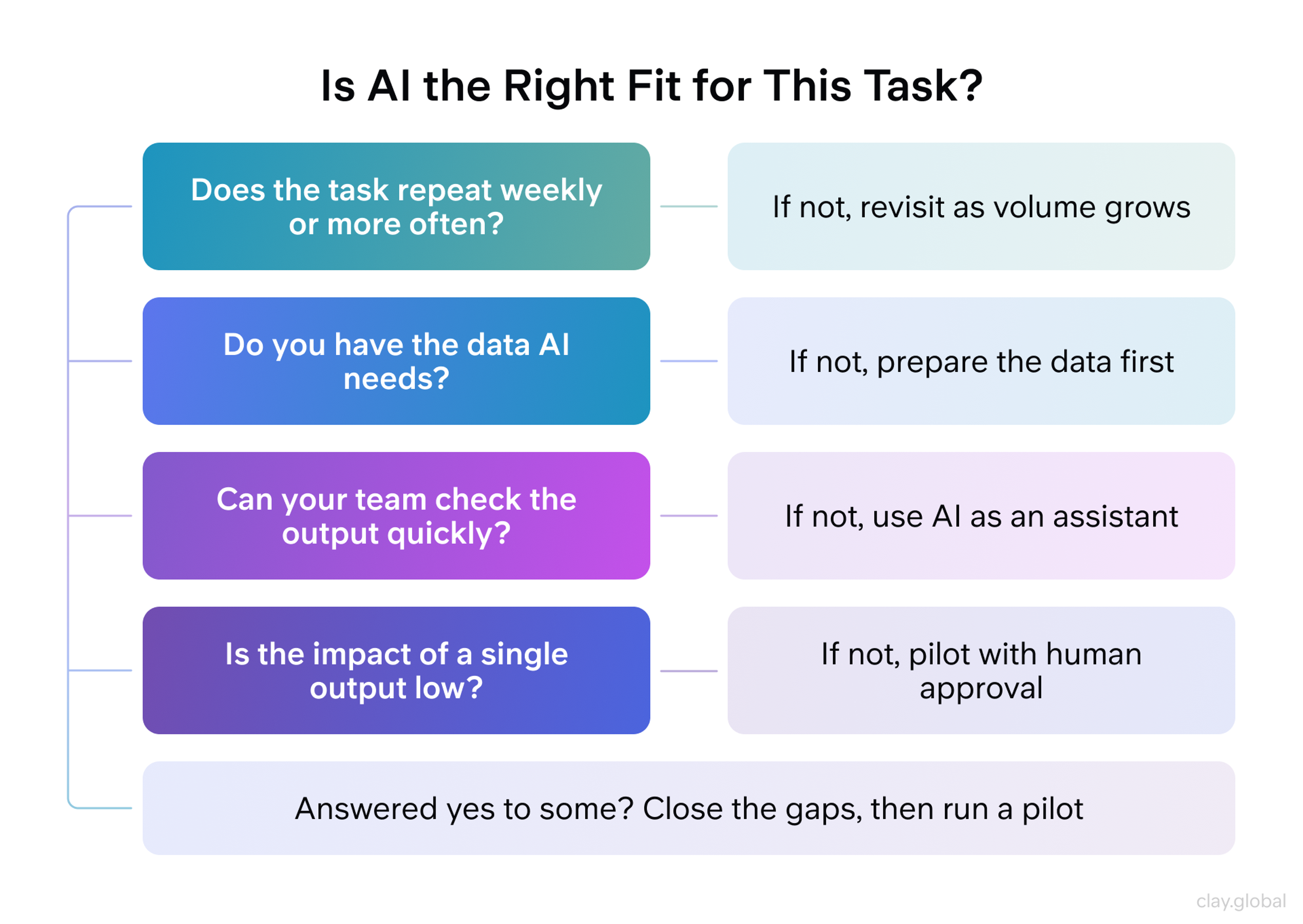
Early adopters in action: IBM says its cognitive supply chain, which links procurement, planning, production, and logistics, has saved USD 160 million in inventory, freight, and related costs.
IBM also reports that it fulfilled 100% of its orders despite COVID-19 pandemic disruptions.
Autonomous AI Agents Become Digital Coworkers
Agentic AI describes systems that plan, use tools, and carry out delegated multi-step tasks within goals and permissions that people set.
The line between virtual assistants and agents is blurring, since many modern assistants can already take actions.
In practice, an agent might read an email, update a ticket, and flag the case that needs a human. The enabler is tool use, a model's ability to call software and pass results to the next step.
How AI Agents Automate Workflows by Clay Global
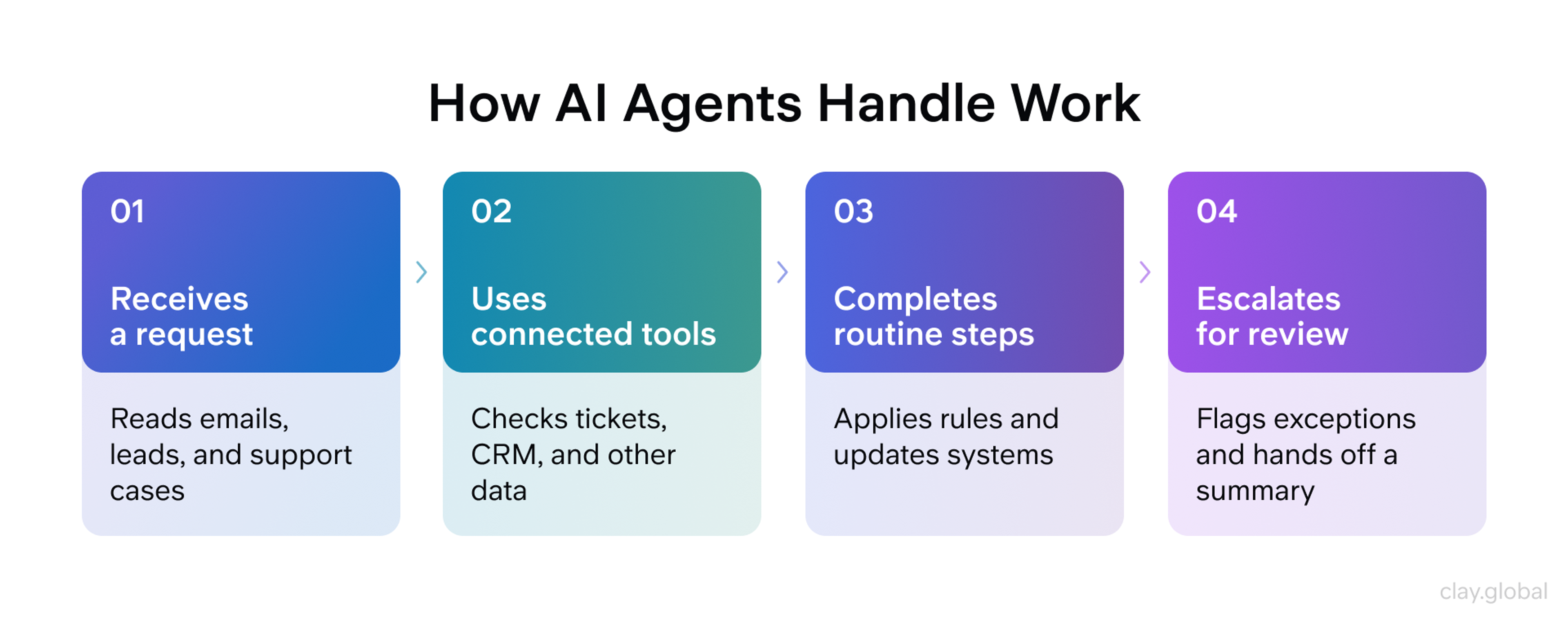
Microsoft Research demonstrated the idea in 2024 with Magentic-One, an open-source research system in which an orchestrator agent plans tasks and delegates them to specialist agents. Its authors recommend keeping humans in the loop.
Agent adoption for everyday tasks may broaden over the decade, and some agents could become as familiar in daily life as autocomplete.
Cost, accuracy, permissions, integration, and oversight will shape the pace.
Early adopters in action: Siemens runs two AI agents in a defined lead-qualification workflow. One engages prospects after they download software. The other asks about budget, authority, need, and timeline, applies about 50 predefined rules, and hands qualified leads to sellers with a summary.
According to Salesforce's customer story, this setup cut Siemens' lead response time from days to minutes.
AI Transforms Product Design and User Experience
In the product design process, AI tools can help designers generate layout variations quickly, build prototypes earlier, and adapt interfaces to a user's context. Testing with real users and in production still matters.
AI and UX Research by Clay Global
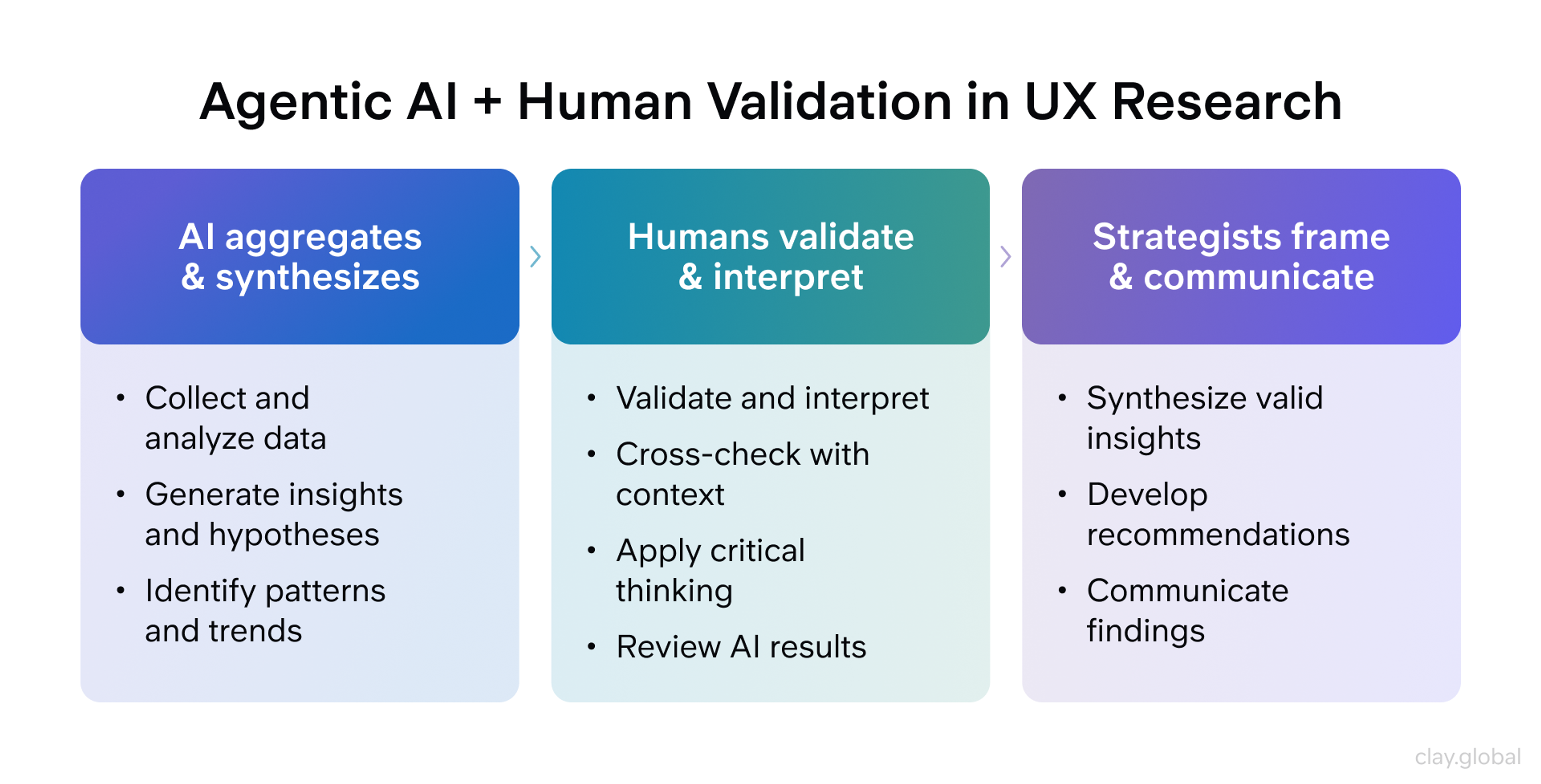
Models that handle text, images, and voice in one conversation raise expectations. Most people care whether an app understands them, and lasting customer relationships depend on human-centered design that keeps complex technology predictable.
The internet was initially driven by technology experts, but design became more important as it grew. AI may follow the same path. As our Head of UX, Alex Khmelevsky, told Fast Company:
"I believe AI technologies are set to embark on a similar journey, with designers poised to step in and refine these technologies, making them more intuitive and user-oriented."
Early adopters in action: Eden, an AI-powered real estate platform we worked on, is a good example of how AI and thoughtful product design can work together.
Users can describe their ideal home, including interior style, surroundings, and neighborhood noise levels. AI analyzes these preferences to suggest matching properties and helps users visualize their ideas.
Home Visualization Feature in Eden’s AI-Powered Real Estate Platform
The app's intuitive design makes these features easy to use.
AI Automation Transforms Business Operations
Agents get more media attention, but many companies save money through routine automation, and this trend focuses on the processes themselves. Document review, data entry, and invoice matching take up a lot of time for many teams.
Many software platforms increasingly offer automation features, so much of the real work is redesign. AI delivers the most value when it runs on a well-designed process.
Map your business operations, cut the steps nobody needs, and automate what's left, starting with high-volume tasks where speed and accuracy are easy to track.
Top AI Use Cases by Clay Global
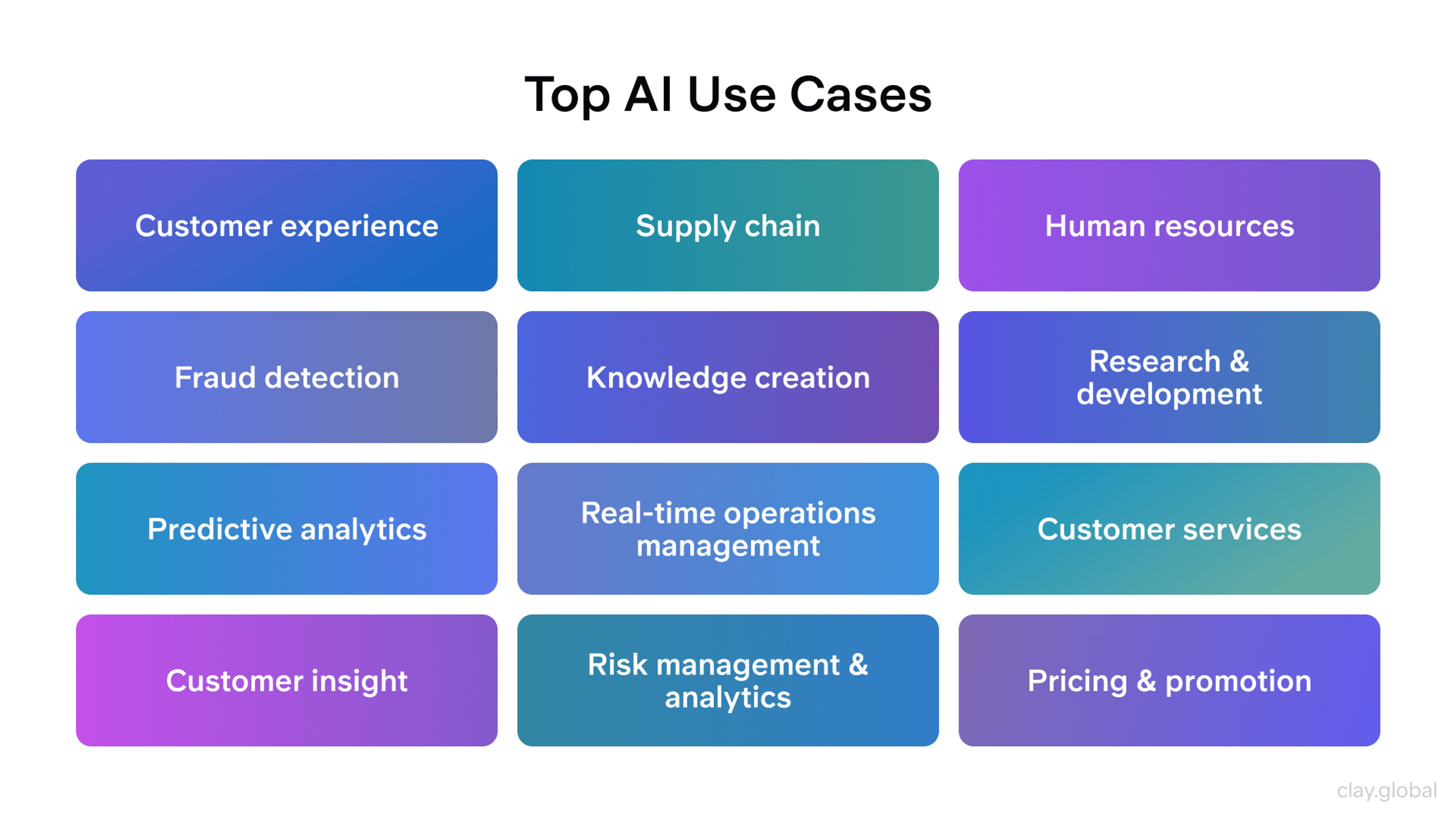
Early adopters in action: In a 2024 Microsoft customer story, Unum described a generative AI tool that helps its client support representatives search about 300,000 digitized policy contracts. Unum reported 95% accuracy when the tool went live.
AI Changes How Websites Are Built and Optimized
AI tools for code and written content can speed up site builds and migrations, depending on a site's size, platform, and review process. Discovery is changing too.
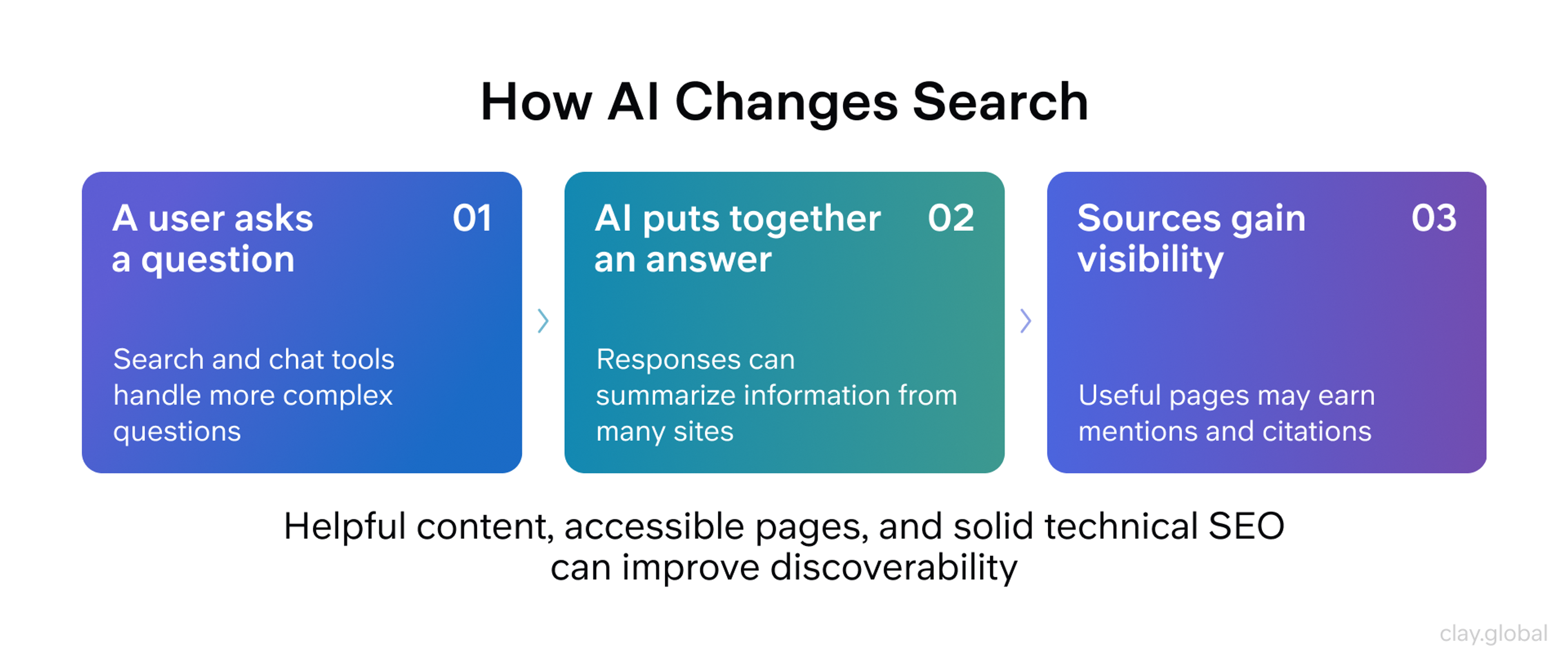
Google says it shows AI Overviews only when its systems judge them additive to classic search. AI Mode is a separate experience for longer, more exploratory questions. Chat assistants also generate responses from several sources, so for some queries people may get what they need without clicking.
The AI Search Shift by Clay Global
Effects on website traffic vary by query intent and industry, and some sites may see fewer but better-qualified visits. Marketers are paying attention.
In a survey conducted by Vanson Bourne for Webflow among 700 marketing leaders and 300 technical leaders in the US, Canada, and the UK, 52% of marketing leaders said they would prioritize optimization for AI-driven search and summaries in 2026.
Google states that there are no additional requirements or special optimizations needed to appear in AI Overviews or AI Mode. Helpful, accessible content, crawlable pages, and solid technical SEO improve discoverability and your chances of a citation.
Early adopters in action: In 2026, Arkose Labs moved its decade-old WordPress site to Webflow. It used Claude through Webflow's MCP connector for much of the migration and for ongoing changes.
According to Webflow's customer story, the team cut page creation time from three days to 15 minutes.
Intuitive AI-powered websites and products don't happen by accident. Clay Global is a UI/UX design and branding agency helping startups and established brands get them right. Learn more about what we do.
AI Helps Companies Make Smarter Decisions
Dashboards tell you what happened. Decision intelligence helps you decide what to do next.
Large language models connected to company data can identify patterns, highlight risks, and run scenarios to support better-informed decisions.
A finance lead might ask why margins dipped in one region and get a useful first analysis, provided the system draws on reliable data and someone checks the results. Comparing the model's reasoning with original sources helps verify its conclusions.
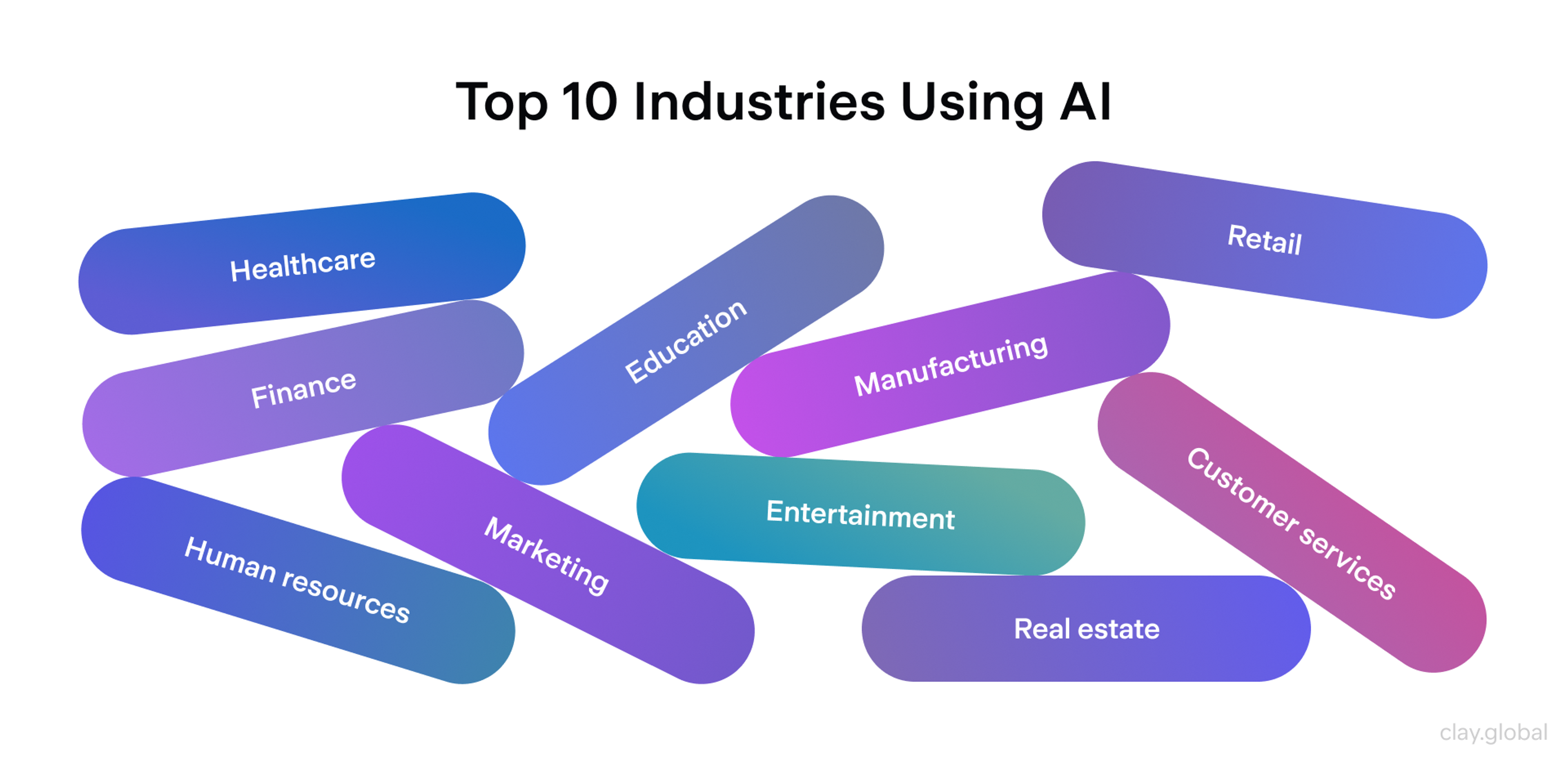
AI adoption is expanding across industries as more sectors use it to analyze data and guide business decisions. Over the next decade, its role in these industries is expected to grow further.
Where AI Is Driving Smarter Decisions by Clay Global
Early adopters in action: IBM also uses AI for supply chain disruption response, where the tools analyze data and recommend actions while people decide.
IBM reports that mitigating a part shortage used to take four to six hours per part number, and that the time dropped to minutes, then to seconds.
AI Makes Brand Differentiation More Important Than Ever
Generative AI has made some kinds of content cheaper to produce, though strong brand work still requires a brand strategy and review. With many brands using similar tools and prompts, distinctiveness becomes more valuable.
AI marketing may also add a second audience. Kantar's Marketing Trends 2026 argues that as generative AI and agents shape more purchase decisions, brands that fail to differentiate risk being lost in a sea of sameness.
AI-Driven Brand Differentiation by Clay Global
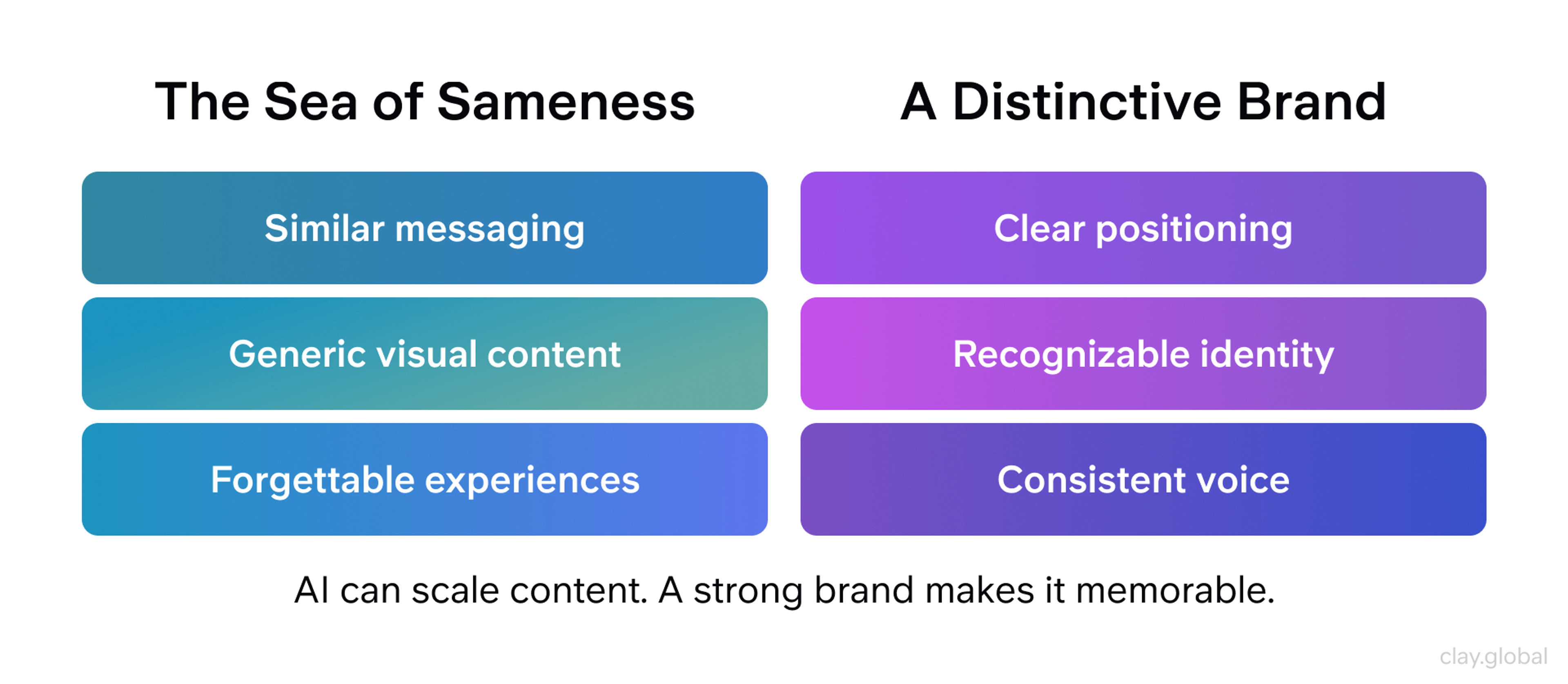
Protect a clear position, a recognizable visual identity, and a consistent voice. Use AI advertising tools to scale production, and keep the final creative call with people.
Early adopters in action: Streetbeat, a subscription-based AI investment platform, shows how a distinctive brand identity can help an AI product stand out.
We redesigned its brand with bold typography, a recognizable app icon, and a consistent illustration system.
These elements help Streetbeat maintain a recognizable and consistent brand identity across its app, advertising, and marketing materials.
AI Reshapes Jobs, Workforce Skills and Team Structures
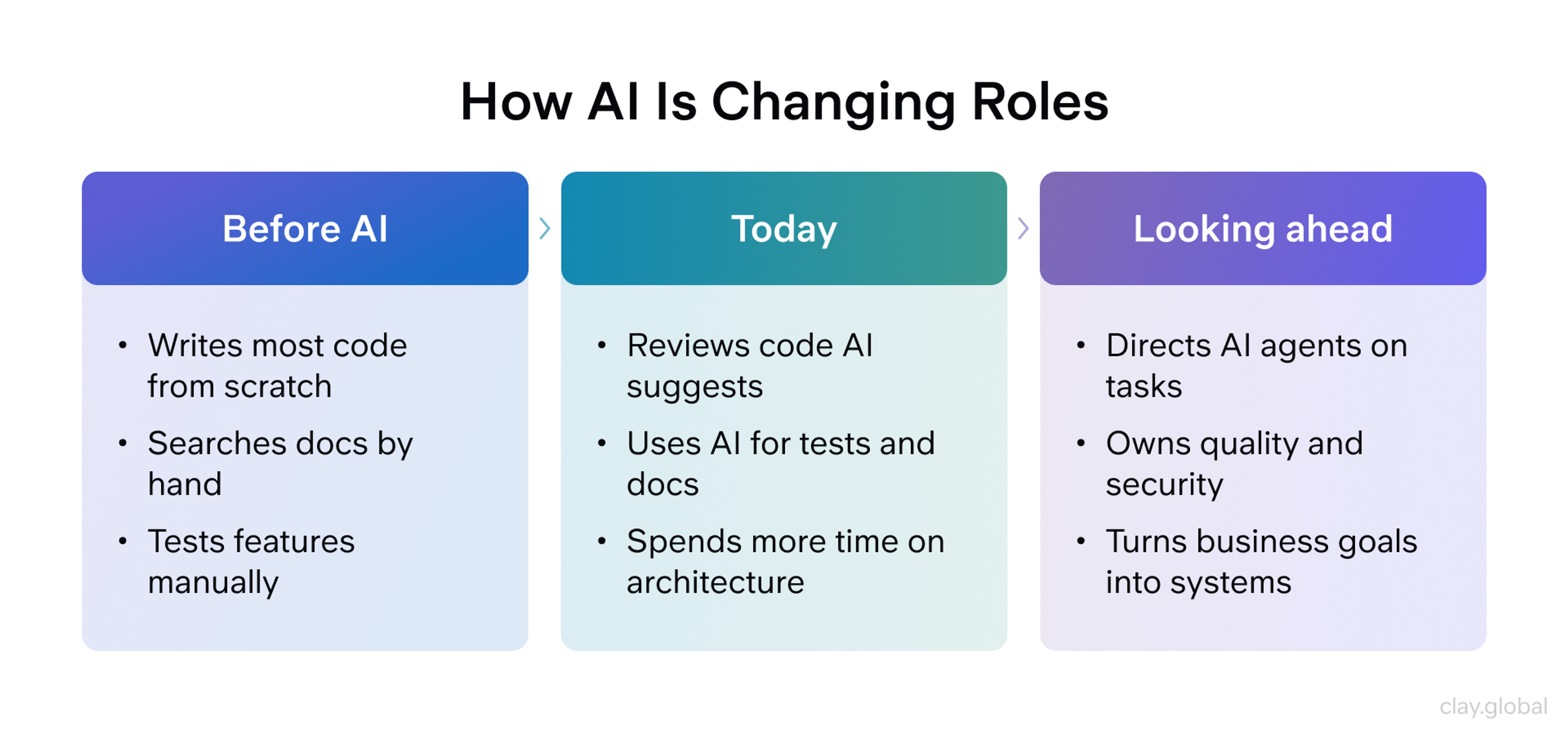
Many roles may evolve as AI spreads, and the effects will vary by occupation, company, and region. In some settings, developers already spend less time writing code from scratch and more time reviewing what AI proposes.
Example of How AI Is Changing Developer Roles by Clay Global
An emerging pattern in the AI job market favors people who pair domain expertise with AI literacy, meaning a practical sense of how AI works, critical thinking, and the judgment to review AI output.
Some companies now run flatter teams with new roles in AI operations and quality review. Routine roles will change significantly, so plan reskilling before you restructure.
To avoid heavy dependence on technology, keep your experts doing hands-on work so their skills stay sharp.
Early adopters in action: Generali, a global insurance company, worked with Accenture to create We LEARN, a training program for its workforce of more than 82,000 people.
The program offers courses in generative AI, data skills, and other emerging technologies, helping employees adapt to changing job requirements and prepare for new roles.
It also includes specialized training for 1,200 senior managers on generative AI.
This shows how companies can prepare their teams for AI-driven changes by investing in new skills rather than focusing only on automation.
Human Oversight Becomes More Important as AI Grows
Every process you automate needs oversight. As AI takes on more work, businesses need clear ways to check output quality and reliability, and to manage the risks of AI.
Regulation is arriving in phases. Under the EU AI Act, the European Commission states the following dates.
- Prohibited practices and AI literacy obligations have applied since February 2, 2025.
- Obligations for general-purpose AI models have applied since August 2, 2025.
- Most other rules have applied since August 2, 2026, with exceptions.
- After the Digital Omnibus on AI entered into force in July 2026, high-risk rules apply from December 2, 2027, for sensitive use cases, and from August 2, 2028, for AI embedded in regulated products.
Which rules affect you depends on your systems' risk category, your role as provider or deployer, and where you operate, so get legal advice for your situation.
Inside the business, decide which calls need human sign-off, keep data access tight, and test outputs before relying on them at scale. Those guardrails give you more control and can help customers trust businesses that use AI.
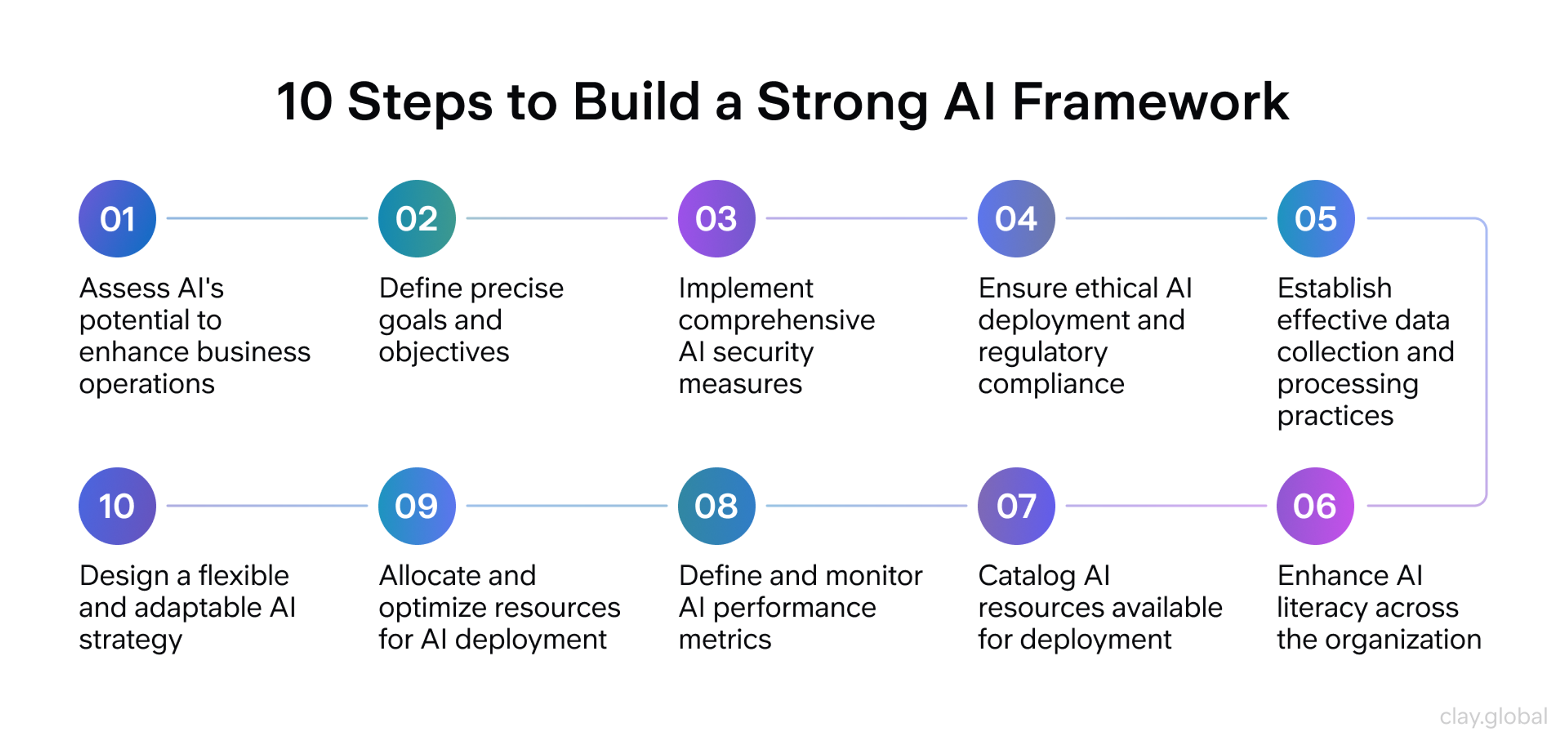
10-Step Approach for Implementing a Robust AI Framework by Clay Global
Early adopters in action: ZS spent three months comparing an AI security agent's investigations with its own analysts' findings.
According to Wiz's customer story, the agent reached a self-validated accuracy rate of 95%.
ZS now lets it resolve only a defined set of low-severity cloud detections, and analysts review its work at the end of each shift.
Bringing AI into your product or website is a serious investment. Getting the design right from the start saves years of correction. Tell us about your project, and we'll take it from there.
Read More
FAQ
What's the difference between generative AI, agentic AI, and AGI?
The first refers to systems that create content such as text, images, code, or audio.
The second describes AI that plans, uses tools, and carries out multi-step tasks, and the two overlap, since many agents run on generative models. How much supervision an agent needs depends on the task and its permissions.
The third, artificial general intelligence, refers to hypothetical AI with broad, human-level ability across many tasks, and experts still disagree on its definition and timeline. Researchers usually place it alongside narrow AI among the main types of AI.
What is reinforcement learning, and why should business owners care?
The approach trains a system through rewards or other feedback signals, so it learns which actions lead to better outcomes.
It has contributed to some of the reasoning and alignment techniques used in recent AI releases.
Possible business applications include pricing, recommendations, logistics routing, and robotics, though many systems in those areas rely on other methods.
Should my company use open-source models or proprietary ones?
Check the license first. Some open releases are fully open source, while others are open-weight, meaning you can download and run the model, but the license may restrict how you use it.
Open options can give you more control over hosting and customization, and proprietary services can offer easier setup, so compare both on security, privacy, capability, and cost.
Many companies mix both and decide on a case-by-case basis.
When does it make sense to fine-tune an AI model?
It can make sense when you need consistent behavior at volume, such as a specific tone, output format, or specialized vocabulary that prompting delivers inconsistently.
Try better prompts and retrieval from your own documents first, because they're easier to change, though relative costs vary by case.
Data needs depend on the training method, so match the dataset to the goal.
How much should a small business invest in AI?
Start with the AI features already inside the tools you pay for, then pick one or two processes where a measurable gain would matter.
A focused pilot with a clear baseline tells you more than a large budget spread thin. Expand spending once a pilot shows evidence of value, and accept that some pilots won't.
Will AI replace designers and creative teams?
AI in UX design can take on more production work, such as variations, resized assets, and first drafts.
Taste, strategy, and an understanding of what a specific audience needs remain human strengths.
The work of creative departments may shift toward art direction, editing, and judgment, though how that plays out will vary.
Which industries will AI change the most over the next decade?
The impact will vary by sector.
Information-heavy sectors such as finance, insurance, and professional services already have many use cases, while manufacturing, logistics, retail, and healthcare administration have their own.
The pace in each depends on regulation, the mix of tasks, data quality, and geography.
How do I choose the right AI vendor or partner?
Look at how they handle your information, their security practices, how easily the tool connects to your existing systems, and whether they'll agree to a measurable pilot.
Review contract terms, including data export and model portability if you leave. If you're comparing AI-first design agencies, a partner who asks about your workflow before pitching features is a practical sign.
What's a common mistake companies make with AI adoption?
Some buy tools before defining the problem. Without a clear owner, a baseline, and clean data, even good software produces scattered results that nobody can measure.
Fix the process and the records first, and the technology has something to work with.
How can I tell whether an AI trend is hype or here to stay?
The trends to watch are the ones where organizations outside the tech industry report concrete, measured results, so focus on those results over demos and announcements.
Early-stage applications may still justify a small, controlled pilot before published metrics exist.
Gather your own evidence before committing to large investments.
Final Thoughts
Some of these AI trends will land early, and a few will take longer than expected.
Companies that prepare may be better positioned as they unfold. Treat the next wave like any strategic investment, with a clear budget, tracked results, and people accountable for the outcomes.
For the future, focus on foundations that help in most scenarios, such as clean data, measurable goals, AI-ready teams, and guardrails that keep you in control. They'll stay useful whatever the next leap is.


About Clay
Clay is a UI/UX design & branding agency in San Francisco. We team up with startups and leading brands to create transformative digital experience. Clients: Facebook, Slack, Google, Amazon, Credit Karma, Zenefits, etc.
Learn moreAbout Clay
Clay is a UI/UX design & branding agency in San Francisco. We team up with startups and leading brands to create transformative digital experience. Clients: Facebook, Slack, Google, Amazon, Credit Karma, Zenefits, etc.
Learn more